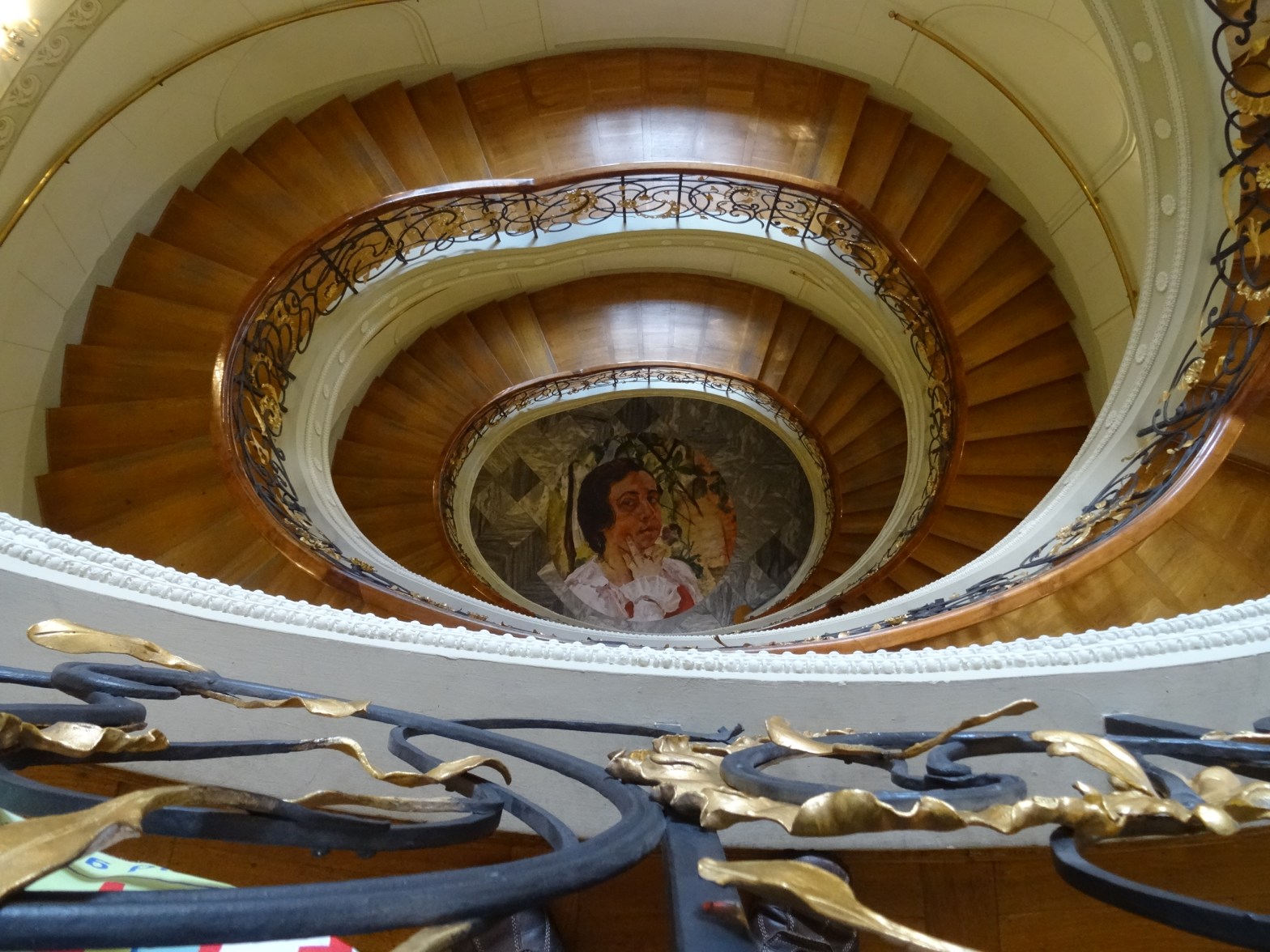
Fremdgehen


Die Geschichte hat zwei Heldinnen. Zuerst sollen Sie Felicity kennenlernen.

Sie ist die älterer Frau. ‘Unkraut vergeht nicht!’ würde sie sagen.

My novel <The Last Stop> can be purchased in English on Amazon. 🇬🇧  🇺🇸 

Oder auf Deutsch DE

Mein Roman <Endstation – Eine Geschichte aus Berlin> wird ab jeztz als Auszuge, erscheinen. Hier ist Teil 1. Ich wünsche viel Spaß!

Felicity Precious stand da im wolkenverhangenen verschlafenen Leamington Spa und blickte aus dem Erkerfenster ihres Hauses aus den dreißiger Jahren. Sie mokierte sich oft über Mode und glaubte, dass es dafür keinen Platz in der Architektur gab. Sie hatte darüber gelacht, als über die Jahre ihr Haus als typisches minderwertiges Einfachhaus abgetan wurde, man es dann als ein Beispiel gut durchdachter Planung wieder auferstehen ließ, aber nun wieder mit Hohn dafür bedacht wurde, dass es Teil der landschaftlichen Zersiedelung war, die so typisch für englische Städte ist.

Sie ging weiter zum Flur, um nach dem Telefon zu sehen. Warum das Telefon? Glaubte sie, dass es gleich nicht funktionieren könnte? Sie bemerkte, wie konfus sie im Kopf geworden war und legte wieder auf. Dabei schaute sie in den hohen Spiegel, der das Kernstück eines Möbels aus dunkler Eiche bildete, mit einer hohen Rückwand und einer Seite mit Kleiderhaken, Kleiderbürste und einem Behälter für Schirme. Ihr Blick verharrte auf der Spiegelung der großen, eleganten, schlanken Frau mit der Andeutung eines Bäuchleins, einer Frau in Haus Nummer 32, die saubere Fenster putzte. Sollte das ihr schlechtes Gewissen beruhigen? Abgesehen von ihrem Gewissen, ihre Adresse gefiel ihr sehr. Sie war nicht abergläubisch, aber 32 kam ihr immer als eine sichere Zahl vor.

Sie gönnte sich einen Augenblick, um ihren Hausflur voller dunkler Brauntöne zu bewundern, die die meisten Besucher höflich übersahen. Ihr war die doppelte Bedeutung bewusst, wenn man sagte: „Du hast den ursprünglichen Charakter erhalten. Wie hübsch altertümlich.“

Sie schätzte ihre Lincrusta-Tapeten und Linoleum-Fußböden mit Läufern in der Mitte des Gangs und auf der Treppe. Ein paar Schritte, und sie hielt erneut inne, im Wohnzimmer, wo sie stehen blieb, um die verbleiten Art-Deco-Fenster mit den seltsamen Schnörkeln aus farbigem Glas zu bewundern. Das war genau das, was in den Fünfzigern herausgerissen wurde, und, dessen war sie sich wohlbewusst, dem man seitdem kaum eine Träne nachgeweint hatte, aber sie liebte es. Sie wusste, dass ihre Nachbarn sie als die komische Alte vom Ende der Straße ansahen, aber das war gemein. Ihre schöne Haut war alles andere als faltig. Sie war eine sehr ansehnliche Frau, selbst mit Anfang sechzig.

Felicity wusste, dass ihr Mann sie für exzentrisch hielt, aber das war unwichtig. Oft genug hatte er ihr gesagt, dass eine Einrichtung im Stil der dreissiger Jahre nicht sein Ding war, aber zum Glück für sie gehörte Jack zu der Gruppe von Männern, die glaubten, dass Geschmack eine Sache der Frauen war. Zu den Pluspunkten zählte, dass ihre Vorstellung von Inneneinrichtung nicht viel kostete, deshalb ermunterte sie Jack, viel von dem verfügbaren Einkommen für Reisen auszugeben, was ihr wiederum nicht so viel bedeutete. Sie betrachtete das als einen guten Kompromiss, der sie beide durch einen glücklichen Ruhestand führen würde.

Felicity strich eher über die Scheiben, als dass sie sie putzte. Das Bleiglas war mit achtzig Jahren nicht zu stabil, und sie wusste, wenn es brach,  dass ihr Mann seinen Willen durchsetzen und die Fenster durch moderne Kunststoffelemente ersetzen würde. Sie jedoch mochte es, zärtlich mit einem feuchten Tuch über das Bleiglas zu fahren und und das Metall wieder flach gegen das Glas zu drücken, sodass es sich nicht immer anfühlte, wenn der Wind blies, als ob sie in einem Zelt lebte. Das war eine notwendige Maßnahme, wenn sie eine erfolgreiche Scheiben-Beschützerin bleiben wollte.

Ein verstohlener Blick die Straße hinunter machte ihr klar, dass ihr Besucher sich verspätet hatte. Vielleicht würde er gar nicht kommen? Sie lenkte sich ab von der Furcht, versetzt zu werden, indem sie für einen Moment in Selbstgefälligkeit verfiel. Ihr Augenmerk richtete sich auf die anderen Häuser, denn sie hatten seit langem schon ihren ursprünglichen Charakter verloren, und die Tatsache, dass sich ihre Besitzer nun an durchzugfreien Wintern erfreuten, entschuldigte in keiner Weise die mutwillige Beschädigung, mit der die Häuser zerstört worden waren. Mit einem selbstgefälligen Grinsen erinnerte sie sich daran, dass sie selbst es so lange nicht durchzugfrei haben würden, bis die Fußleisten um die Kanten abgedichtet und die Kamine verschlossen waren und ihre aufwändig ausgearbeitetes Eichenambiente dem Möbellager zur weiteren Verwertung übergeben wäre.  Die Nachbarn hatten einen altmodischen offenen Kamin behalten, und, auch wenn sie ihn nie benutzten, verloren sie so an Wärme und waren nicht besser dran als sie.

Sie stupste sich zurück in die Gegenwart. Keine dieser windigen Themen war jetzt für sie wichtig. Sie putzte ihre Fenster, sodass sie ihren Liebhaber in dem Moment ausmachen konnte, wenn er auf der Straße parkte. Ihr Plan war, die Haustür geöffnet zu haben, bevor zu viele neugierige Nachbarn Zeit fanden, ihn ankommen zu sehen und die Stunden oder Tage zu zählen, bis er wieder ging. Sie hatte sich schon wochenlang ausgemalt, wie ihr Liebster und sie sich tagelang verlieren würden, in einem Rausch der lang vergessenen Hormone.

Die meisten Nachbarn wussten, dass etwas im Gange war. Sie zuckte zusammen, als sie sich des Ausmaßes ihrer Verlogenheit besann. Für Wochen schon hatte sie eine Lüge gelebt. Jedes Mal, wenn Jack irgendjemanden, der zuhören würde, ankündigte, dass er weg sein würde, für eine Abwechslung als Kulturfreak in Berlin, während seine Frau bei ihrer Schwester die Schwingungen in Lugano aufsaugen würde, musste sie die Schamröte ihres schlechten Gewissens unterdrücken.

Autsch!

Sie hatte ihren Flug gar nicht gebucht. Sie trug jedoch in den Küchenkalender ein Abreisedatum ein und eine Uhrzeit, wenig später als das ihres Mannes. Das war dumm. So war sie gezwungen, an dem Tag einen Koffer zu packen und mit Jack zum Flughafen zu fahren, ihm zum Abschied zuzuwinken und dann ihren Koffer zum Auto zu bringen und nach Hause zurückzukehren.

Sie erschrak, als sie bei der Abfahrt bemerkte, wie der Nachbar nebenan im Garten werkelte und auch, wie er Zeuge wurde, als sie ein paar Stunden später zurückkehrte. Sie hatte ihn durchschaut und seit langem erkannt, dass die Stunden, die er im Garten verbrachte, der beste Weg war, um mitzubekommen, was auf der Straße vor sich ging. Eine ihrer Lieblingsbeschäftigungen war es, seine Schnüffeleien zu durchkreuzen. Er hatte etwas über den Rasen gerufen wie: „Flug abgesagt?“ Sie hatte sich entschieden, kurz hinüberzuwinken, aber ansonsten ihn zu ignorieren, und war ins Haus gegangen. Ihre Taktik hatte niemanden getäuscht. Er würde die Erde durchkämmen, vorgeben, störenden Löwenzahn zu suchen, bis er herausgefunden hatte, was in Nummer 32 vor sich ging.

„Männer sind ein Mysterium“, dachte sie und erinnerte sich daran, wie sie in diese schwierige Lage geraten war. Vierzig Jahre Ehe hatten den erotischen Funken ausgelöscht. Sie verzweifelte daran, ihren Mann überhaupt dazu zu bringen, wieder mit ihr zu schlafen. Etwas war gestorben. Es war nicht überraschend, mutmaßte sie. Vierzig Jahre sind eine lange Zeit. Das ist länger als alles andere, womit sie je in ihr Leben verbracht hat. Und der Mann, den sie liebte, hatte bei ihr sein Feuer verloren, angeödet von ihr, nahm sie an. Sollte sie das einfach so hinnehmen? Gehörte das zum Altern dazu? Vielleicht hätte sie gesagt: „C’est la vie“, wenn da nicht eine unbequemen Wahrheit gewesen wäre, die sich weigerte, in einer entfernten Windung ihres Gehirns zu verschwinden. In unserer Welt der sexuellen Freizügigkeit und Promiskuität war Jack ihr einziger Liebhaber gewesen. Sie war eine Ausnahme in unserer Zeit. Und nur, weil Jack im Bett aufgegeben hatte, wollte Felicity ihre letzten Jahre gerade nicht als Jahre ohne Sex akzeptieren. Hätte sie eine gute Portion Sex wie all die anderen Mädchen in ihrer späten Jugend oder an der Universität gehabt, wäre sie vielleicht damit zufrieden gewesen, die letzten hormonellen Schübe an ihr vorbeziehen zu lassen. Aber so war es nicht gewesen. Unterschiedliche Zufälle hatten dazu geführt, dass sie Jungfrau blieb, bis sie Jack traf und sich in ihn verliebte. Dann war es eine Lawine der sich steigernden Gefühle und heißem Sex gewesen, und alles vorher war nicht mehr wichtig. Jetzt fühlte es sich anders an, wie ein Leben der verpassten Gelegenheiten. Sie wusste, wie kindisch sie war. Man kann die Uhr nicht zurückdrehen, und davon zu träumen, verpasste Abenteuer nachholen zu können, war ausgesprochen dumm. Aber Hormone und Dummheit sind oft austauschbare Begriffe. Sie hatte es bei ihren eigenen Kindern im Teenageralter beobachtet, als sie die verschiedenen verrückten Phasen der Reifezeit durchliefen. Sie verzweifelte an ihrer Tochter und ihrer Partnerwahl. Jetzt war sie selbst die Dumme.

Felicity hatte einige Kennenlernportale mit ein paar Sites für reifere Männer und Frauen ausprobiert. Die Kerle, mit denen sie sich heimlich getroffen hatte, – nicht einfach im kleinstädtischen Leamington – waren alles Ärsche gewesen. „Kein Wunder, dass sie bei keiner landen konnten“, hatte sie gedacht. Und es ging niemals weiter als bis zum ersten Treffen. Sie waren scharf auf sie gewesen. Felicity war immer noch eine begehrenswerte Frau, aber sie hatten alle Charaktereigenschaften, die man nicht einmal bei einem scharfen Kater akzeptieren würde. Egos so groß wie ein Elefantenfurz, aber hässlich, fett und faul genug, um sich für einen Eintrag ins Guinness Buch der Rekorde zu bewerben, in der Kategorie „Nutzlose Schwänze“. Es verschlug ihr noch immer die Sprache.

So hatte sie alle Hoffnung aufgegeben, beim Thema Abwechslung im Bett noch etwas aufzuholen, bis es geschah, dass das Forschungsinstitut, in dem sie als Chemikerin arbeitete, eine radikale Neuorganisation durchmachte. Eines Tages kam sie herein und fand den leeren Schreibtisch ihr gegenüber von Ray eingenommen, der von der nun aufgelösten Abteilung „Spezialprodukte“ kam.

Sie hatte an dem Ort lange genug gearbeitet, um zu wissen, wer Ray war, hatte aber nie ein Wort mit ihm gewechselt, nicht einmal in der Kantine bei der Mittagspause. Es war ihrerseits ein Stück kleinkarierter Snobismus gewesen, und das kam daher, weil es als Faustregel galt, dass man alle bei den „Spezialprodukten“ Beschäftigte vergessen konnte. Und so hielt sie es auch, befeuert von dem Wissen, dass „Spezialprodukte“ noch niemals ein Produkt herausgebracht hatte, weder ein spezielles noch ein sonstiges.

Spezialprodukte waren die Bratschen im Orchester, die Außenverteidiger in der Fußballmannschaft, Bing Crosby bei einem Konzert von Led Zeppelin. Die Liste geht noch weiter. Sie waren wie ein Witz über die Iren, bevor das politisch inkorrekt wurde. Die Wirtschaft des Grünen Tigers hatte sich herausgebildet und ließ viele zweitrangige Komiker verstummen, aber „Spezialprodukte“ hatte nie jemanden verstummen lassen.

Sie hatte keine Ahnung, wie sie am Anfang Ray begrüßen sollte. Er saß da, lächelte sie an und bezauberte die Frau, die ihn zehn Jahre lang unbeachtet gelassen hatte. Was konnte sie tun, außer – reizend – zurückzulächeln? Dann kam die Mittagspause. Sie konnte nicht umhin, ihn einzuladen, sich ihr zum Mittagessen anzuschließen.

Sie hatte versucht, reserviert zu erscheinen, aber zu ihrem Erstaunen verlief ihre Unterhaltung völlig ohne Probleme. Sie kicherte bei seinen Späßen. Noch schlimmer, sie flirtete mit ihm, wenn niemand zusah. Was passierte da?

Zurück im Labor lag ein träger Nachmittag vor ihr. Die Hydrolyse-Reaktion, die sie am Morgen angesetzt hatte, sollte bis sechs Uhr dauern, und dann musste das aufgearbeitet werden, bevor das Produkt über Nacht verfiel. Das bedeutete, dass sie Zeit hatte für Recherche in der Bibliothek oder das Kreuzworträtsel in der Zeitung. In der Bibliotek angekommen entschied sie sich für das Rätsel und ließ sich in einer versteckten Ecke nieder. Sie musste ihr Verhalten in der Mittagspause überdenken. Sie merkte, dass sie errötete. Sie hatte sich unmöglich aufgeführt. Die Frage bei Sechs Senkrecht war: „Feuriger Liebhaber“. Die Lösung sprang ihr ins Auge, und sie füllte behutsam die fehlenden Buchstaben aus. Die Lösung: „VERKNALLT“.

„Oh, mein Gott, böses Mädchen Felicity“, so erinnerte sie sich, hatte sie vor sich hin gemurmelt. Sie streichelte zum wiederholten Mal eine widerspenstige Bleilamelle, wobei ihre Gedanken ganz woanders waren. Sie war ganz in ihren Träumen versunken.

„Und in deinem Alter“, sagte sie, lauter als beabsichtigt.

Ray war ihr zur Bibliothek gefolgt und stand hinter ihr.

„Hast du etwas gesagt?“

Sie war nicht in der Lage gewesen zu antworten, glühte aber so rot wie eine Tomate. Sowas von peinlich! Ihre Wangen beinahe in der Farbe ihrer tollen kupferfarbenen Locken, die immer noch nur hier und da eine Spur von Grau zeigten.

Sie hatten das Kreuzworträtsel gemeinsam gelöst, unter reichlichem Gekicher.

Und noch etwas. Sie fühlte eine Scham, als sie sich daran erinnerte. Was für eine peinliche und blöde Zicke sie gewesen war, und alles nur, weil sie sich Ray gegenüber aufspielen wollte, auf Kosten ihres Assistenten. Ihr Techniker, Billy, hatte um vier angekündigt, dass er eine Verabredung hatte und dass er Punkt fünf Uhr dreißig weg wäre. Sie musste ihre Versuche also selbst aufarbeiten. Dies, das wusste sie, würde sie bis neun beschäftigen, keine große Sache. Aber wenn ihr Techniker um fünf Uhr dreißig ginge, wäre sie allein im Labor.  Es gab eine Unternehmensrichtlinie, aus Gesundheits- und Sicherheitsgründen, nach Dienstschluss nicht allein im Labor zu arbeiten. Der Versuch an jenem Tag hatte das Unternehmen Tausende gekostet, nur um es so weit zu bringen. Entweder musste der Techniker seinen Termin absagen oder … ?

Sie atmete vor den verbleiten Scheiben tief durch, so tief, wie sie es an jenem Nachmittag im Labor getan hatte, als sie sich entschlossen hatte, ihm die schlechte Nachricht zu vermitteln. Warum hatte sie es getan? Sie hätte die Security bitten können, alle zehn Minuten nach dem Rechten zu sehen. Das hätte ausgereicht. Aber nein, sie war entschlossen gewesen zu zeigen, wer das Sagen hatte, und alles, weil Ray ganz in der Nähe war. Wie kindisch war sie gewesen? Aber wenn Hormone das Terrain verrückter Teenager sind, was soll dann jemanden stoppen, der sich wie ein Teenager aufführt? Die Hormone schossen hoch im Überschwang. Ihr kam das Sprichwort in den Sinn: „Wenn ein altes Haus Feuer fängt, da hilft kein Löschen.“ Sie schauderte. Es gab keine Entschuldigung für das, was nun kam!

„Du weißt, wir hatten heute diesen Versuch. Warum also dein Termin?“

Billy hatte das kommen sehen und wusste auch, warum. Er wusste, dass sie sich für den neuen Kerl aufspielte.

Es hatte ein kurzzeitiges Patt gegeben. Ganz recht so. Ihre Rage hatte sie völlig eingenommen. Sie fürchtete, er würde ihr raten, ihre Hydrolyse aufzufüllen, wo die Sonne nicht hinkommt – der Scheidetrichter hatte ungefähr das Profil – aber bevor Billy antworten konnte, hatte sich Ray eingemischt.

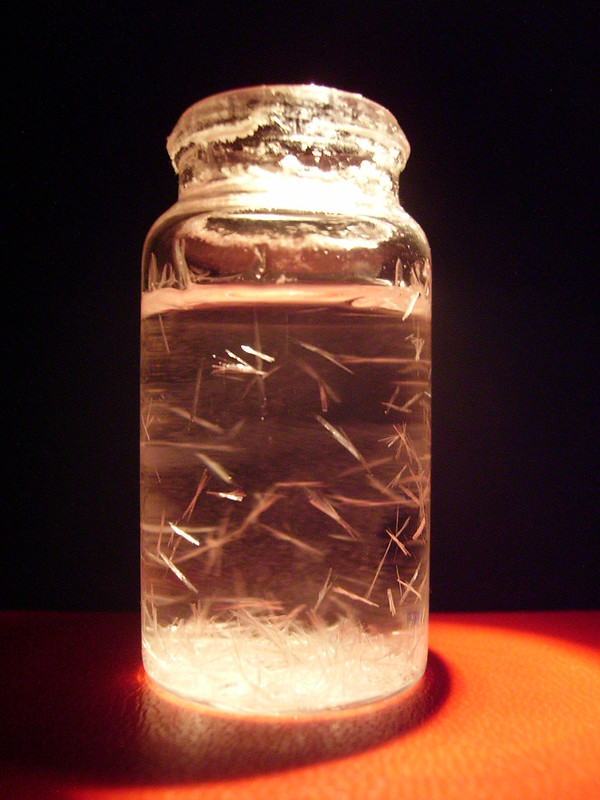
„Ich bleibe, bei mir liegt heute Abend nichts an“, hatte er hinübergerufen, und er fügte jenes Lächeln hinzu, wie immer, zum genau richtigen Zeitpunkt. Und es waren wundervolle drei Stunden gewesen, wobei sie über Chemie, Politik, Fernsehshows und Ehefrauen und Ehemänner gesprochen hatten. Enthalten waren auch die eigenartige Neutralisation und Extraktion, gefolgt von einer sehr kniffligen Re-Kristallisation, die auch noch eine Mischung von Ethanol- und Eisessigsäure beinhaltete und wobei Wasser hinzugefügt wurde, um die Ausfällung zu erhalten. Billy hatte die Gabe, den Temperaturpunkt zu treffen und immer nur einen Tropfen Wasser zum rechten Zeitpunkt hinzuzugeben. Sie war immer zu hastig. Sie kannte sich selbst gut genug, sie würde zu viel Wasser hinzugeben oder es nicht kühl genug bekommen. Sie würde um die weißen nadelartigen Kristalle beten – sie war Dr. Precious, der Boss – aber Titel halfen hier nicht weiter. Bei ihr endete es oft mit schlammigen Öl oder, noch schlimmer, mit einer Emulsion. Warum hatte sie das zu der Zeit Billy gegenüber nicht eingestanden? Er hätte sich wertgeschätzt gefühlt und hätte sich darüber gefreut, die Wahrheit zu hören. Es hätte bestätigt, wie gut er war, und sie hätte vielleicht ihren Kopf durchgesetzt. Er wäre vielleicht für sie geblieben. So, wie es nun war, erntete sie die schlechteste aller Lösungen. Sie hatte ihren besten und fähigsten Mitarbeiter verärgert, und sie würde in seiner Abwesenheit die Re-Kristallisation vermasseln und damit tausende Pfund an Firmengeld vergeuden, und all das vor dem Mann, den sie beeindrucken wollte. Es fühlte sich an wie „Spezialprodukte“ an einem schlechten Tag.

Aber der schlechte Tag war gerettet worden. Ray, er sei gesegnet, hatte ihr die Mischung aus der Hand genommen und den Moment genutzt, um ihr Handgelenk zärtlich zu streicheln. Dann hatte er ein bisschen stärker gekühlt, ein Tropfen Wasser und Simsalabim, es klappte beim ersten Mal. Sie war in der Lage gewesen, wunderbare weiße, nadelförmige Kristalle herauszufiltern und zu trocknen und sie zur Analyse am nächsten Morgen zu schicken. Die Überprüfung enthüllte eine beispiellose Reinheit, und die Abteilung wurde mit Pluspunkten überschüttet. Was für ein Star Ray war.
Augenblick der Wahrheit

Jetzt war ihr Ray, ihr Liebhaber, auf dem Weg. Keine Zeit, wieder auszupacken. Sie hatte den Koffer an den Abstellplatz unter der Treppe gestellt und begann ein flinkes, aber planloses Fensterputzen. Sie putzte die Fenster einmal von innen, drückte das Blei runter, staubte die Rahmen und Simse ab, und noch immer war nichts von ihm zu sehen. Ihr Nachbar war immer noch am Jäten, wobei er hoffte, dass seine Scheinbeschäftigung die ständigen Blicke in ihre Richtung verschleiern könnte. Sie kannte ihn zu gut, als dass sie sich von einem Eimer Unkraut täuschen ließ. Löwenzahn war das Letzte, wofür er sich interessierte. Er spionierte wieder herum.

Wieder mit den Fenstern von vorn anzufangen, das war keine Option, würde verdächtig erscheinen – ein Zeichen von Irrsinn oder, schlimmer noch, eines schlechten Gewissens.

Ihre Fassungslosigkeit wurde noch durch die Tatsache verstärkt, dass ihr Liebhaber nicht ihr richtiger Liebhaber war, jedenfalls noch nicht. Sie hatten Mittagspausen zusammen in einem Pub nahe der Arbeit verbracht und schwer miteinander geflirtet, wann immer sie sich auf den Fluren zwischen dem Labor und den Waschräumen begegneten. Aber es war nicht zu mehr gekommen, und heute sollte der Tag sein. Sie war niemals fremdgegangen, und niemand war mehr verwundert darüber als sie selbst, dass es zu dieser Situation gekommen war.

Ihre Absichten auf der Arbeit zu verbergen, war leicht gewesen. Niemand nahm Notiz davon, wenn zwei Über-Sechzigjährige flirteten. Es war für jüngere Kollegen unvorstellbar, dass in gesetzten Leibern noch immer eine erotische Flamme brennen könnte. Seit dem Aufstehen heute Morgen hatte sie ihren eigenen Mut bereut. Vierzig Jahre der Monogamie machten diesen Schritt hin zum Betrug zu einer ganz besonderen Sache. Sie nahm an, dass Jack irgendwo in Berlin eine kleine Liebschaft sitzen hatte. Warum sollte er sonst immer wieder dorthin fahren? Das machte es aber auch nicht leichter für sie, es mit der Untreue auszuprobieren.

Sie nahm ihr Handy, um ihrem sich nähernden Verehrer zu sagen, dass sie ihre Meinung geändert hatte. Ihr Handy war ausgeschaltet. Das war eine Sicherheitsmaßnahme für den Fall, dass Jack anrief und Glockenschläge von Westminster von der Uhr im Flur das Spiel auffliegen lassen würden. Dann würde er wissen, dass sie nicht in der Schweiz war. Sie würde ihm dann die Wahrheit erzählen. Soviel wusste sie. Den Nachbarn etwas vorzuspielen, war das Eine, ein Seitensprung viel schlimmer, aber dann den Mann der vergangenen vierzig Jahre anzulügen, war undenkbar. Folglich, räsonierte sie, war es besser, nicht aufzufliegen, und dann würde sie nicht lügen müssen, nicht wahr? Sie war stolz auf ihre weibliche Logik.

Sie begann, an ihrem Handy herumzufummeln und versuchte, es in der Eile einzuschalten, aber das Gatter quietschte, und da war er, und er kam den Weg zum Eingang hoch. Zu spät! Sie rannte zur Tür, zog sie auf, ergriff ihren neuen Mann und – gleich hinter der Türschwelle – begrüßte sie ihn mit einem Zungenkuss, wie sie es mit niemandem in den letzten zehn Jahren getan hatte.

„Wow“, dachte sie. „Hormone können immer noch in Wallung bringen.“

Felicity ertappte sich dabei, wie sie Rays Jacket vom Körper riss.

„Nicht so wild, Liebes!“

Beide hielten einen Moment inne und lachten.

Free to read at Kindle Unlimited.

Flash Fiction 1 – Sweet Dementia


The key slid in the lock with its usual slight resistance – or did it? Wasn’t there a different feel to his apartment door? How would he be able to decide that? He knew he imagined things and then often had to admit they were unverifiable. That was to be expected at his age, but that lock felt different, dammit. Why would he pretend to be dumber than his years?

His monologue was loud enough to reveal a mid-west accent. Living as he had, outside the USA since he was 33, he rarely spoke English, except to himself. Now he felt the need for that special clarity produced by native emotions.

He dropped his shopping bag in the kitchen and as something wasn’t right, dropped his backside onto a convenient upright chair. Then came the ritual of smoothing a greying beard and short-cut sparse white hair.

This image has an empty alt attribute; its file name is dsc02529.jpg
Dementia’s hole

His disbelief at the tricks of a wild imagination caused a shake of the head, which meant a glance through the doorway, towards his writing table in the next room. Where were the papers from the church elders? They had written asking him if he would play a few Sundays, while the regular organist had her baby. He’d left the letter there, on his desk, protruding from the half-opened envelope that had arrived that morning. The envelope was gone.

Jumping to his feet with the energy of a five-year-old, he inspected the desk, the drawers, turned papers over to make sure he hadn’t slipped it under something, to then stand, arms crossed over his old-man’s torso, considering possible conclusions. What was there to consider? Someone had taken the papers. Impossible of course and why would they?

‘Check the waste bin,’ he said, his voice husky from the years of too much singing. He still sang. ‘What is there left in life if one stops singing,’ he would have demanded. ‘Why would I have thrown them away? Why am I beating myself up, accusing myself of some bizarre senior moment? There is only one explanation! Someone has let themselves into my apartment.’

Back in the kitchen he bent to retrieve the bin from under the sink, but, although his hand arrived on the bin lid, his concentration didn’t. He’d left the sink full of breakfast washing up. Where was it? Not on the draining board – so he hadn’t washed up on auto-pilot and left it to dry. Washing and drying without noticing was a step too far for credulity. He opened the crockery cupboard. There were the plates, cereal bowl – and his favourite mug, the one he never put in the cupboard, because he used it so often.

The ringing phone diverted him from the unsolvable riddle. It was a friend from the UK, one of the few people with whom he still spoke English. That was good. He felt that revealing the onset of dementia shouldn’t be hampered by language limitations.

A quick ‘Hi,’ was all he said as a greeting, which barely covered necessary courtesy.

‘I’m so glad it’s you. Advise me if you can. Am I lucid?  Do you get the impression I’m losing it? I can’t decide anymore. Think carefully. A lot depends on your answer.’

This image has an empty alt attribute; its file name is dsc03138.jpg
Going under!

Flash Fiction 2 – Sweet Nostalgia


My dad asked me to take him to France, one last time, to buy his cigars. ‘They are cheaper in Calais,’ he assured me.

Long grey waves, white topped, sway us. The captain says, ‘Force 7 Beaufort,’ in a matter-of-fact way.

‘It won’t be moved,’ I assure my dad. ‘65000 tons, rock solid and rock imperceptibly.’ 

‘Stabilisers out,’ the captain says, yet I know who will win, eventually.

‘Of ships and men, nature has the last say,’ I tell my dad. ‘Steel stretches, imperceptibly, but nevertheless – crystals form and plates weaken, under constant water movement. It’s a law of life. The sun’s energy makes the waves, gives us life and takes it away.’

‘Whatchoo so mawkish about?’ he asks in his broad South London. My mum once said, ‘If you or your brother ever talk like that, you’ll get elocution lessons.’ We had no idea what that meant, but it sounded horrible, so we don’t talk like our dad.
‘A friend just died,’ I explain. ‘That’s where we are at in life, I suppose. School, girlfriends, job, marriage, kids, kids’ girlfriends, divorces, retirement and now bereavement. The way things are. The natural progression.’
‘What? Are we going to fall off our perches, now, one by one?’
‘Afraid so,’ I say, but wished I’d spared the old fellow that news.

‘How’d he die?’

‘His heart stretched once too often, and one last time. A bit like ships plates – they stretch, and contrarily, lose malleability, until deemed by a smart engineer, no longer fit for service. They are beached one last time, on far Asian sands, for a shoeless army of pieceworkers, to rip their guts out with bare hands. That’ll be us, if there is anything worth having when we go.’

‘What are you talking about?’ he mumbles through a mouthful of chips, while admiring the white topped spray in the distance.

‘Just waving goodbye,’ I say.

Don’t buy so many‘, I say, worried he might not live to smoke them.
He drove the 90 miles to Dover at 86 years of age, parked up there, with the confidence of youth, but struggled with the slope up to the ship. Once in Calais, I took money from an ATM.
‘What’s that for?’ He shouts. ‘I said, today is on me’.
‘We might need a taxi back to the ferry,’ I reply and watch him concentrate on coordinating unruly feet that, these days, pay scant regard to what his brain is telling them. This outing is too much for him.


We made it. He won’t let me carry the cigars, which are stowed in a large white carrier.

‘You drive home. I’m tired and I don’t see so well in the dark,’ he explains.

Happy man has cigars!

He’d enjoyed his last drive in his last car. I took the wheel of the bright blue Rover 200, 1.8 litre turbo. It was designed for the race track. Cars mean everything to his generation. He’d rather risk driving off the end of the quay, unable to see, than surrender his licence.

I look for the exit signs, but am waved down by a young immigration officer. She is smart in her uniform, and confident.

‘Additional security today sir. Sorry for the inconvenience,’ she tells me. ‘Passports please.’

I hand mine over. We wait for my dad to respond.

‘I think he has dozed off,’ I say and lean over to take his passport from his hand. I have to prise it from his fingers, which are stiff and cold.

‘Is your dad OK?’ she asks as she returns the passports.

‘Just tired,’ I say. ‘It’s been a long day.’

She leans through the window space and looks the old man over. She thinks of all the aggravation if she challenges us. She’d rather let me drive home with a stiff in the passenger seat, and who wants his dead dad impounding, pending a post mortem?

‘If you are sure?’ she asks with compassion. ‘Well, drive carefully, sir.’

I let the window whir up and glance down at the bag, tucked between my father’s feet. I decide to test the water.

‘How many did you buy?’

His face falls into a smile. He’s OK, or is that just the muscles relaxing?

‘Never you mind how many,’ he chuckles. ‘Just don’t tell yer mum.’

‘The lass from immigration thought you had croaked it. I wasn’t sure.’

He laughs.

‘200 best duty-free Havanas in that bag my old son. I’ll smoke those bastards, if it kills me.’

Gift – Or imagining the dark side.


We are writers. Imagination is our most powerful gift. Imagine the impossible – being a Spitfire pilot in a dogfight, being your sister, especially if you don’t have a sister. Then you have to imagine her brother or sister, too, who isn’t you.

And you can safely imagine your dark side. Crime writers imagine the illegal, without fearing arrest. A vivid imagination keeps one out of trouble. You don’t have to live the risk of a bungee jumper or have the bravery of a gay man coming out to his family at Christmas.

I can imagine things too awful to contemplate, such as now, when I’m imagining a Christmas gift – a very special gift, given to the world Christmas 1941.

The German word for poison, is Gift. Exactly the same spelling and etymology, both words, English and German, come from the Low German, or Dutch word for ‘to give’.

To give a present – to give poison. Giftgas – poisonous gas, such as mustard gas or chlorine, used in the trench war of 1914-18. Gift – a poison or a present.

Hamlet knew! Claudius killed King Hamlet by pouring poison into his ear. Shakespeare continually illustrates that words can function as poison in the ear as well. As the ghost says in Act I, scene v, Claudius has poisoned “the whole ear of Denmark” with his words (I.v.36). The running imagery of ears and hearing serves as an important symbol of the power of words to manipulate the truth.

It’s easy when a gift doesn’t have to be a joyous event.

I know men and women who, when standing under the shower, suddenly imagine it to be the outlet in a gas chamber in Auschwitz. They are jammed in the shower with hundreds of other naked men and women. Intimate body contact is unavoidable. Someone begins to scream. Sobbing can be heard along with clueless questions of little children to their parents.

‘What’s happening daddy? I can’t breathe.’

‘It’s alright my darling. Just remember we have always loved you,’ comes the answer and a tight cuddle.

It’s too late to fight, or even struggle. One wants to live, but considering the terrible things going on around, maybe the end is acceptable. They have walked by the heaps of charred bodies bulldozed into a pit. Is death OK, after that view of death?

The gentle hiss of Giftgas begins. Hands reach up trying to block the jets. Panic sets in. The noise is deafening, the jostling of bodies unable to escape, causes fear to spread. They lose control as the gift wrecks the nervous system, causing them to piss, vomit on each other and defecate. Slowly the panic ebbs and peace sets in. It’s over. 

But not in my imagination. I know the Gift wasn’t quick. If exposure is slow, such as the gas diffusing through a packed room, it took a while. Death, from Zyklon B, preceded by painful convulsions, could take 20 minutes or longer. When used to gas prisoners on Death Row in the US, in a small room, only one victim, times as long as eleven minutes were recorded. That’s a long time to prepare oneself or a child for the worst. For the first time I wonder why they used a cyanide compound in Zyklon B. Carbon monoxide would have been cheaper, more effective and less painful. No convulsions – just gentle sleep.

I’m going to guess the answer. Carbon monoxide leaves a period of several minutes, in which the victims can still reason and fight, scream, beat the walls of the van, as they did, when it was tried, by diverting exhaust gases into the chamber behind the driver. This upset the perpetrators and their henchmen. The fight for life distracted the driver. They quit after one journey.

With cyanide, there is no way back. By the time you realise, the nervous system is out of control and it is too late.

There probably is another reason I don’t know about, but in that moment of wondering why, I have reduced genocide to an intellectual exercise.

It was a day at the office for someone, when he dealt with that question. Can I imagine being a perpetrator? I just did, when I asked the question about Zyklon B and carbon monoxide.

This is how it works. Someone asked the question, ‘What are we going to do with the Jews?’ Genocide was a solution. That someone sat down and imagined mass murder, ignoring the moral implications. They probably called it ‘planning’.

This planning process happened just after Christmas – January 1942, in a beautiful villa on the Wannsee, outside Berlin. The house still stands and is now a museum to that planning conference. The state needed to know that its various institutions were on board, so that they would commit to their part in the genocide. No opting out, like the drivers.

The so-called ‘Wannsee Conference’ was opened by Reinhard Heyderich, who had already decided the parameters for the mass murder of Jews. He defined, what was a Jew, what exceptions were to be made to Jewishness and that, in the first instance (he still needed to build the infrastructure), Jews would be transported to the East where they would carry out forced labour. He knew this labour would result in the death of the workers, due to the extremity of the work conditions and because he didn’t plan to feed them. He openly spoke about the murder of the Jews. We know all this, because an American soldier found a protocol copy of the Wannsee Conference in a drawer. It was the one that didn’t get destroyed in 1945, when people were covering their tracks. But for that copy, we wouldn’t know there had been a conference, or its outcomes.

I have read the protocol. It is short – barely 1½ pages long, typed on a typewriter, well beyond its sell-by date. What did the typist say when she reached home that evening, when her husband, boyfriend or dad asked what sort of a day she had?

I know that in quiet moments, men imagined committing mass murder. Heyderich mentions a ‘final solution.’ Historians assume the conference members understood what the final solution meant. They imagined death in a gas chamber – not with horror – but with satisfaction. Suddenly, my dark-side imaginings seem sane!

I left the S-Bahn at Wannsee, and because I stood on the wrong side of the road waiting for the bus, I missed it. The next was in 20 minutes but at -15 deg, I figured it better to walk the few kilometres along the lake. I passed the Liebermann House, with a collection of his impressionist paintings. Worth a visit! He was a rich Jew, who died in 1935 and thus avoided deportation. Then I arrived at the villa where the conference took place. I look around, am brave, and go in.

The most awful part of the exhibition is the section on the ones who got away – that was pretty much all of them. A few died as the Russians advanced in 1945 but 90% lived out their lives, post-war, in peace, as respected members of the community, some practicing medicine. That was the State’s gift to men, who had put their imagination to the final test, then shrugged their shoulders and moved on, when it was advantageous to so do.

The state had sanctioned it and the state forgave it.

I wrote in my Berlin novel – The Last Stop.

 ‘He kept listening to it, discussing it, listening to others discussing it, and soon daftness disappeared and lunacy became reason. That’s how propaganda works. If one tells the same lies often enough, one’s brain accepts them as the truth. He had undergone the process.’

 This process was the purpose of the Wannsee Conference and I just imagined, being there. A writer’s imagination can be a curse, as well as a gift.

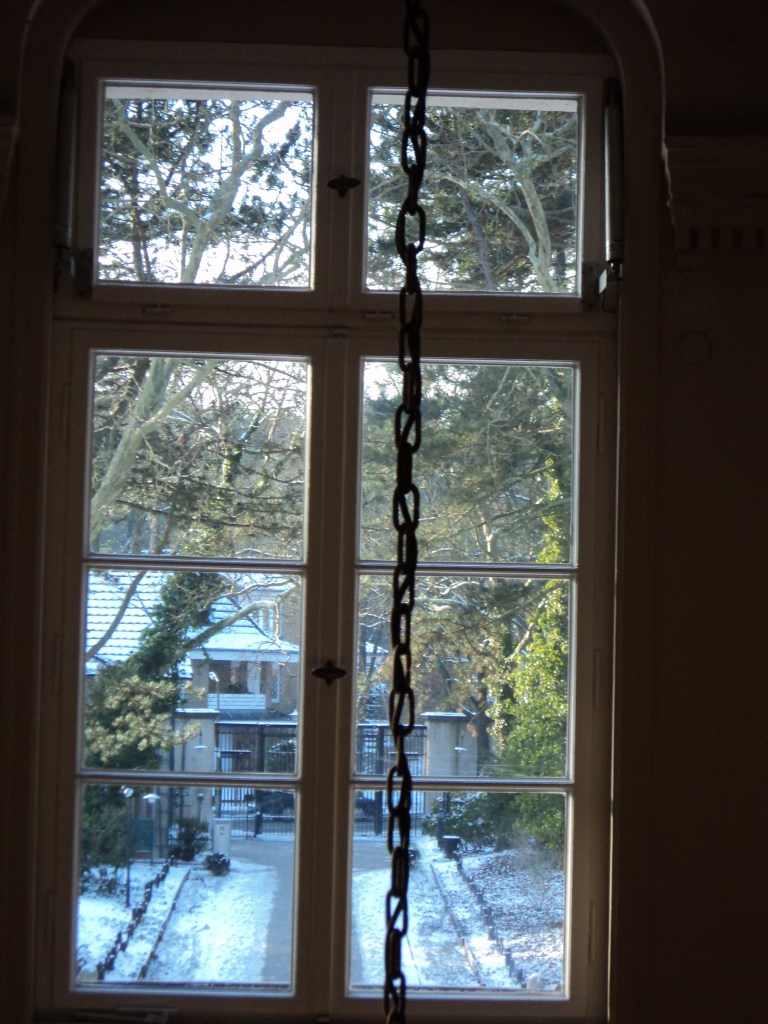
View from the Wannsee Villa.

Homebrew Spin-off


Glasses in Berlin

You think you brew for the delight of that first taste of a special beer. That’s how it all starts, but 20 years later I discovered historic beer glasses, each with its own story to tell. Today’s collection was a morning’s work in the Frankfurter Allee in the old east Berlin. Locally, it is known as Little Moscow, due to the impressive Soviet Russian buildings, supposedly clad with Meissen tiles.

Frankfurter Tor beautifully composed by Ralph on Flickr.

Beneath the apartment buildings are comfy arcades of shops, now schicky micky outlets, but a few years ago, it was all second hand bookshops and junk stores. It was in one such that I discovered the beer glass with PdR on the side.

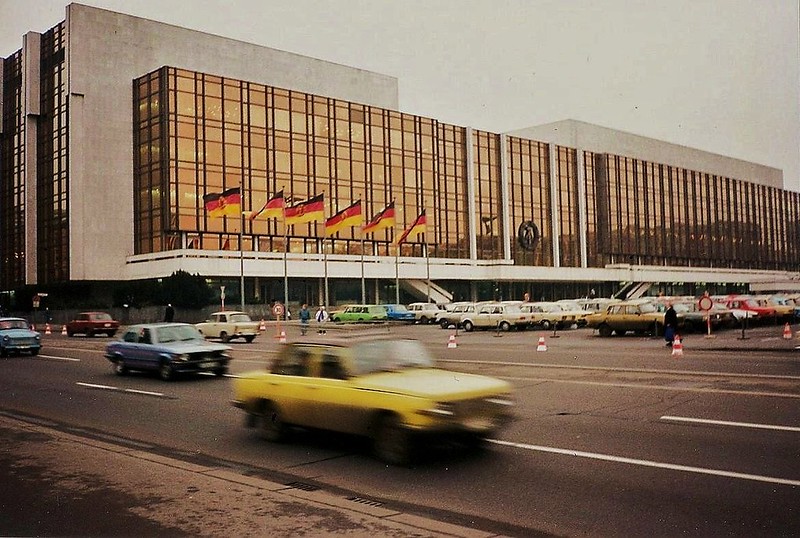
I had to ask the significance and discovered it was the logo for the Palast der Republik – now scandalously demolished by an over-zealous Berlin Senate, but once, during the days of the DDR, the favourite entertainment venue for East Berliners. And if you went there for Sunday tea and a dance, you took a souvenir home – a glass or cup and saucer. The junk shop owner explained.

‘This glass is a perfect example – never been drunk from, or perhaps just the once. Stealing a souvenir was an act of revenge by the people, who were being screwed over by a government as never before.’

Most available pictures of the Palast der Republik are of its destruction. It was truly vast and I cannot imagine what the immense space was used for. Thanks to aad1969 on Flickr for this rare pre-1989 picture.

There should be numerous examples of this glass, if every visitor took one – but not so. When the Wall came down in 1989, the East Germans were so sick of their history, that they must have ceremoniously smashed their stolen goods, as the final revenge act.

In the same junk shop was a rare Pilsner Urquell glass, with a frosted cracked look. I’m still trying to date this beauty.

Stunning workmanship. It doesn’t go through the dishwasher.

I also collect kitsch as well as beauty. This one shouldn’t have been allowed out the factory.

Reiner frischer Gerstensaft
Gibt Herzensmut und Muskelkraft
Pure, fresh juice of the malt,
gives you a brave heart and strong muscles.

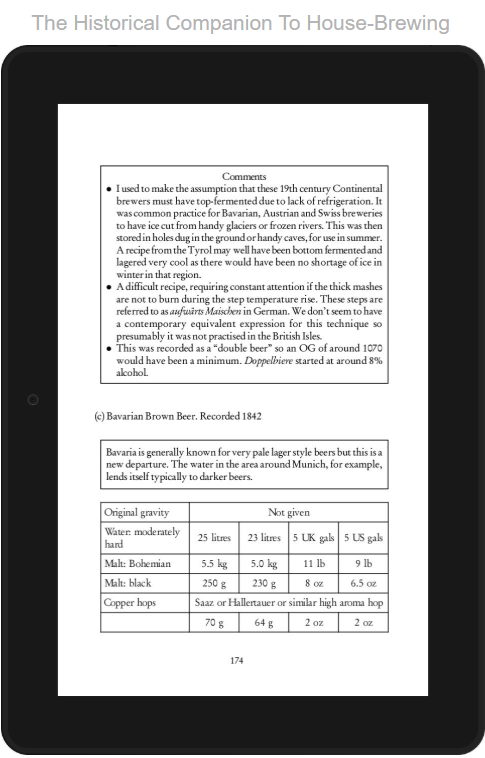
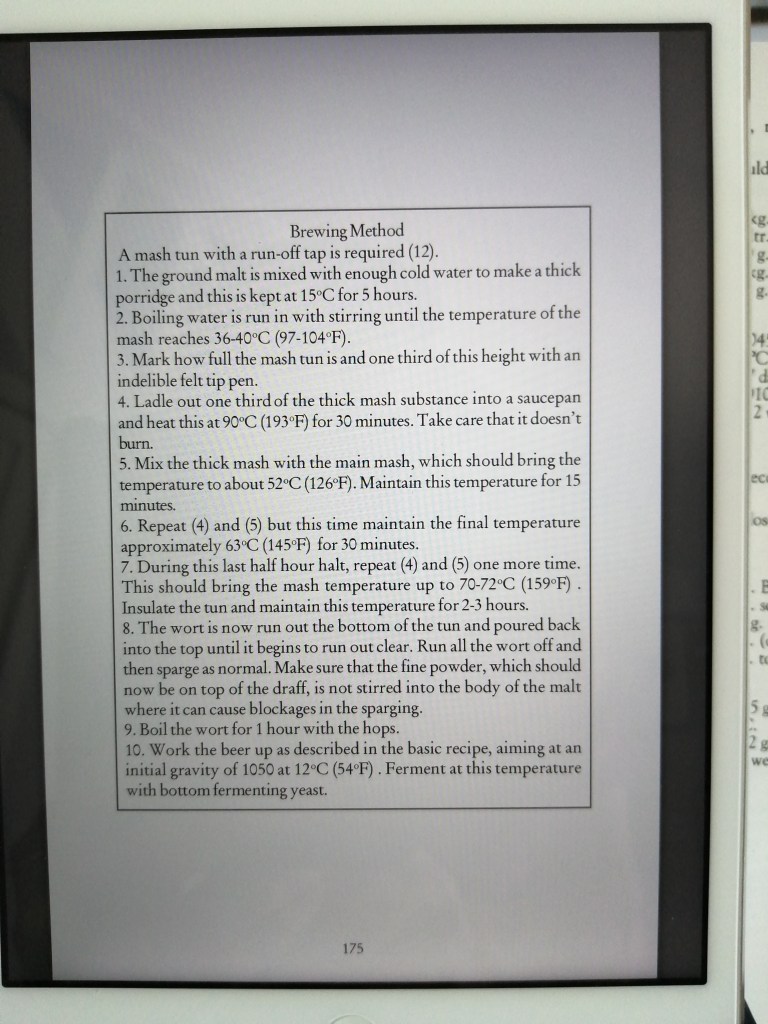
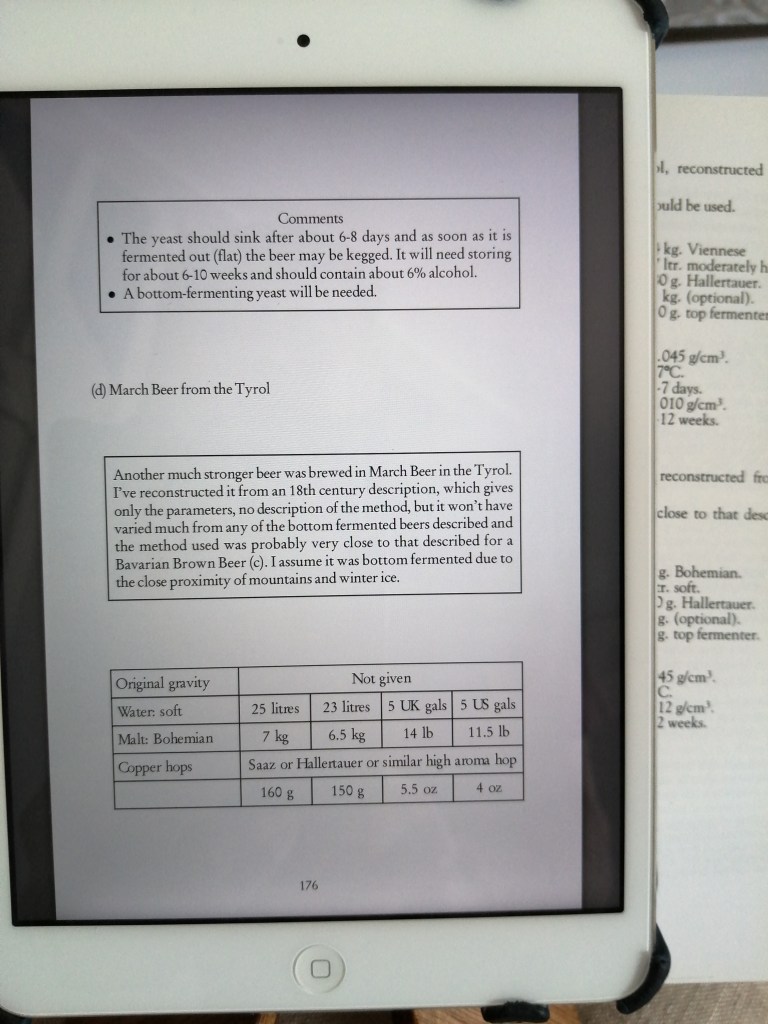
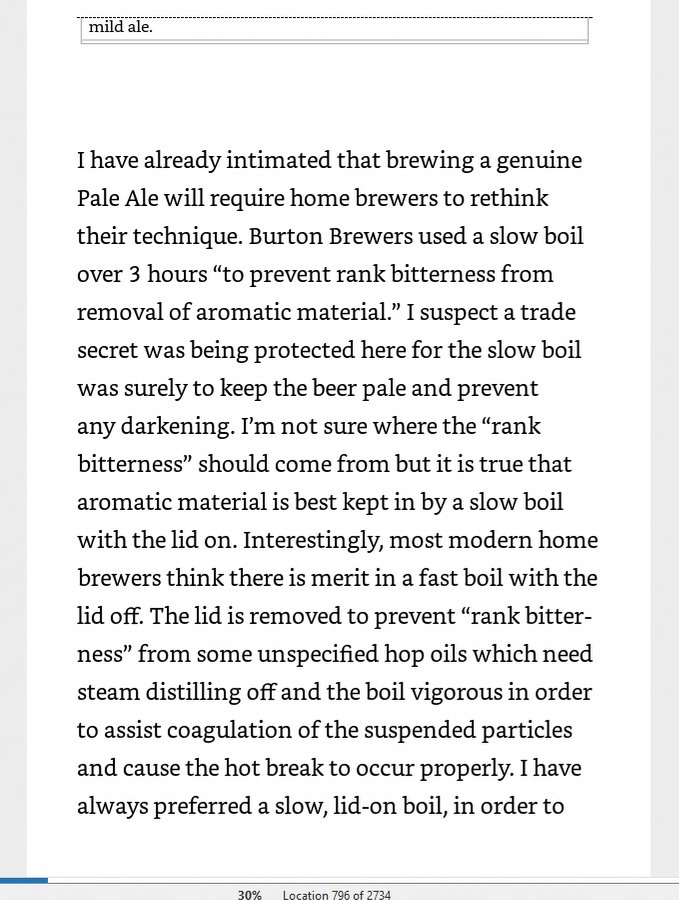
So, let’s end with a German beer gyle. This is a Bavarian Brown Beer, recorded in 1842 and begins halfway down the page in my book on historical brewing. This is a screenshot from the author’s previewer provided by Kindle.

Kindle Software previewer for authors

This shot was taken from the iPad Kindle reader, with an Android camera. Stunning clarity!

And finally, so that you can brew Müller’s Brown Beer, the last page of the method.

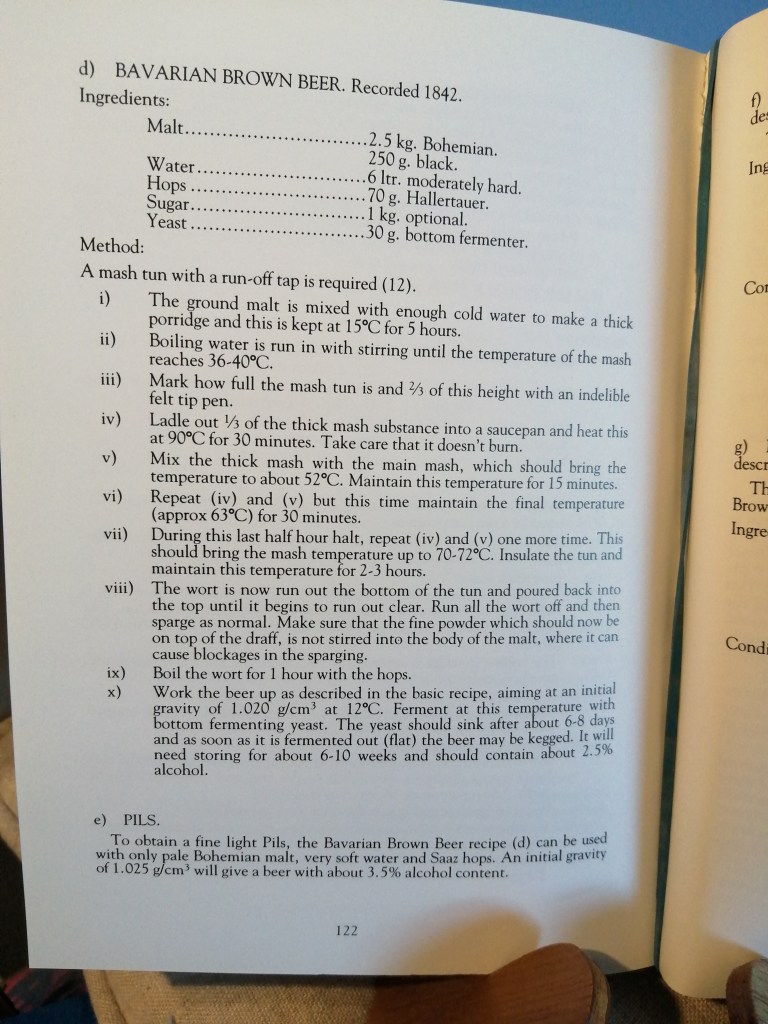
I decided to display this, because the original paper copy of the Historical Companion to House-Brewing, is fetching eye-watering prices on the second-hand market.

Here is the page from the 1990 paper version.

1990 Historical Companion

E-Book versus paper version!

  • the force needed to keep the book open, which will soon break the spine.
  • and if the spine survives the treatment, the paper won’t stand being splashed with hot wort.
  • the e-version costs $6.99, not $200. Does anyone get the e-bay asking price?
  • I have removed the printshop gremlins from the e-version. OGs are back where they should be. (It’s always the printer, never the author).
  • modern software makes tabular presentation possible. It’s easier to find where you are on the page. Tables were a printer’s nightmare in 1990.
  • tablet screens will always be slightly warmer than ambient – no steaming up.

Let me know if you brew Müller’s Brown Beer. The special malts required might not be available to you, but I describe how to make the malt varieties, at home with nothing but a fridge and old baking oven. If you live as far up the northern hemisphere as I do, you can dispense with the fridge.

See you next week with more beer glasses from back when I was the principle speaker at the LA and Baltimore AHAs.

That happy moment when the blog is ready to go!

Beer, Wine – Woodruff and Maibowle


Waiting for Woodruff

Maibowle is a German speciality, once common in the UK, too. With that heritage, it must be (or once have been) present in the US.

 I pick woodruff in April and tie it in bundles, which are hung in a shady space to dry. As they dry, they give off an adorable aroma and I am champing at the bit to hang a sprig or two of the fully-dried bundle in some dry white wine, but also in a wheat beer. The picture shows a Berlin glass built for the purpose.

Pale Ales

Brewers of traditional Pale Ales and IPAs might be aware that historically, highly hopped and 12 month matured Pale Ales were likened to white wines. We are talking of OG above 1090. I have tried it and understand where the writers were coming from, but it is a slightly fanciful description.

Artist John Munday’s drawing of Woodruff. This one is a day too late for beer. Those flowers need to be closed.

Furthermore, I used hopping rates of over 300g (10 oz) for a 45l (10 gal) gyle. Shorter than 12 months maturity and they were pretty undrinkable. After 12 months (when they have reached the white-wine description) there would be little point in expecting the gentleness of Woodruff to make much impact, but we are not looking for huge impact – just a new nuance to enhance our hobby of brewing awesome beers, and the woodruff flavour can be adjusted by varying the length of time the bundle resides in the beer.

OK. Why am I telling you this well into May?

Plan ahead.

Find some woodruff in a shady woodland, or from your plant nursery and plant it in a half to full shade spot. It’s used to dampness although shade is most important – the forest atmosphere is where it gets off. If you plant now, you will have plenty to play with next year.

Summary

Woodruff – Asperula adurata. Waldmeister in German.

Harvest April – dry and use in May. Once the flowers open it is too late to dry, but one can use the flowers to make a delicious tea. Personally, I prefer the beauty of the flowers across my garden. They spread to cover any bare patch of earth, but don’t upset other plants.

Woodruff in flower. Too late for beer but perfect for tea.

Porter, Stout, Brown Beers, Entire Butts


No more soggy pages, when you employ your PC, Mac, iPad or iPhone, tablet or Android, in the brewery – oh, and no pages to flip shut on you either. It won’t mist up as the screen is always slightly warmer than ambient.

Along with its companion on Pale Ale Brewing, this text gives you the low-down on brown beer brewing.

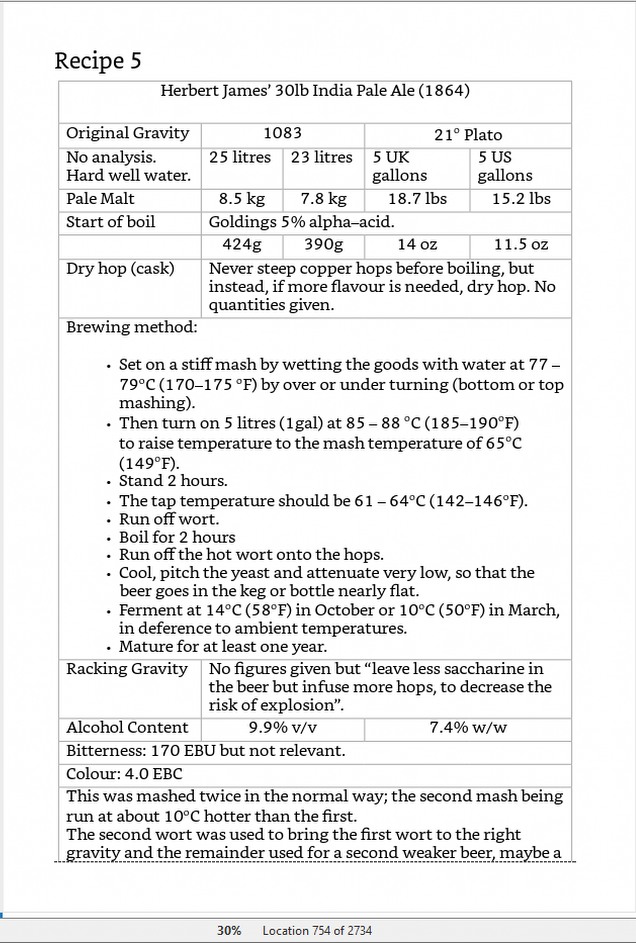
Have a look at this brown beer from 1736, recorded by Farmer Ellis in London and Country Brewing, worked up by me for the modern craft-brewers rig and presented in US, Imperial and metric units.

A screen shot of a classic beer, nearly 300 years old, and spot on in every detail and understanding of the art. Strong, bitter and very dark.

Take a look at my video on how it works.

There are also sections on what the malt should be, hopping ratios and of course great gyles, including a disaster by the nephew of the Great Guru of Brown Beer, Mr. Guinness. Why a disaster? Read about a little bit of Irish Hubris.

25 great gyles for you to brew.

There are hyperlinks throughout, which will navigate you back to the contents page and let you choose another topic or brewing method and jump straight to it. The traditional index at the rear is replaced by a keywords list, which you can use along with the search facility for your particular e-reader.

Speaking of readers, unless you have Kindle or Apple software please use the sample pages to check everything works. Dedicated e-readers can cause problems. Software such as come with Kindle Fire or iPads is fine.

Enjoy your beer reading.

Berlin Life 2


I walk through the midday Alt-Tempelhof heat and cross the four-lane Tempelhofer Damm to get to the discounter supermarket. I should go to the Turkish grocer on my way, because I know that the discounter will make me buy a sack of onions, most of which I won’t be able to use. I will leave town soon.

Image courtesy of Alte Wilde Korkmännchen

I don’t go to the Turkish grocer. It’s hot, I’m lazy and assume I will find a small enough onion quantity and not have to bother with two shops.

‘But the discounter only has pre-packed goods. It’ll be a couple of kilos or nothing,’ my inner voice of reason tells me. Today, my inner voice of reason is less persuasive than my outer voice of idleness.

I buy the beer and mineral water and lo! There in the corner of a vegetable box is a single onion. Just what I need. In the basket it goes.

I put the onion on the checkout band with all the other goods. In front of me is a man with a defeated look. There is only one band open and a young woman scanning the goods. Her face is thunder. She checks his stuff. I later realise she was making sure no alcohol or tobacco products were in the basket. She prices it up and looks at a slip of paper he hands over.

‘Not enough,’ she gruffly announces. ‘What shall I take out?’

He takes a few items out and she stores them under the counter. The rest he packs in a carrier and leaves. I assume he had a food docket. I don’t know how it works. Somehow companies issue coupons worth one Euro per hour to otherwise unemployed people. They can exchange the coupon at certain outlets for essentials.

My stuff jerks erratically along the band like a metaphor for one Euro Jobs. It arrives in front of the woman working the check-out. She is young, has short blonde hair, a charming, slightly plump figure and a determined energetic working-woman face. She knows the realities of working long hours for low pay and it seems, does not have much time for men with coupons. It’s my turn.

‘What’s that?’

Her voice is well aggressive. She holds my onion in the air as though it smells more unpleasant than an onion should. Despite the heat, I’m feeling mischievous.

‘An onion,’ I reply truthfully and somewhat timidly. I soon regret my daft answer. She turns into a power woman.                                        

‘Well you can’t have it for nothing.’                    

‘I want to pay for it!’                                                                                   

‘Can’t! There is no way I can scan an individual onion so if you think you are getting it for nothing, you are wrong!’

Wow! I draw breath and keep calm. She must have had some rubbish experiences at the hands of people trying to spice their lives with an onion.

‘I don’t want it for nothing. I’ll pay for it.’ Now I’m becoming assertive.

‘You’ll have to take a two-kilo sack. I can scan that. And any aggressive behaviour by customers will be dealt with so tone your voice down.’

She is beginning to bristle. I try to explain, knowing I risk being ejected, but she interrupts me and decides to shame me into submission. In a loud voice that goes twice round the supermarket she yells, ‘You can’t have it for nothing. I’ve told you twice. Stop trying to get things…..’ she pauses for effect, ‘without paying for them; for nothing!’

I put the onion back in my basket. I know this is provocative. It works.

‘You can’t take it without paying,’ she screams, ‘and you can’t pay and you’re not getting it for nothing!’

She is becoming a little incoherent in her anger. By now, customers are looking to see what the commotion is behind the greens.

‘No fear,’ I say calmly although I am seething inside. ‘I just want to put it back in the box where I found it.’

‘Give it to me!’ she barks.

I take it out the basket and hand it to her. She throws it on the floor at her feet and starts scanning the rest of my stuff. I suspect she deliberately trod on my onion.

I’m too scared to risk her wrath by holding up the queue while I fetch an onion sack. The Turkish shop is a hot walk away. Thus, I pay for everything but the onion and then walk round the supermarket very slowly, expecting she has forgotten the incident. I return to the checkout with a sack of onions. There are now three checkouts open. Although her queue is longest, I wait in it. It’s my bit of protest after my earlier pathetic performance and it’s as much as I dare under the circumstances. The woman is ready to kill. She should audition for Lady Macbeth!

It’s my turn again. She manages to scan the onion sack and take my money, without making eye contact.

I wonder why I am generous to a woman who tried so hard to humiliate me. A complaint in the right ear would see her shamed. A letter to head office would get the sack. I know the company has CCTV at the checkouts and her body language would substantiate my side of things. I do neither, but walk home wondering about the confrontation and why I feel uncomfortable.            

I have plenty of time to think about her; her lost dignity behind the checkout, enhanced by a scream worthy of an opera heroine. I’m becoming besotted by her. In deference to her power-performance, I make my usual carrot salad with extra onions and look up a recipe for an onion cake.

Two days have gone by since the check-out incident over an onion. I am armed with composure as I head for the discounter supermarket. I queue at the checkout with my mineral water and beer, and a bag of apples. A man is in front of me – possibly my age but he looks much older – and he piles bottles of cheap Schnapps on the band. Where is the food? No wonder staff get tetchy.

I look up to see my persecutor of two days ago. She sees me and recognition flickers across her face. I stay calm. She becomes nervous. Is she embarrassed about her behaviour the last time we met? Does she fear I will complain about her?

It is my turn and my goods come to €18.25. I give her a €20 note. She is so flustered that she loses concentration and gives me back €18.25. €1.75 goes in the till. I walk towards a bench put there for customers to pack their bags and consider my options. It would serve her right if I walk out the shop leaving her till €18.25 light. While packing my bag I glance up at her. She knows something is wrong. I wait for her to ask me to come back, do her a favour, but she doesn’t. Her movements tell me she is furious with herself, but I don’t think she is going to relent and go through the embarrassment of talking to me in a civil tone.

I finish packing my bag and see a gap in her queue. I hand her the receipt and the €18.25.

‘Maybe you want to check that,’ I murmur.

She doesn’t look at the bill or count the money. She has noticed her mistake, but doesn’t want to risk having to apologise. She is prepared to work two hours for nothing rather than admit she needs a kindness from a customer she taunted.

She puts the €18.25 in the till, and gives me €1.75, without looking at me.

‘Thank you,’ I say with politeness and sincerity.

She ignores me and speaks to the next customer.                             

I leave the air-conditioned supermarket. Hot air rises from the car park tarmac, wavy striations distorting the view of the Turkish grocer opposite, across the four-lane carriageway. A pang of conscience hits me. How long would it have taken me to go to the Turkish grocer? It can be a pain crossing the busy road, but I knew she couldn’t scan an onion. I set her up for a fall and then caught her as she was looking at two hours unpaid work, which makes me a hero – the nice guy. If I’m honest, that was shoddy of me.

I hear a voice behind me of the Jehovah’s Witness selling her paper. I try to ignore it. My indifference is a red flag to the Lord’s messenger!

‘Excuse me sir. Can I ask you if you have read the bible?’

‘Yes! At school; of course I did,’ I call over my shoulder.

I turn round and see a handsome forty-something woman, staring me provocatively in the eyes. I thought that a good answer. Her face has a smile that tells me different.

‘That was a long time ago,’ she reminds me.

‘Are you calling me old? Don’t be so personal,’ I joke.

‘No, no!’ she exclaims. ‘I merely wanted to say that you have some catching up to do.’

‘Indeed I do! Nice of you to offer. Your place or mine,’ and I put on a lascivious leer.

Her face shows the self-satisfied smirk that says, ‘I have received today’s lashes for the Lord. Now I can go home.’

That was bad of me, but I enjoyed it and it seems I have helped her on her way. I watch her walk to her car, her light summer dress oscillating with the rhythm of her majestic figure. I consider walking after her. ‘Have you read the bible,’ could mean any number of things in a modern parlance and hers was a face to die for.

She turns as she opens her car. Her face says, ‘Don’t even think about it!’

I am distracted by another woman, who appears to be waving at me. She is standing in the doorway of the customer exit to the supermarket and judging by her blue smock, is an employee. I’m sure she is walking towards me, so I hesitate.

‘I have a message from Trudi,’ she shouts across the space between us.

I look blank.

‘I don’t know a Trudi,’ I say, trying to keep my voice down.

‘Yes you do.’ she chirps. ‘The check-out assistant, who gave you too much change.’                                                                          

‘Oh… right,’ I mumble. I smell trouble. I’m going to be accused of staff abuse or harassment and they are going to prosecute. Instead, I receive my orders.

‘Her shift finishes at four. Meet her here, in the car park.’

She smiles briefly and turns to walk back to the entrance.

I know I have nothing on this afternoon and I would cancel the Queen to meet Trudi off the field of battle. I will be in the car park waiting, because there are riddles in life, to which every man wants the solution. Nevertheless, I feel the need to test the water.

‘What if I am busy at four?’ I call after her.

‘That would be daft,’ she twinkles over her shoulder. ‘I think she wants to say thank you properly.’

At four o’ clock the sun has lost its strength and the car park has the jagged geometrical shadows of the neighbouring buildings, patchworked across its tarmac.

I see Trudi in the distance, leaving by the staff exit. She wears a skirt fractionally too short for her generous thighs and above it is a bosom, hoisted up for maximum effect. She moves with the confidence of a woman who knows she looks great. ‘Dressed to kill,’ crosses my mind.

She walks over, gives me a warm smile as she gets close, but says nothing. Instead she puts her arm in mine. We walk through the shadows, towards the car park exit, towards the Turkish grocer across the road, who could have ruined everything. I remember Watchtower woman, whose divine intervention, delayed my exit. She too played her part in getting me to heaven.

‘Where are we going?’ Trudi murmurs.

‘You decide,’ I tell her, ‘but I have an onion cake in the oven warming, if that helps you make up your mind.’

I feel her giggle. She takes my arm more firmly and presses her hip against mine. Maybe I’ll stay in town.

I have 1.5kg of onions to get through.

The Last Stop – My Alt-Tempelhof novel. German language edition now available.
Endstation – Eine Geschichte aus Berlin


No more soggy pages – Pale Ales


Brewing Pale Ales according to historical principles, is a breeze for the craft-brewer. It’s even easier now. These remarkable gyles from the time of the greatest beers ever brewed, are now available, reduced to 5 gallon amounts with all parameters in metric, US and Imperial dimensions.

The sample pages below, are screen shots from Kindle for PC, of my book, Brewing Pale Ale and India Pale Ale.

Incidentally, I analyse each technique and don’t recommend running hot wort onto hops as the hopping method, but that’s history. We have to make up our own minds what is good practice and what was downright daft.

The book works just as well on your iPad, Windows tablet, Android or iPhone. Take a look at this video.

As you can see, the quality on an ancient iPad is stunning and the Android performs creditably, too. No more soggy pages in the brewery.

Don’t take a chance. Grab the free pages from Amazon and enjoy some sensational keeping beers. Brewing Pale Ales.

Berlin life. Part 1 -Tubes


Open doors.

A biology Noble Prize winner, once said, ‘The world is made up of tubes.’ Consider the human body as an example! Of course, tubes need doors, otherwise our longest tube, the alimentary canal, would be a disaster. We have a door each end, a few in the middle and a mobile door, driven by peristalsis, which is a kind of moving door. Perhaps the doors are more important than the tubes.

Since hearing about the tube-theory of the Nobel scientist, I am obsessed with his observation. I count tubes wherever I stand.

My apartment access has two tubes and four doors before one gets inside. On the way you negotiate five staircase bits going up and two going down. One didn’t consider old or disabled people in 1906.

My niece came to call. She is so scatty that I struggle to stay on the same page as her. We spoke briefly on the phone.

‘That would be great if you can drop by,’ I truthfully tell her. ‘Can I buy you dinner?’

‘Best not,’ she replies. ‘I’m on late shift, won’t get to yours until 9.00. Early shift tomorrow. I’ll just come and say hi and go again.’

I smell a catastrophe. My niece is never that uncomplicated. She always carries her bike into the secure area, which involves four doors, which are never open and six stairways – and that for a quick call. Ooof.

She arrives at 8.00pm punctually – she has never managed that before. I give her a hug – an act of which we both disapprove. She ignores it and she counters with, ‘do you have an allen key set?’

I look at her. I’m mystified and fail to hide my incomprehension.

‘Er…. yes.’

‘Good! There some people out the front who asked me if I had an allen key for their bike. I said I hadn’t, but I’d ask my uncle if he had.’

‘I should take them out some tools to fix their bike before making you welcome?’

‘Please do. Take what they need now.’

I go to my man-drawer and amazingly put my hand on my allen key set and stroll off for the front of the house, leaving my niece talking on the phone to her bloke. I glean, as I pass her, this will not be a flying visit after all.

 I grab a tin of WD 40 as I leave the flat.

There are three young people at the front of the house. One of them greets me like a long-lost pal. I don’t recognise her as I only have eyes for the other woman, who is of far eastern origin, is wearing the cheekiest bright red lipstick ever invented and spectacles that look so perfectly formed in her face that I consider asking her for the name of her optician. She looks as though she has been born with them. Maybe evolution put them there. Furthermore – the face! To die for! I gasp! In one way her expression is a too severe for one so young, but it is also kind and full of determination.

I manage to glance in the direction of the greeting. I recognise the hair on my neighbour. The face is a mystery. I bet the little tinker has changed her make up again because she knows I can’t keep up. A slight change, and a door in my brain shuts. I hope my hasty reply was within the bounds of the socially acceptable, but I think she is deliberately fooling around. Why do women play these tricks?

I speak to the man in the group, who seems to be in charge of the bike problem.

‘I hope the right size is among them,’ I say as I hand the bundle of keys over. He is the young man every mother wants her daughter to bring home. He already has ‘it’ – a great smile and impeccable manners without a hint of obsequiousness. I am put at ease.

‘The seat is far too high for my friend to ride this bike,’ he explains and looks at an ancient and very rusty woman’s bike, leaning against the Eastern Beauty. How did she ride the bike here, if the saddle is so much too high? Who cares? I’m glad she managed. I want to put some penetrating oil on the rusty clamp thread. I can’t because she is standing in the way. I think she will move. She doesn’t. I ask her to move. She doesn’t. I manage to circumnavigate her cute backside and get some oil on the thread. Someone tell me what is going on!

The young man releases the clamp and she energetically adjusts the saddle tube to her preferred height. He begins to re-tighten the clamp and I watch what he is doing. I feel a huge force dig at my shoulder, powerful enough to leave a bruise. I look round and see Eastern Beauty pointing at my oilcan and then at a very dry set of gear sprockets. She says nothing, but points from one to the other. I get the message and oil the sprockets. I know that many Asians speak remarkable English so I ask her in English, ‘is there anything else that needs oiling?’

She isn’t looking at me as I say it and she ignores me. It’s as if I haven’t spoken. She turns her back on me and gives the bike an analytical once over. She is so independent and decisive in her actions, but her back remains my only view.

The young man intervenes.

‘She is profoundly deaf and can’t speak,’ he explains.

I try to make consoling noises, but she doesn’t want my sympathy. I know that if she is looking at me she may be able to lip read and I don’t want to patronise, so I grunt something indistinct. Not even33 I have understood myself. Why didn’t I speak directly at her face? Did she think me rude, too? I remember that lip-reading doesn’t cross language barriers, but one never knows with remarkable people. Maybe she can lip-read in Chinese and half a dozen European languages. Maybe she isn’t a foreigner at all! I am a foreigner and I’m sure she can’t read my lips.

He gives me the tools and thanks me. I look round for my neighbour. I want to take the time to chat and make amends for my earlier rudeness even if it is she, who is to blame.

She has disappeared. She probably thought, ‘if God wants a fool, he dangles a pretty woman in front of an old man,’ and left, before it became embarrassing. She was right.

I turn and watch the young man and Eastern Beauty ride off together and wonder how many tubes are involved in that scene. Two bikes, two bodies – immeasurable.

How does a profoundly deaf woman cycle in city traffic? I hope for his sake she can at least make appreciative noises when they make love. I’m back to tubes again.

An unruly tear forms in my eye, delivered no doubt, by a tiny tube.

I should have learned the old maxim about disabled people by now – after all I spent sixteen years working with deaf and blind pupils.

‘See the person, not the disability!’ we always said. My favourite poster on our staffroom wall showed a young loving couple, but he was in a wheel chair. Underneath was written in large font, ‘Sue and Tom have a problem with sex!’ Then in a much smaller font, ‘Sue is a screamer! See the person!’

See the person! Not the disability.

 I can’t.

I wonder how Eastern Beauty communicates emotions in bed. OK. Nasty voyeurism on my part, and my thoughts mean I’m not seeing the person. I’m back to seeing the disability, but I’m going to indulge myself.

The problem is, deaf people never learn subtlety. Theirs is a binary world of on and off switches, because there is no aural input and thus, no nuance. If you ask a deaf person, ‘How was it for you?’ they will answer with unintended brutal honesty, because sign language or lip-reading don’t do shades of meaning. They don’t intend to be hurtful, but it is unavoidable in a world of on or off – nothing in between. So, if they say, ‘You were rubbish,’ it can mean anything from 0 to 10. ‘That was OK,’ can mean anything from 0 to 10.

You don’t believe me. Try it out.

Say,  ‘That was OK.’ giving it 0/10

Now say, ‘That was OK.’ but giving it 10/10

Sign language however, is a Dalek.  Now say ‘That was OK’, in a Dalek voice. You understand the problem.

Another problem – signing and lip-reading don’t work in the dark and signing requires the girl to be on top. Now you understand my sympathy for Eastern Beauty’s boyfriend. Communication can easily become more important than the loving act.

Fortunately, there remains the ‘open door,’ method of measuring meaning – wait until next time and observe how quickly the door opens.

Lipstick

Much later I learned that Eastern Beauty was an established New York artist, making a name for herself in Europe. See the person!