The Assembled

The usual suspects from the English Department
Assemble, Levitically, as romantic as Monday morning.
Late, crusty defensive years and ears hear
Sunny but arid words.
Brynmor evenings thwart noon’s thirst for torpor,
But siestas can be a moveable feasts.
Midday slumbers threaten the evening air.

The Readings

Gangs of knowing smiles
Show pinched appreciation
And uncertain comprehension
But precise applause -
Just in case.

The Token Foreigner

Kim stood with her notes
And translator.
Her voice sang remote sounds
About a blade which came and went,
Its long profile accumulating perspectives.
And then she praised a disabled artist
Pushing air onto paper,
Thus seeking a colour to define
The hands he had been painting?
For some reason it didn’t matter
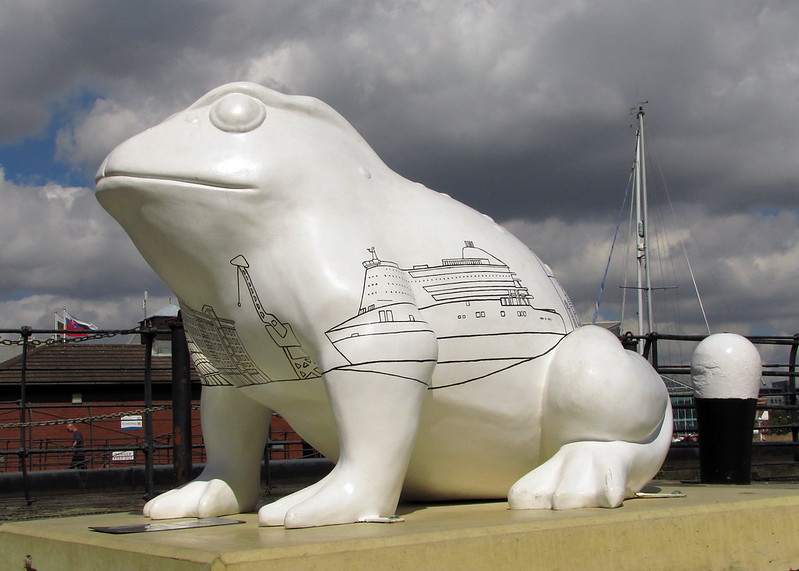
If one accidentally cut off the toad’s leg.

Closing Speeches

2017, year of culture, had been honoured
And then put to bed.
What a relief!
And a special mention for Matthew,
The Hull poet we had understood.
He was urged not to apologise.
Performance poetry has its place – apparently.
I first heard the term ‘Women’s lib,’ sometime in the late 60s or early 70s. At the time we dreamt of men becoming more like women and to a certain extent, some men have softened their approach. It was never going to be enough to make a difference and so the outcome is understandable, but I don’t think anyone expected women to become more like men. E.g. Play rugby, football or cricket, box or wrestle.
OK! I can see it is right to enjoy team sports but I would have preferred men to abstain from boxing, rather than women participate, but that is just an opinion and very few women wreck their health by boxing.
So, I’m gong to make two contributions to World Women’s Day. Here is the first. Is misogyny OK if women indulge themselves?
Damp Patches, Highsmith and Misogyny.
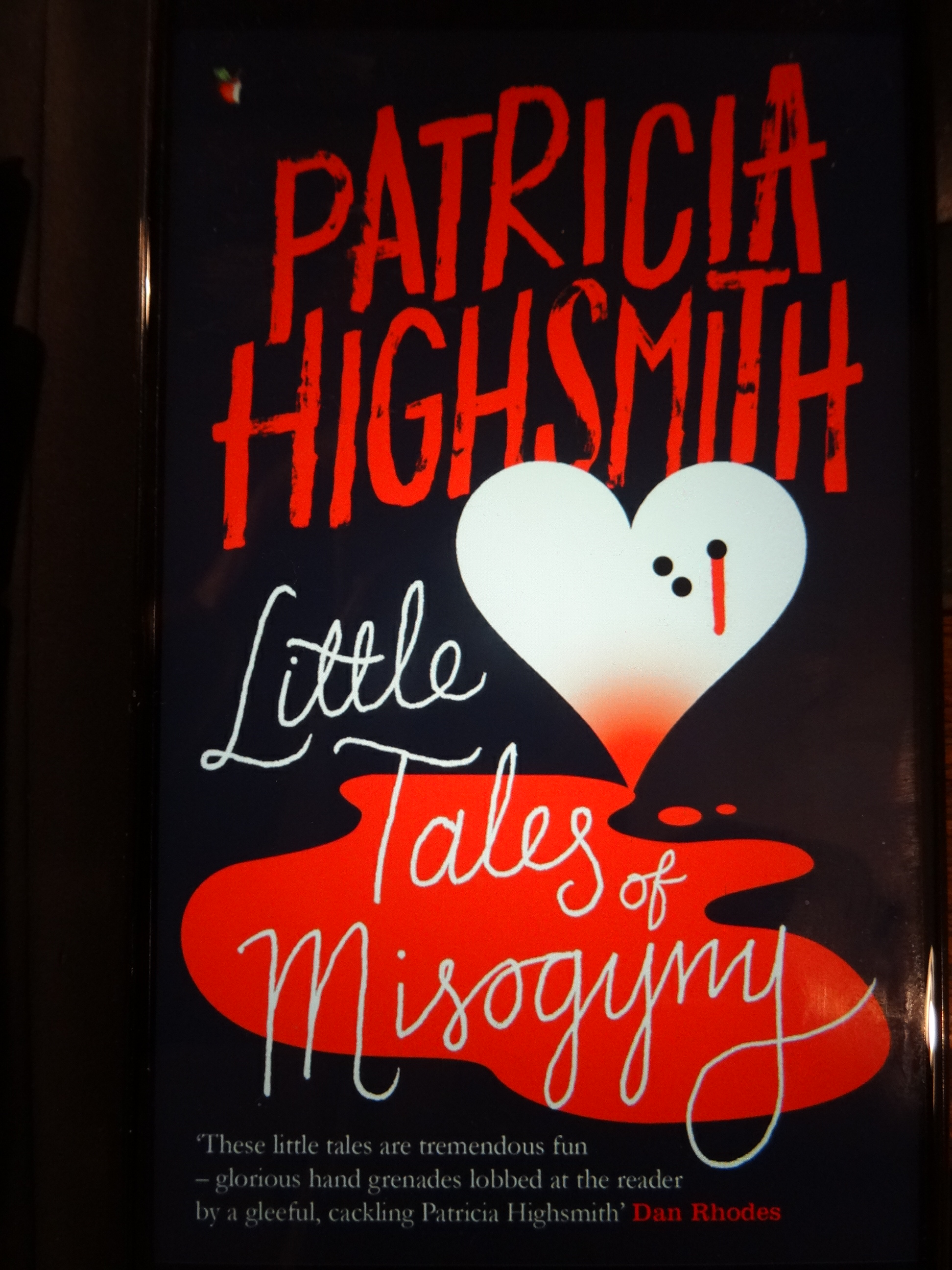
Two female authors revelled in hating their own sex. I’ve just finished Little Tales of Misogyny, by Patricia Highsmith, and Girl Friday, by Charlotte Roche. The original German title is Ein Mädchen für Alles. There is the first fascinating conundrum. Charlotte Roche has a British passport, because her parents were both British citizens. Charlotte lived in Germany from her infancy. Hence her first language is German, her three novels are written in German, but the German press and reviewers always refer to her as an English authoress. Is the reason for this odd definition that she is the author to hate and one doesn’t want to own up to her?
Her first two novels received disgusting reviews from scandalised literati, became best sellers and have been made into films. They have also been translated. Feuchtgebiete appeared in English as Wetlands, which is a cop-out. OK. It is a correct translation, but Damp Patches would be better. Anyone and everyone who has read the book understands that Wetlands, refer to a woman’s damp areas. Her second novel appeared in German as Schoβgebete – translated as Wrecked. That’s kinda OK as a part of the novel is autobiographical and refers to the death of her brothers in a car accident, on their way to Charlotte’s wedding, but it isn’t a translation. The other sentiment in the story is about coming to terms with sexual relationships post accident. Schoβgebete – Prayers from the lap? Does it for me! It’s a correct translation and conveys the message.
Why are her novels so hated and so widely read? She tells it how it is to be woman, who has had a screwed up childhood and is now trying to deal with a decent portion of self-hate. She leaves nothing out in her study of the female anatomy and psyche. I now know what it means, as a woman, to have wet areas.
The critiques for her third novel, were so awful, I refused to part up with €16 in a bookshop. Within six months of publication, I found a second hand copy on ebay.de for €3.50 including postage to the UK. It had never been read. The critics have won. It won’t be translated into English and won’t become a film. It is powerfully misogynistic, and blokes don’t do too well either. I’m glad I read it, because I can’t imagine she has another novel in her after that final chapter! I would so like to meet this woman.
Alongside Charlotte Roche, I read Patricia Highsmith’s Little Misogynistic Tales. They are gems of short fiction, but take every stereotype of female nastiness, amplify it and serve it up cold and indigestible. Edna is about a mother/mother-in-law, living with her son and his wife. This so reminded me of my own fraught relationship with my mother in the months before she died. Men get fat and lazy in old age. That can be annoying, but is better than wanting to run people’s lives under the pretence of being useful. While minding her own business, Edna takes over the house and the lives of her son and daughter-in-law.
In these stories, Highsmith takes every facet of the female psyche and gives it back with a hateful twist. She chose the title and the stories are misogynistic. Do such women, as she describes, exist? How would I know? All I can say is, I’ve never met them – or have I?
In order to understand where Highsmith and Roche were coming from, I looked up their biographies. Like Roche, Highsmith was brought up by dysfunctional parents, who failed to put the needs of their child, before their own. Most people involved in pedagogy agree, it doesn’t matter how you bring up your children, so long as you have thought about your system and it has the interests of the child as a priority. I suppose the corollary is – anti-authoritarian or the odd thrashing – it doesn’t matter, so long as the parents care enough to make the effort. One says that the difference between a successful school career and dropping out with no qualifications, is a five-minute chat with a parent every day, about what happened at school. Take those headphones off mums and dads and turn off the phone when walking your little ones to and from school. Otherwise your children might become novelists!
Highsmith never stopped hating. She became a brilliant writer, but couldn’t conquer her demons. Roche still has time to let go, unless her writing is therapy. She describes a bowel movement as a metaphor for getting rid of her anger. Her metaphors are the reason the critics hate her. Chapter 17 of Ein Mädchen für Alles by Roche (Girl Friday), is a red flag to nice middle-class critics with a degree in creative writing, who never got beyond page 3 of their own novel, but now have a cushy number trashing the novels of others. They would say, ‘Nice people don’t write like that!’
Highsmith is cleverer, or more skilful. Her stories are gems. She has the drop on the critics. She has them running scared.
This blog was first published for the last International Women’s Day in 2016 by New London Writers.
Ask ten brewers how to brew beer and geteleven opinions.
Ask ten brewers – get eleven opinions. As a brewer and a writer and a one-time writer on brewing, I have always been fascinated by the truth of this brewers’ paradigm. More interesting is applying the idea to other creative areas, such as writing and publishing.
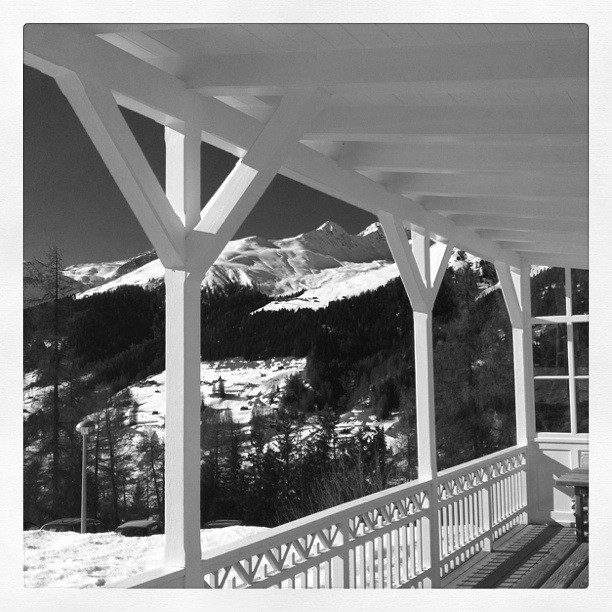
I think most writers do as I do. We get an idea onto paper anywhichway and worry about the content, style, grammar, syntax and spelling, during the editing stage. Ask ten writers then, you should get one answer. Not so! Apparently there is another way. Thomas Mann, so the story goes, sat every day with a fresh sheet of writing paper, and hand wrote a page, and didn’t cease toiling until he thought his labours had produced the perfect 200 words. His wife then typed and looked after his six children. She ended in a sanatorium in Davos, suffering from exhaustion. He visited her and had the idea for his greatest work, Der Zauberberg (The Magic Mountain). It is among the greatest works of world literature (according to a Channel 4 documentary). Proust, Kafka, Conrad and Dostoevsky were the other runners and riders.
Unreadable Genius
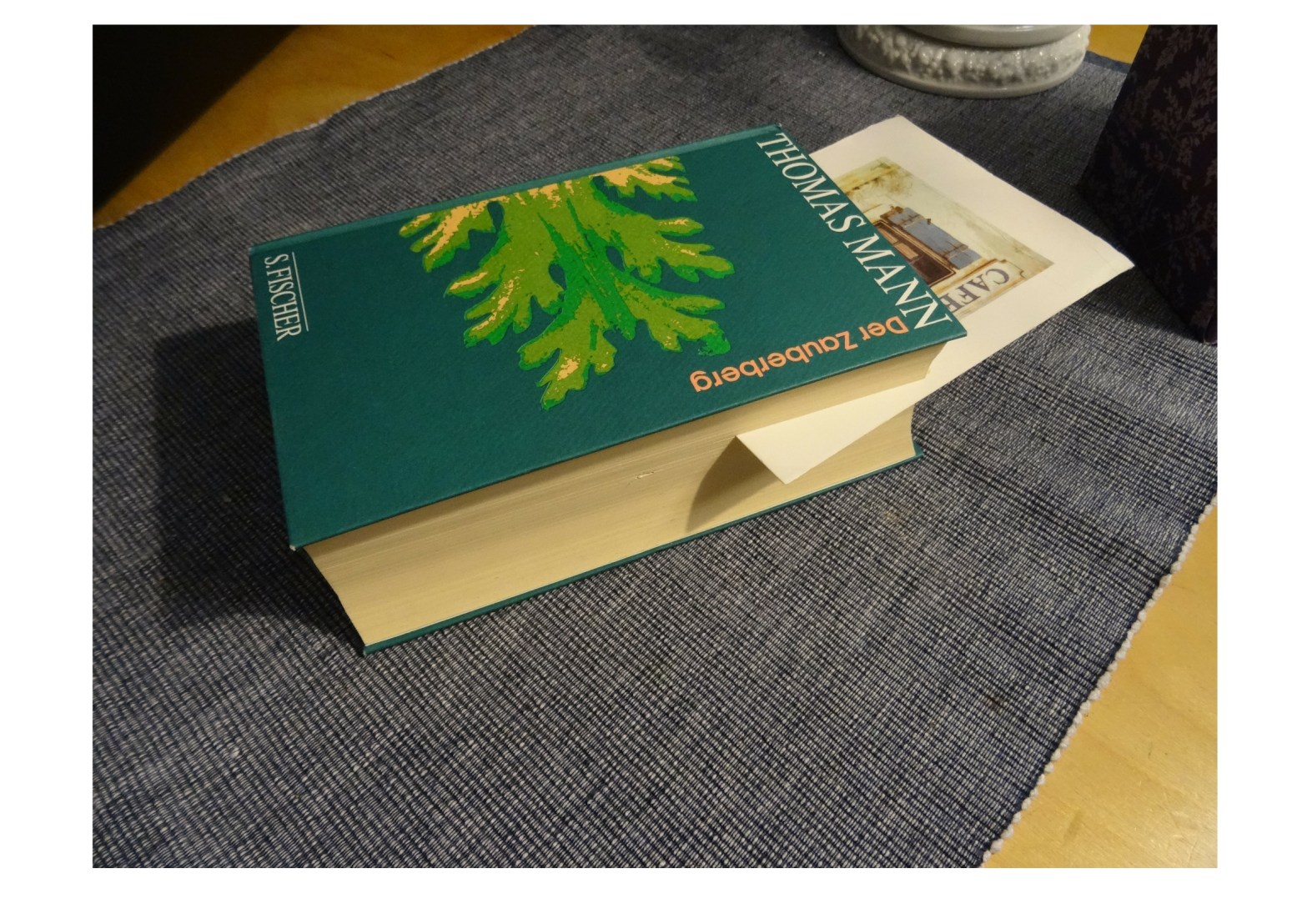
My copy of the Magic Mountain is 1002 pages long and each page is around two sides of hand written text. That means it took him 5 years 5 months to write, which isn’t that bad. Many of us have been hacking around on novels, much shorter in words and for longer in time.
Mann started the novel in 1912, finished in 1924, but added nothing to it during WW1. After the war he revisited, rethought and rewrote the whole project. In that time (6 years) it grew from a novella, much in the style of Death in Venice, to the monster it now is. His wife typed and provided the cash for his lifestyle.
My copy has been out of reach on the top shelf since 2000. I can be sure, because I used a post card as a bookmark and can still read the date on it. The post card was last inserted on page 380 – where I gave up. Mann said that any prospective reader should be prepared to read it twice so I have 1624 pages still to do. I read on a little, from where I stopped. My translation – Then death was just the logical negation of life; between life and barren nature was a gaping abyss, which research tried unsuccessfully to bridge. I’m amazed I got that far before throwing in the towel. I’m equally amazed men and women faced the task of translating his beautiful German it into every major language.
A Magic Mountain, perhaps.
The truth is, I started reading it because of the Channel 4 documentary and everything else of Mann’s I’ve read is a breeze and pure genius. The Buddenbrooks – read twice and the film once and the same for Death in Venice – pure delight. What went wrong with Der Zauberberg for me? Simple. It’s too clever for mere mortals. In one volume he redefined sickness and health, time and place, and everything and anything else we can think of. A sanatorium up a mountain is the setting, and is the perfect place to do this. It is full of sick, educated people, hanging on, loads of money, unlikely to recover, trying to make sense of their mortality, but each with their own little bit of worldly wisdom and philosophy, which they have time to impart to their companions.
In the story, Castorp goes to the mountain to spend a few weeks. The doctors find an ill-defined murmur and convince him to stay – years. He loses touch with time, space and reality, except once, when caught in a snowstorm. The book is about the ideas with which Castorp – the main protagonist – is bombarded. Maybe he was a metaphor for the millions bombarded on the battlefields of Flanders, a bombardment which changed our world view forever and is discussed by the patients on the Magic Mountain. Germans discuss things to death.
Back to brewing – Castorp’s first concern when arriving at the sanatorium was whether Porter was available on the Zauberberg.
Woolf to the Rescue
Is Woolf’s Mrs. Dalloway an English equivalent? The British don’t bombard with ideas. They slap make-up on uncomfortable truths and hope they stay out of sight. No such luck with Woolf! Reading Mrs. Dalloway is like hiking with a pesky stone in the shoe. You keep shoving it out the way, into some remote shoe corner, certain it will return to remind us of its presence in the most inconvenient way.
Was Woolf driven by her illness?
How did Woolf write? Not like Mann! I believe she used her illness to propel her writing, because writing can be so cathartic when the blues set in. When she knew a final bout of depression could not be avoided, she took her own life, to protect her family. I imagine she poured her emotions into her writing, whenever she was strong enough and in so doing, kept her demons at bay.
She has one similarity with Mann. Her husband Leonard, devoted himself to her literary success, as convinced of her genius as Katia Mann was of Thomas’s.
Too many words.
In our digital age we are producing words faster than ever, and no one uses pen and paper nor sits every morning until they have a perfect page. And the influence of conflict? Which post war? I am asking which proxy war in the 21st century shall we put as our datum point? Who will produce the piece of literature to define these decades, and if someone does, who will publish it?
Would anyone try to read it? We shall never know.
If ten brewers are worth eleven opinions then a hundred publishers will provide just one.
‘No!’
Risk has become a four letter word.
And I doubt Mrs. Dalloway drank beer. She was definitely a Champagne or Mosel wine person.
Thomas Mann lived for a while in Nidden, then East Prussia, now Lithuania. That is further east than Pomerania, once Prussia, now Poland and the birthplace of the super-heroine of my new novel, The Last Stop – A novel about the Berlin Sex Industry and one woman’s fight back. Available on Amazon.
The Ring Cycle, – full name ‘the Ring of the Nibelungen,’ finished its Gateshead run and made that night in 2016, one to remember. Sixteen hours of drama spread over four nights, two long intervals each night – about a day of your life. I have no idea what decent seats cost, but as the whole shebang demands a massive orchestra, a team of top singers in their prime, vast stage settings and a conductor who doesn’t get out of bed for less than a year’s average income, they can’t have been cheap. Yet they were sold out for all locations around the UK, months in advance. Had I got myself turned around to get tickets, including hotel and restaurants, I would have allowed at least £1000 for the week.
And I just did it again. Radio 3 from the Royal Opera House in London, four nights and my poor neighbours must be glad it is finished.
ROH did the full stage version, but I had to imagine that bit, as a radio listener. And that is the beauty of radio – I had my interpretation, not that of the opera company. The usual portrayal uses clichéd Arthurian rubbish, so I took the text on my iPad and scrolled through the nights of gods, goddesses, dwarves and giants, maidens and crooks, love and deception with not a hint of stage kitsch in my mind’s eye.
ROH grand designs
Opera North cut corners. Why not? They used modern projection technology to save themselves the expense of the sets Wagner demanded at Bayreuth – his purpose-built theatre in Bavaria. Wagner imagined the orchestra hidden in a pit. Opera North had it on stage, in full view. This improves the acoustics and the entertainment value, as there is never a dull moment for the players. And Bayreuth needs knocking down. I watched a live-stream of Tristan and Isolde from Bayreuth in 2015. Temperatures inside the theatre were in excess of 40oC. I was in an air-conditioned cinema on the Potsdamer Platz in Berlin, and at €20 my seat was a twentieth of a Bayreuth wooden bench. The announcer in Bayreuth assured us, performers have died on stage in the heat, and some listeners have failed to see the end, despite the ticket cost. He went off to wring himself out.
Cost and comfort apart, there are other reasons not to buy a seat for Wagner. Opera, generally, is the barmiest art form ever! You need subtitles. No one can understand the singer. The language, usually German or Italian, is too distorted by the musical demands. Does one need to understand? Opera plots are sometimes non-existent. Where they do exist, they can be incomprehensible and if they make sense, predictable. Nevertheless, when an opera production works, it is one of the greatest of experiences, but that won’t be down to the plot! German opera-goers have a stanza to summarise.
First act – they don’t want to. Second act – now they do want to, but can’t. Final act – now they do want to and can, so do, after all.
Not so Wagner. He uses multi-layered plots in which you discover something new each listening. After decades, I begin to get them. Books have been written on books about Wagner, some using Jungian psychology to analyse the plot – especially the Ring.
Are Wagner’s plots stupid? I can’t say, but they are original, contain philosophy, wisdom, the development of capitalist production, love, hate, incest, dwarfs, giants, mermaids and a monster, but above all – amazing, and at times, very loud music. He invented the cadence which brought tears to our eyes, the first time we saw ET. His most famous tune is the Ride of the Valkyries, usually played as an orchestral version or ring tone. In the theatre, the Ride, is fortified with Brünnhilde and her sisters, who boast the ultimate octet of girls’ names. (Helmwige, Gerhilde, Ortlinde, Waltraute, Siegrune, Grimgerde, Schwertleite). The sisters need massive voices, able to shatter glass at fifty metres and all shriek in fear as Wotan approaches. They have to drown out a hundred-piece band with horns, Wagner tubas and trombones a plenty. Magnificent mayhem. After the ear-bashing Wotan received from her indoors, in the previous act, for allowing twins to procreate, in order to get the hero he needs, to undo all his daft actions, this is the ultimate stage domestic. Fantastic fur-flying fun – unless you are Brünnhilde, who unfairly gets the blame for everything. The final act of the Valkyries is the most delicate farewell between Wotan and Brünnhilde – father and favourite daughter, who must be separated, to appease moral decency in a hypocritical world. It is rated as Wagner’s most successful attempt at the ‘total artwork’. He wrote the librettos, in amazing poetry, the music, created the drama and designed the visual experience. His notes on the sets are precise and unacceptable! The prelude demands Rhein maidens swimming – and singing – at the bottom of the River. The final moment of Twilight of the Gods, 16 hours later, has Walhalla, the castle built for fallen heroes, going up in flames. There are minor demands between the two – a mighty dragon slayed by Siegfried, and a subterranean workshop, into which Wotan and Loge descend, while eighteen anvils are beaten on stage in time with the music. Somewhere in the middle, Wotan summons Loge to surround Brünnhilde with fire, so that only a hero can claim her. There is a hunt scene during which Siegfried is assassinated, the famous Ride of the Valkyries, where Brünnhilde and her sisters arrive on horseback at a craggy mountain top, as well as a fight scene between two giants, one killing the other. I assume Wagner told his set designers, ‘Don’t bore me with problems – I only want solutions.’ Who paid for it all, is another story.
The New York Met created a computer-controlled mountain out of slabs that could slide into different craggy shapes. The burbling brook was a step too far. They used projection. Who can blame them?
What about Hitler and Wagner? He claimed to love Wagner, but didn’t get it. Even a man as obtuse as Hitler realised the parallels between Walhalla (the castle for fallen heroes) going up in flames, at the end of the Twilight of the Gods, and the demise of the Third Reich. The Ring lost its charm for the fascists as the truth in Wagner’s dramatic thread, dawned on them – the bad boys always get their comeuppance, but many will suffer on the way.
Wotan, the boss-god, was the ultimate wide-boy, who loses some godly power every time he does a dodgy deal. His misdeeds are notched into his staff as a reminder of how much he owes, and how much power he had gambled away. But Wotan still has Siegfried, born out of incest, and raised as the ultimate hero, but innocent of emotion and fear. A beautiful contradiction, enjoyed by Wagner – hero and fool in one personality. Siegfried is to put right Wotan’s recklessness and save the Gods. He has the love of a good woman, his mentor and aunt, Brünnhilde, but he betrays her through naivety. Brünnhilde takes revenge for her treatment, burns the house down and destroys the gods. The Ring, all four nights, can be summarised with ‘cheats never prosper and don’t cheat on a good woman’!
Why then, was Hitler besotted? Wagner did himself no favours by writing anti-Semitic pamphlets. His only hope was that his outpourings were such garbage, no one bothered with them. But for the National Socialists, they would be long forgotten for the nonsense they are. Why did Wagner do it? No one knows. It is unlikely he was anti-Semitic as so many of his friends, sponsors, mentors, and promoters were Jewish – Mendelssohn the best known. We do know he was furious at his lack of success in Paris – the art-centre of Europe. His competitor, Meyerbeer, was however, the darling of the Paris opera and a Jew. Was it envy, spite, intrigue against the opposition? Who knows? No one says a genius has to be a nice person. Meyerbeer’s operas have disappeared in the mists of time. Wagner goes from strength to strength, but we could have done without his racial rants.
Wagner’s other problem with Hitler was not of his making. Wagner’s Germany was held back in every walk of life, by its fragmentation. Operas such as Lohengrin and Die Meistersinger, contain references to the need for a strong, unified German state and identity. Such messages are carried by heroic tunes and singing. Enter over a half century later, the National Socialists. They misappropriated Wagner’s sentiment in a way he couldn’t have foreseen. The NS interpretation would have horrified a man who risked his life on the Dresden barricades during the 1848 uprising.
The final reason to avoid Wagner is the length. My first Parsifal involved me arriving in the Liverpool Empire at three in the afternoon, and leaving at eleven. That included a pre-performance talk and two long intervals with space provided for a picnic. I thought I had bitten off more than I could chew, especially as act one is over two hours. Time flew by! Wagner has many acts of that length. I’ve never been bored, (but I’ve never sat on a wooden bench in Bayreuth at 40 degrees. Nor will I!)
On that Liverpool visit, I kept quiet about having travelled the length of the M62 for the occasion, only to find the woman to my left had flown in from New York, where she had been listening to – Wagner, at the Met. That was when I learnt how obsessive one becomes about his music. The Liebestod, frequently gets outings on Radio 3 and I find it impossible to ignore. Turn it off or sit down and listen – there is nothing in between.
Leeds based Opera North started the cycle in their hometown, in their grand, refurbished opera house. They finished on Tyneside. The critics haven’t ceased praising them for managing this momentous artistic achievement. Normally, such a regional company, devoid of the pickings of London theatres, would steer clear. They worked up the Ring over four years, producing an opera a year. That night in Gateshead, was the culmination of all four, performed on consecutive nights, as intended.
The art world is ecstatic about Opera North’s production. Tyneside is not known for losing its cool, but the auditorium went mad – four times – on four nights, clapping, cheering, whistling, and stamping, until Radio 3 faded the noise. The ROH received the same response. Then the announcer had to do the impossible – read the cast list with a steady voice. At least he wasn’t in tears, which was audible at the end of a Tristan und Isolde relay, I once heard, from ENO.
Nevertheless, this was an emotional moment on an unforgettable night – the night when it finally came to an end with Brünnhilde’s immolation. With that act, she avenges treachery and brings the down the gods – forever removing their power
The news is full articles about increased suicide rates. (France24 – lead article). I decided to act.
Around 30 years ago, I wrote a novella on the impact of poverty and isolation on mental health. After a thorough revision I asked beta reader friend for an opinion. She has come back from addiction, prostitution and suicidal behaviour and told me I had captured the moment. Another reader said it reduced her to tears.
OK. It’s not an easy read, so why am I pushing it?
All profits from sales will go to my local MIND shop in Hessle, once it reopens.
I will also offer them paper copies at cost price, to sell for whatever they think reasonable. This will be at my risk – no sales no cost to MIND.
Please support this drive to generate cash for MIND – Hessle
If you are affected by poverty, you can connect to me via the contact form on this site and choose the e-read A Short History of Anxiety from my Angst and the Beatles Generation series of publications. If you are not a reader, still get in touch.
Let’s make this one buzz and put some cash where it will count.
Back to my beta reader! She put a post out there which scared the bejesus out of me. Lockdown was taking its toll and she sounded as though she was about to throw in all her hard work, putting her life together. I emailed and offered a chat session, but she told me that the act of putting it in writing had been cathartic. Let’s remember that! Talk, write, communicate.
It’s important to talk to experts if things are getting out of control. Don’t leave it too late.
This is quite a controversial title, but I don’t expect to get sued.
I’ve just seen an advert on Instagram for an IPA (India pale ale), which showed a picture of a brown beer.
I’ve seen a stout with an OG of 1040.
I have bought a porter, so sweet one couldn’t taste the hops.
So that’s my defence.
These are just the brewery sins that come to mind, sitting over a PC, but as we all recognise marketing hype, we probably were not deceived, (unless we didn’t know better).
There is nothing wrong with brewing beers to fill a consumer demand, but I don’t approve of abusing historical fact, to gain a dodgy marketing edge.
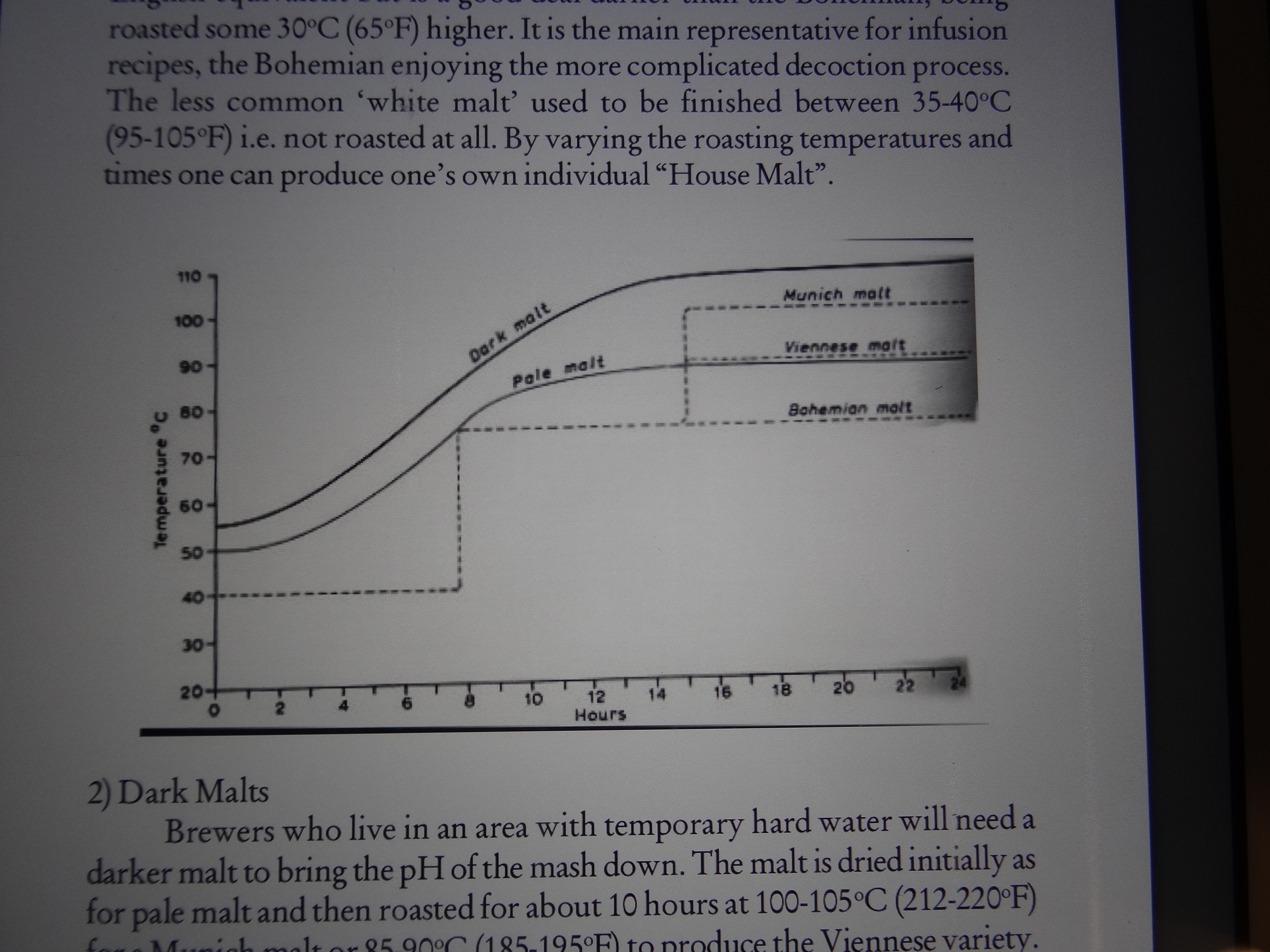
Pale Ale should use white malt, finished at a low temperature. The only commercial malt, which is pale enough, is lager malt and that is still too dark.
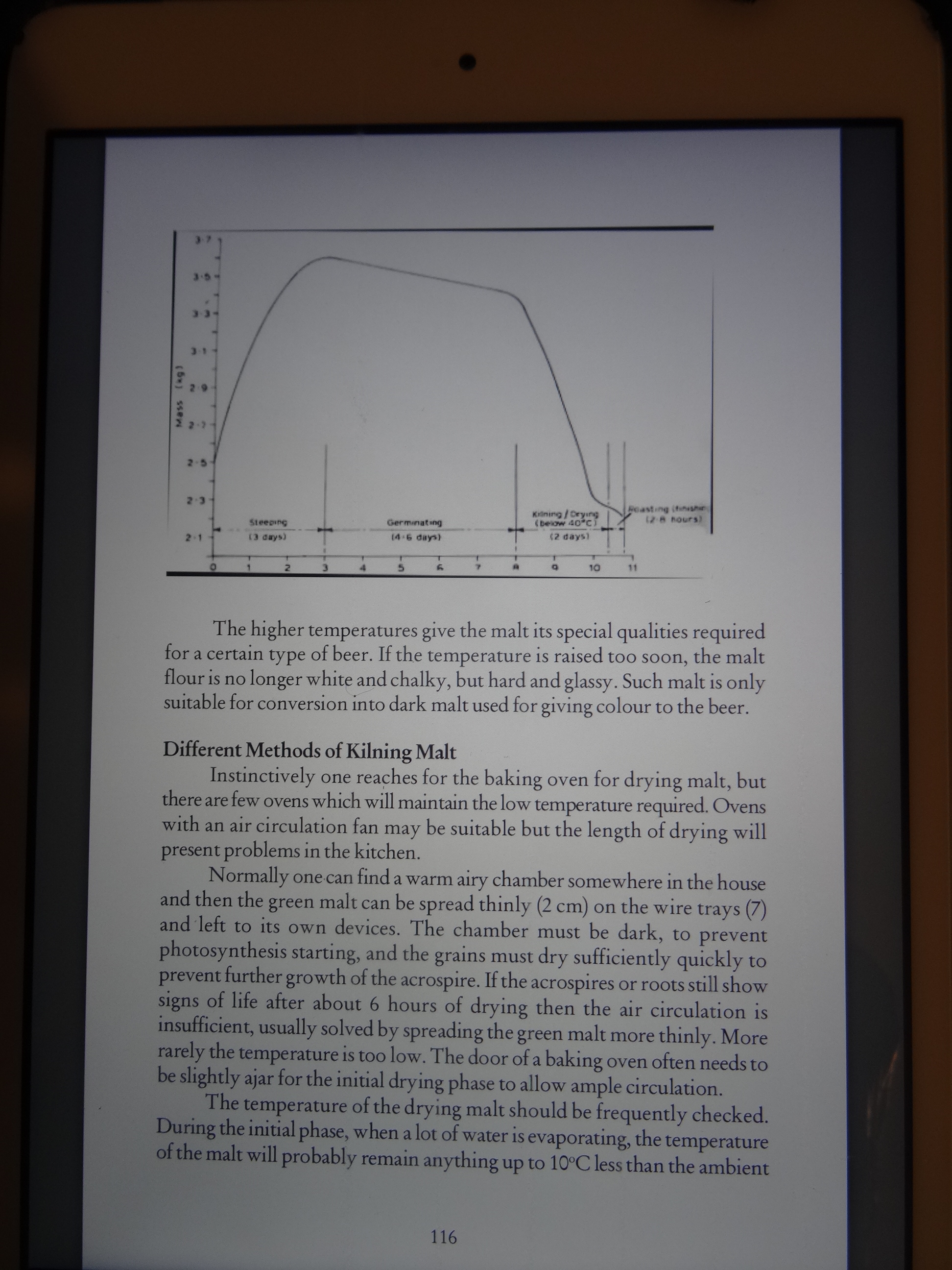
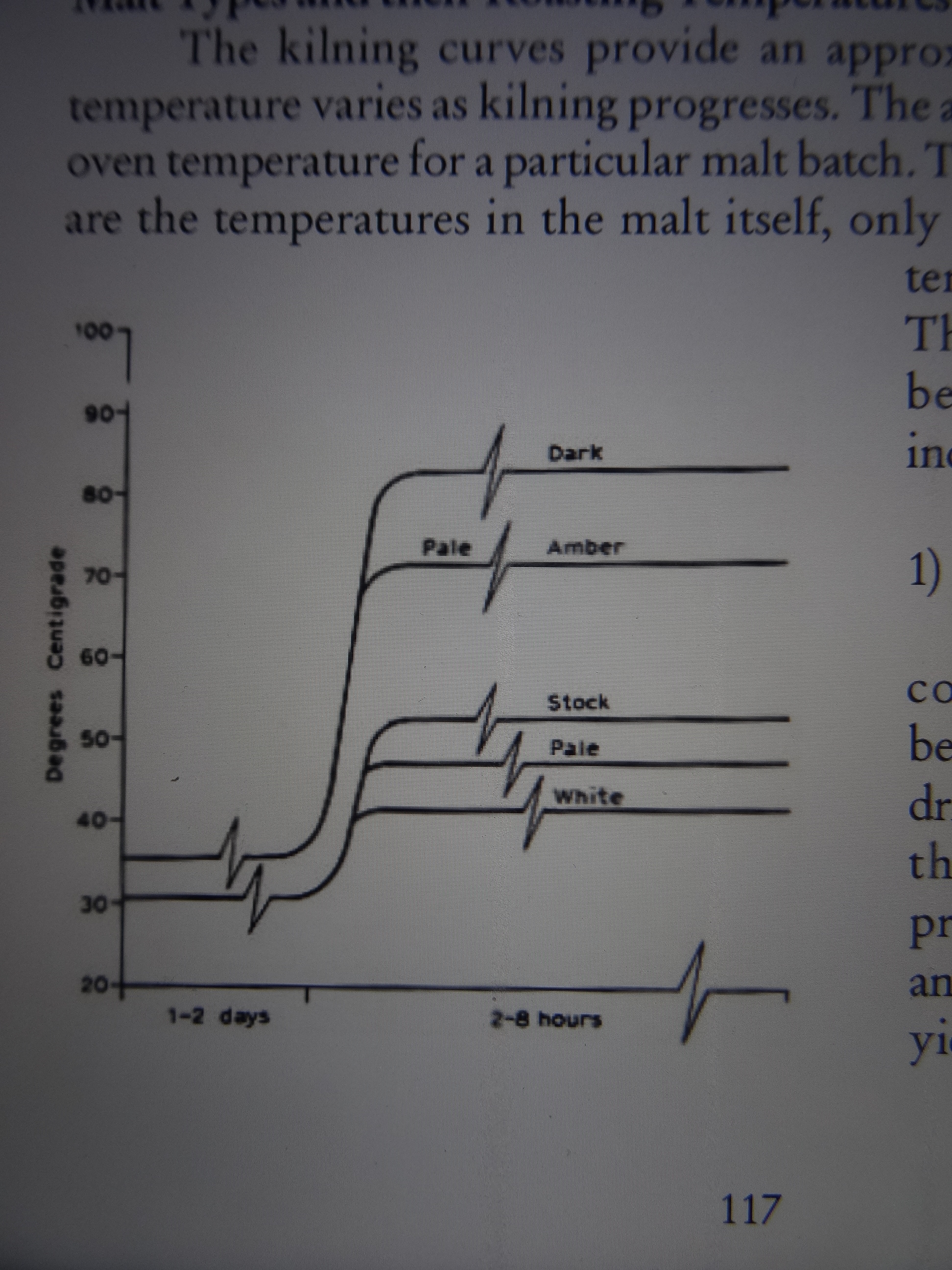
iPad brewing. Drying the malt – temperature curve for all malts.
Stout should need only a few grams of hops, because the malt is so dark it yields its own bittering. So how can one sell a sweet one?
And then there are the con-artists marketing beer in clear glass bottles, because it looks pretty. You might have observed that it sometimes doesn’t keep and soon tastes medicinal. It’s called skunking. A complex reaction between hop bittering and yeast in the presence of supermarket lighting, can produce sulphur compounds, called mercaptans, renowned for their evil ways. Our taste buds can detect them in ppm.
As craft brewers, we can get round these problems, but if you want a genuine pale ale, you might need to start malting. Soak the barley, allow to germinate, halt growth by drying and finally, finish off at a temperature chosen for the malt you need for your target beer.
Finishing temperatures for dark malts
Read my blog – Malt Like and Egyptian and you will understand the delight of going back to where our hobby began. Furthermore, malting grain is good fun and if you can control the finishing temperatures in your oven, then a spot-on historical malt will allow a genuine Munich Bock Bier for example, to come out your brewhouse.
Dry for 1-2 days and finish in an oven for 2-8 hours.
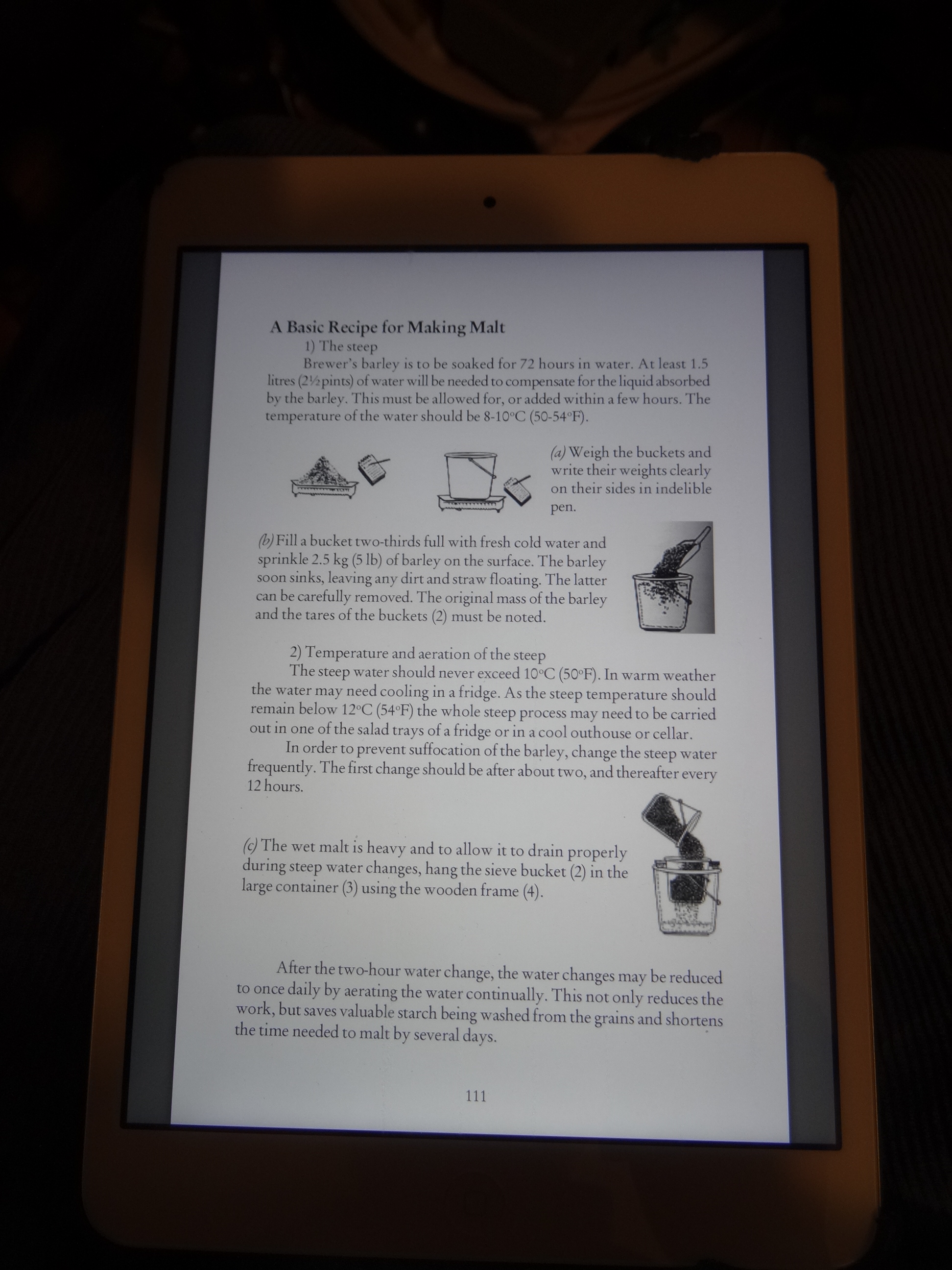
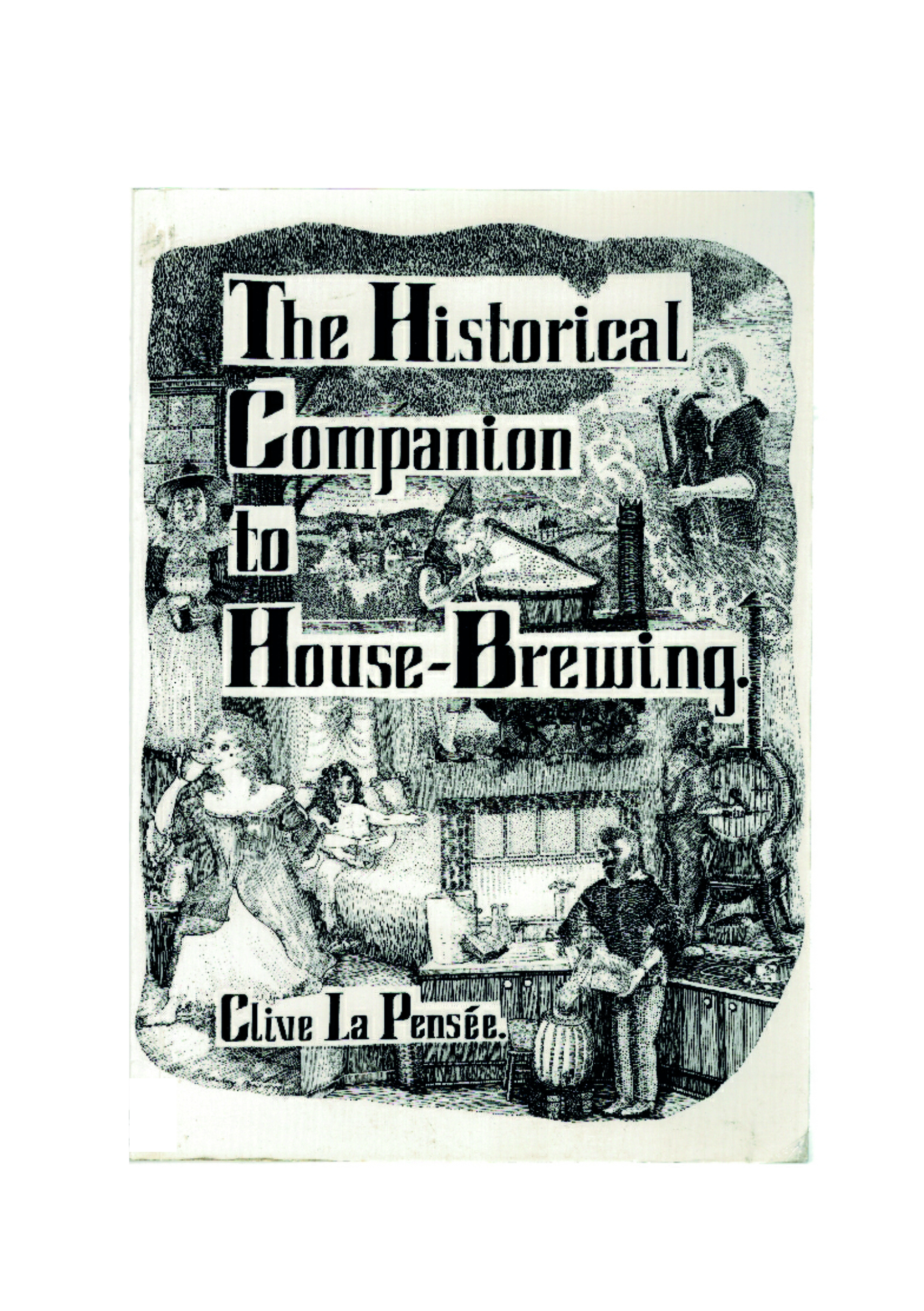
The above pictures were taken with a hand-held Sony Cyber Shot. The images are of pages on a 7 year old iPad, showing the Kindle version of the Historical Companion to House-Brewing.
I emphasise this, because Kindle software is now so good, that I can promise you a good read, including pictures, charts and brewing methods and above all, no soggy pages.
‘History is more or less, bunk,’ claimed Henry Ford. ‘We don’t want tradition. We want to live in the present.’
We all have an agenda, and Henry Ford’s was not to go back to the horse and cart. As brewers, we might want to see things differently. The best beers ever were brewed 200 years ago in places like Edinburgh and Munich, Madrid and Marseille, so for brewers, there is a fascination in looking back.
So, Malt like an Egyptian. Make craftbrew buzz again, as never before.
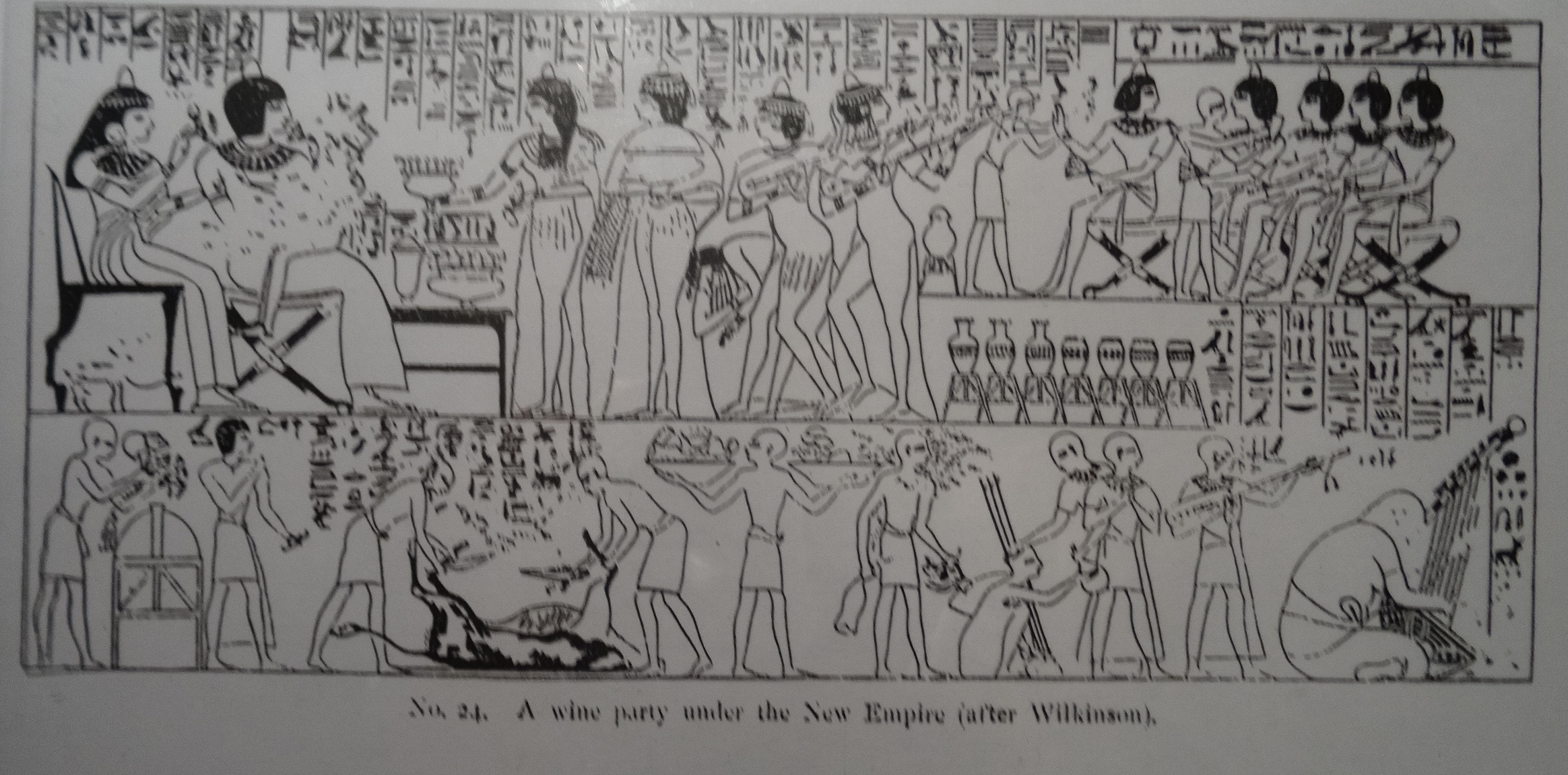
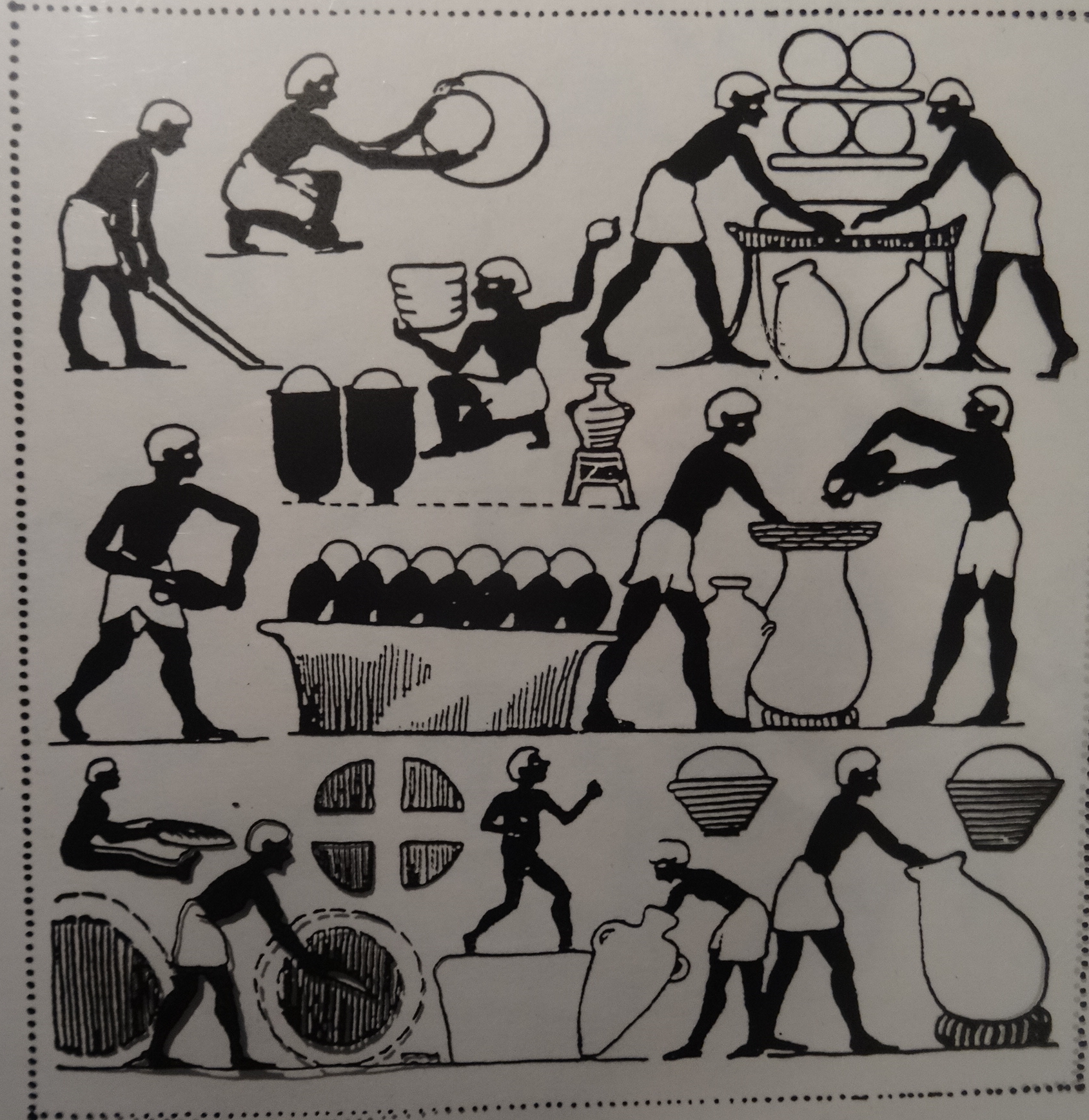
We should remember that our brewing hobby could go back more than 5000 years. Who can be sure? We do know the ancient Babylonians and Egyptians were great brewers. How did they know how to malt barley? How did they know that mashing malt would lead to fermentable sugars and fermentation gives happy hours?
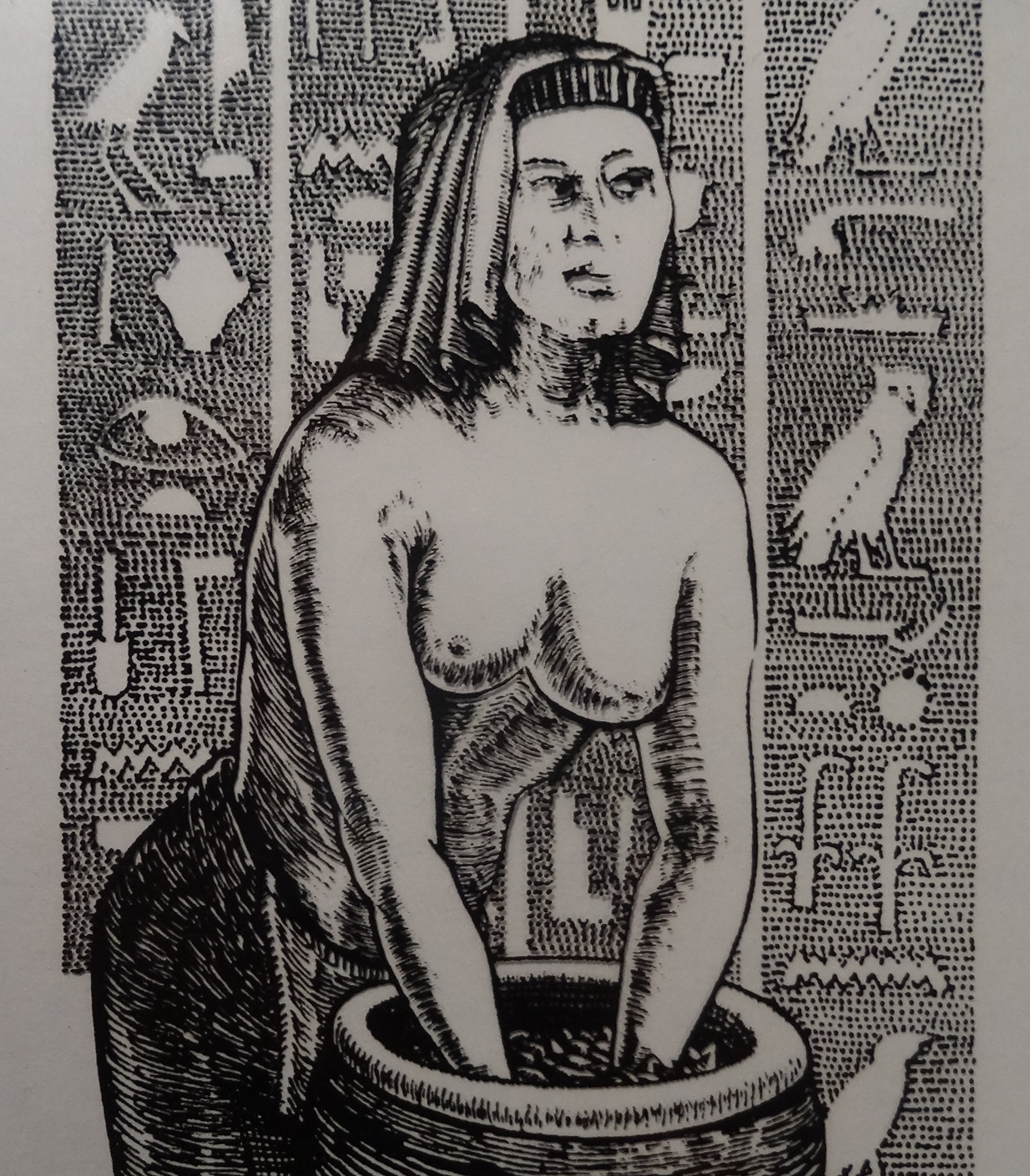
Egyptian woman mashing the malt
They found out because someone was careless and allowed grain to become damp. Before they knew it, the wet grain germinated and sprouted. This took just a few hours at Babylonian summer temperatures, but it was a nuisance – valuable food being wasted. So, the command was, ‘Dry it quickly!’ and in the hot Middle Eastern sun, that was equally fast.
The barley seemed to have been saved, but was now a different beast to before. It was rock hard and after the spouts had been cleaned off, had its own typical smell.
‘It’s too hard to comfortably grind so soften it in water!’ was the next bright idea.
Flow chart of Egyptian endeavours with barley and malt.
Once damp, it took on a life of its own. The water became sweet and while they were trying to figure that one out, bubbles appeared as the wild yeast went to work on the sugar. The taste changed again and the observers kept drinking in an effort to identify the new substance.
They became very happy and they decided to do it again.
‘The rest,’ as they say, ‘is history’.
Making malt with your iPad, tablet or phone. Clear instructions photographed from my iPad
Or get the ancient unrevised paper copy $30 to $60, suffer soggy pages and feel good, because I haven’t earned a sous.
Clive is a free-lance fiction and beer writer, occasionally taking a tilt at poetry. He believes words must serve a purpose, beyond entertainment. If you have new thoughts after his pages, then the read was worth it.
He self-published the Historical Companion, back in ’89. Was he one of the very first?
Time to reflect on a monotony of days, repeating a pattern as never before in my lifetime. Here is a bit of unpretentious light verse, to cheer the day. It should be read as quickly as possible.
I apologise in advance for any rhymes that offend the modernists,but any creativity is good for the soul.
 Let Time be a Game

 Between two seconds
 In time that beckons,
 There is always a border
 Just to keep order.

 The border exists,
 Put there to resist
 Our desire to stray
 Into life, as a play.

 No seconds, just acts
 Not dependent on facts,
 But given to whims
 That can end in sins.

 Borders are safer,
 An imaginary wafer
 To hold seconds apart.
 Put life in a bar-chart.

 Seconds like stitches
 Joined through with hitches,
 Is time caught in a net,
 To keep fancies in check.

 Three score and ten
 Is the biblical end.
 Waste ten at school
 Playing the fool,

 And twenty asleep
 Or at least counting sheep,
 And ten being worried,
 Ten being unhurried,

 And ten in love
 With your turtledove.
 Leaves just ten unspent.
 So no time to repent!

 Crash through those borders
 Embrace new disorders,
 Love the discorders,
 Dispatch time’s daft hoarders.

 Let time’s chariot draw near.
 Clip its wings without fear.
 That last shovel of earth,
 Celebrate like your birth.
 From an idea in Gustav Meyrink's short story, 'Bal macabre.'

Taken from my collection, Getting to Grips.
I visited a museum in Weimar. There was a quote from Goethe. ‘Ich bin zu alt um nur zu spielen, und zu jung um ohne Wunsch zu sein.’
Goethe bust in Weimar
The greatest lines can be an inspiration to writers and get the block out the way.
‘I am too old to only play and too young to be without desire.’
It works better in English (for me), because I can pep it up a bit in translation, to make it stronger. I’ve replaced Wunsch. which means <wish> with <desire>. Goethe couldn’t use desire in German. Lust sounds too coarse. Is this allowed? As Heinrich Böll said, ‘You put it out there, you lose control of what people do with it’. I call it, artistic licence. Goethe would be furious.
That one sentence by Goethe is the perfect description of the contradiction of getting old, made more poignant by the fact that Goethe made a complete fool of himself by proposing to a woman 50 years younger than he. She and her mother, fled town without sending a response, just to make sure that he understood the answer was ‘NO!’
I worked his line up to describe how I feel about old age.
What Goethe MeantGoethe wrote, ‘Ich bin zu alt um nur zu spielen,und zu jung um ohne Wunsch zu sein‘.
I am too old to only play,
Too young to be without desire.
Too old to tumble in the hay
Too young to quench my residual fire.
Too old to miss my midday nap,
Too young to never think of straying,
Too old for hormones to cause a flap,
Too young to stop my eye surveying.
Too old to pass an empty trap,
Too young to stop believing,
Too old to play with ball or bat,
Too young to trickle when relieving.
Too old to worry what comes next,
Too young to admit my leaving,
Too old to bother to get vexed,
Too young to start my grieving.
Too old to think we can live forever,
Too young to concede this cannot last,
Too old to want some new endeavour,
Too young to wallow in the past.
Old enough to know those amazing years
Are in life’s bank, secure and undeniable,
Young enough to sup life’s remaining beers,
And pretend the last few years, aren't so friable.
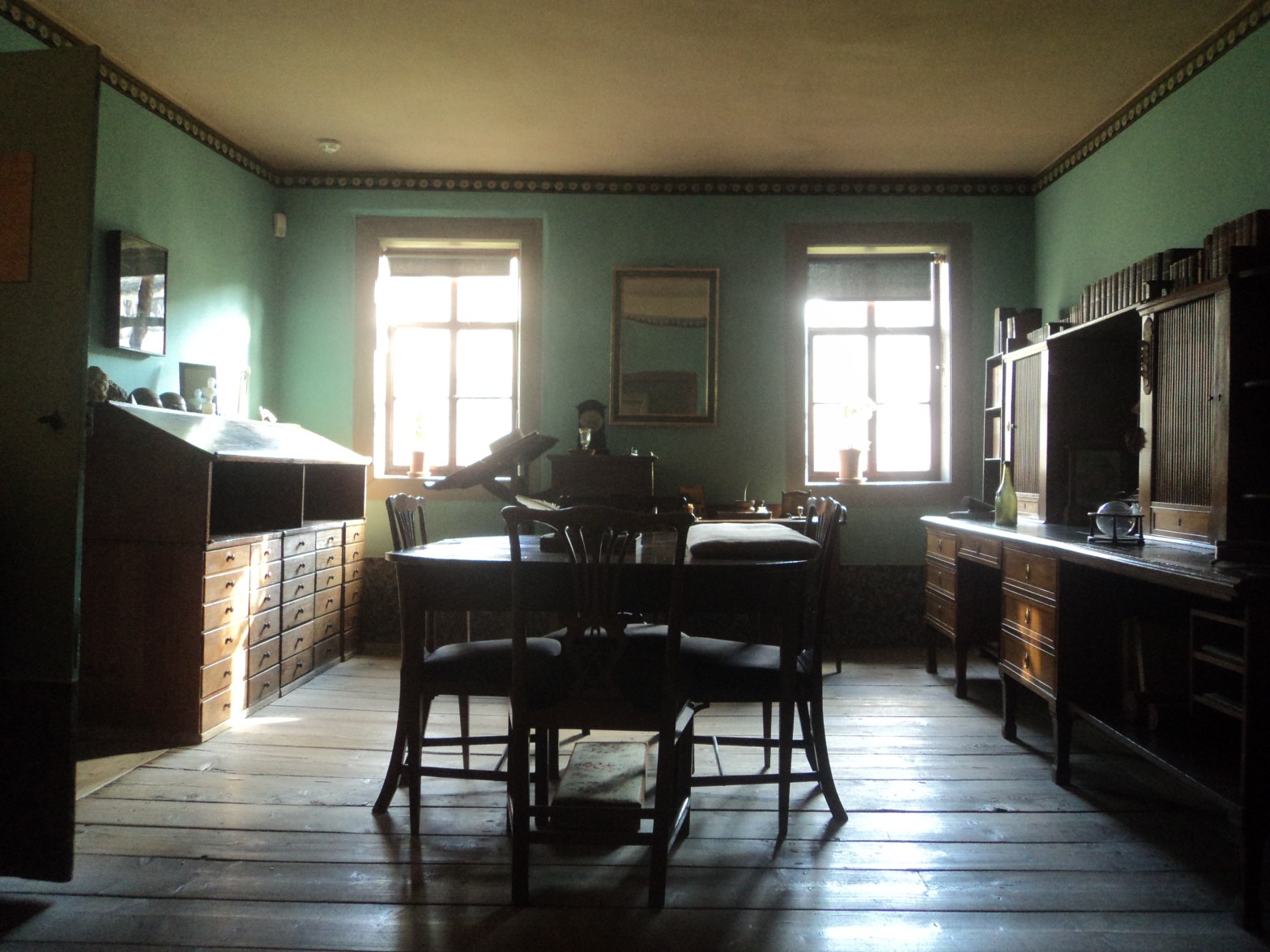
One of Goethe’s many study objects
I always feel I have to apologise for rhyming, but the rhythm in Goethe’s line, (Ich bin zu alt um nur zu spielen, und zu jung um ohne Wunsch zu sein.) seduces one to keep it, and Goethe always rhymed. It’s not good to compare oneself with one of the great masters, but imitation is the sincerest form of flattery.
Sandra followed him on Instagram. Her profile picture was stunning – beautiful, symmetrical face with long raven hair and a smile to melt the rivets on a thousand ships, fit and just a hint of a pout, after a workout. He followed her back, out of politeness, but with a tinge of curiosity. His policy was always to be truthful and not to do or say anything daft or compromising, although, at that distance, he wasn’t sure why he had to be so careful. He messaged her to say something nice about a picture she had posted, but he found she had written first.
‘Hey,’ she said, which was the usual bimbo introduction.
He was quick to move off the dumb stuff. If she wanted to tap him for money, she was out of luck, but her first real piece of information made him feel guilty, then angry.
‘I live with my grandmother in California, since my parents were both killed in an accident.’
After the initial shock, he decided it was the beginning of a sob story that would lead to a plea for money. Yep. There it was.
‘I’m 29 and just finishing my master’s in business studies.’
He waited for the for the second part which would tell him how she had no money for the exam fees. But it didn’t come. No request for money! She went straight to discussing names. He tried a quip to point out her shallowness, but forgot that Californians don’t do irony, or any humour, for that matter.
He could give her something but would risk becoming a scam target.
He sent her an Amazon voucher for $30. The next day brought a polite and seemingly sincere thank-you message from her – and 32 requests from Bimbos Worldwide, for multiples of 30.
Zoë
After a long time at home, one’s mind wanders to happier moments. He thought of Zoë, the wonder woman with charisma and an Essex accent. She ran a betting shop in town. They sacked her during reorganisation. She isn’t worried. She can dominate a room with her voice, shattering all opposition, while her observant eyes use her spectacles to hide what she is thinking. This makes her perfect to become an MP.
Then he considered the problems, such as her predilection for jumper suits with bunnies on. She must change her Facebook page or the tabloids will have her political career on toast. She carries the bunnies off with confidence and style, and is almost her brand, but a new Facebook profile, he thinks, will advance her cause. In this room, she dwells among the empathetic, but that will change once in Parliament. Her symmetrical face beams intelligent observation, and her stunning figure must make her a target for pathetic old socialists who still think any woman is a pushover. Perhaps she can charm them into behaving themselves. If that doesn’t work, her bookie’s voice she used for calling the odds, will impale them with common sense.
He caught himself sighing while watching her prepare for the meeting.
He hears her call the meeting to order and she glances around the room. She knows her power, but is too clever to flirt. Her look says, ‘It’s OK to be in love with me. It won’t go to my head,’ but also told him, ‘Everyone is safe in here.’
‘I’m going to be the parliamentary candidate at the election,’ she announces in a matter of fact way. He felt the relief of the meeting. Thank goodness someone wanted it, was the sentiment. No one cared that there hadn’t been a vote.
‘You’ll have to get a new Facebook profile,’ the secretary joked. ‘The tabloids will have a field day with that picture of you in a jumper suit covered in bunnies.’
Bunnies rule
‘No I won’t,’ she replied firmly. ‘The picture stays.’
A pregnant silence was broken by a nervous cough from the treasurer. The old man sitting next to him whispered, with glee in his voice, ‘You don’t mess with our Zoë’.
‘She must be a target for daft old men at party conference,’ he suggested.
‘Her withering look, when she uses it, will cool their ardour,’ the party stalwart grinned between sips of beer.
She glanced around the room and her eyes rested on their table for just a moment. He lost all sense of reason and mouthed, ‘I love you.’
Not a flicker of emotion could he see!
‘Any more contributions?’ she asked.
No one dared, yet everyone was glad she was in charge. He was relieved to have finally come out to her, but wondered what he would do if she ignored his declaration – which he was sure she would.














 Clive La Pensée