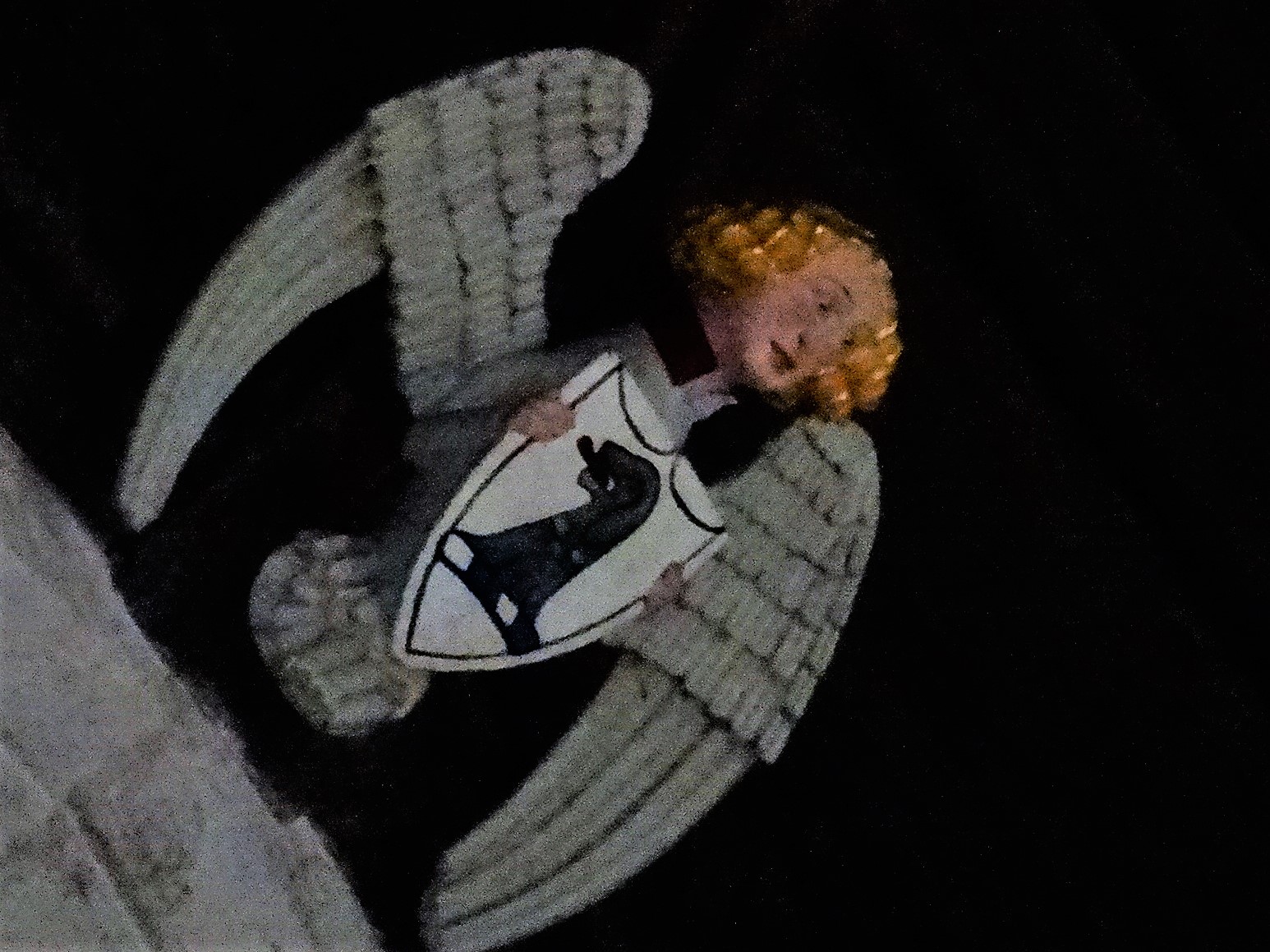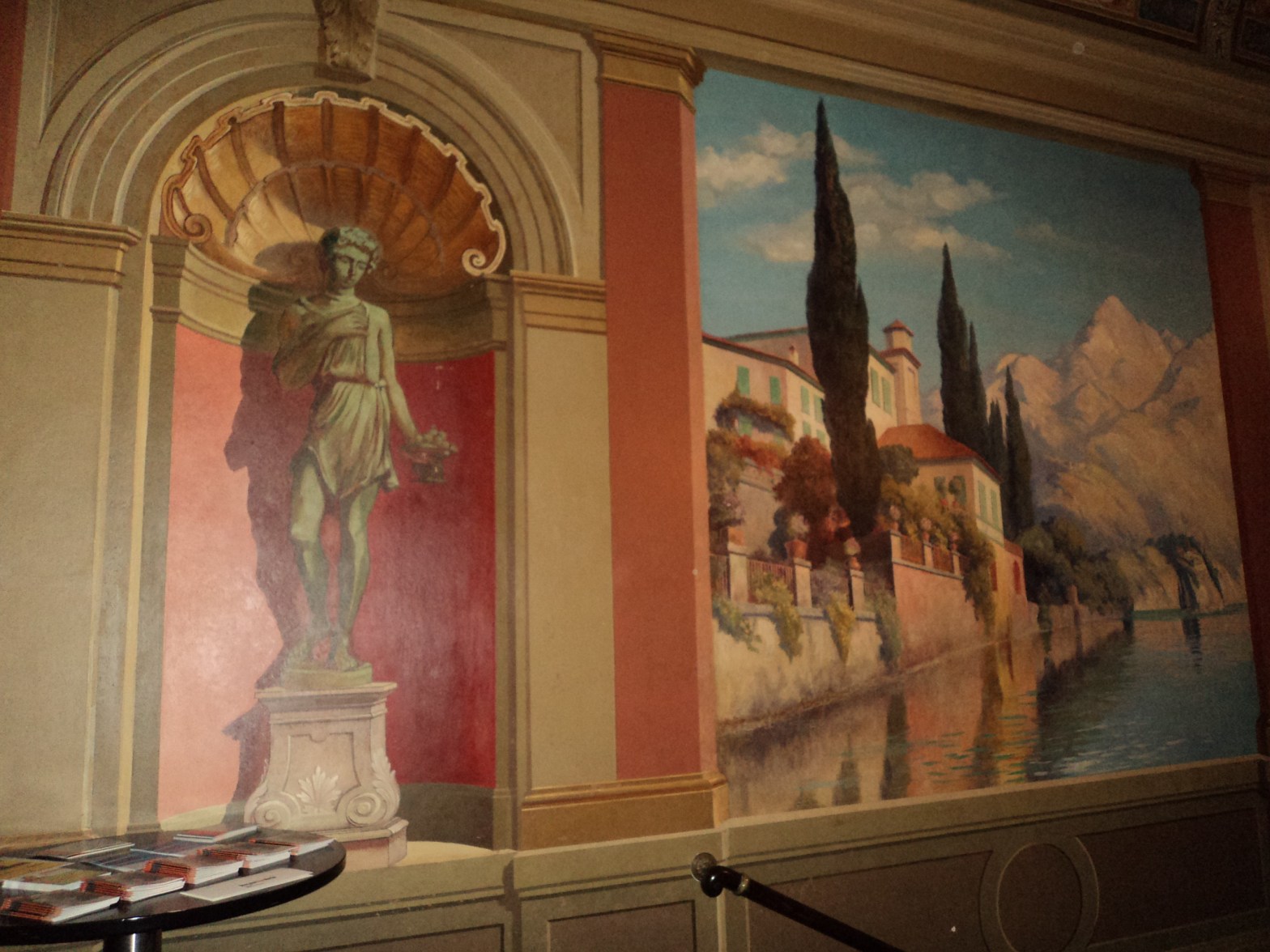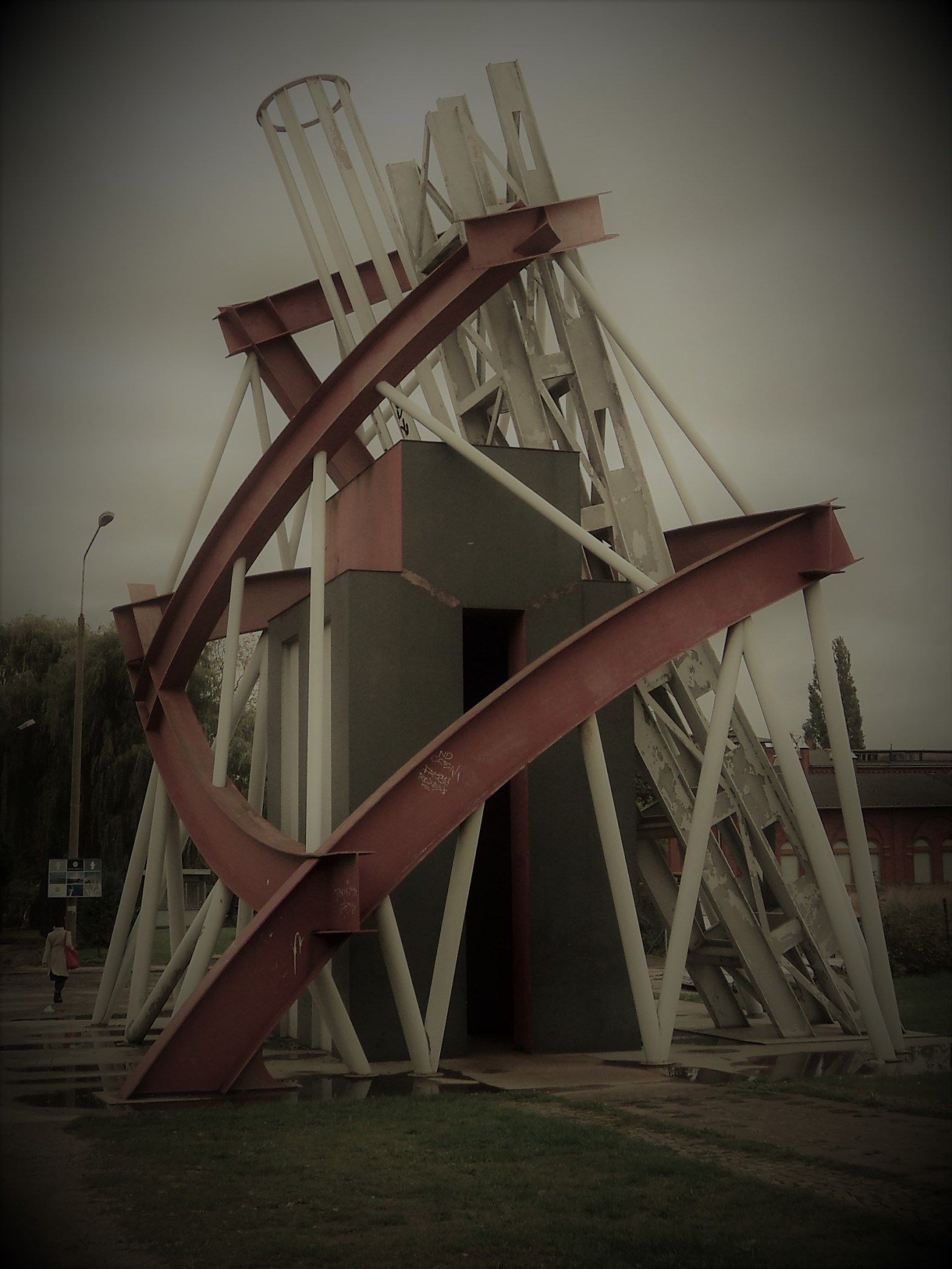
Doors of your mind – an old tale.


Judith vs Bluebeard

Judith heard the horses and then the coach rattle over the cold cobles beneath the castle. It would return to her home, and then she would be here until her husband died. She was sure he wouldn’t. He was thought to be over 125 years old.

It takes two to psychoanalyse the other.

She heard him talking to the servants and then the door creak as he entered. She didn’t turn to him, but waited for him to make the first move. She was surprised to feel his hands on her shoulders as he gently turned her to him.

‘This is me, your lover and husband-to-be, and once I have made you my wife, there will be no way back to your old life. Look well and tell me if you wish to stay or go.’

Judith stared at the rugged face and its huge, full blue-tinged beard.

‘Think well,’ she heard him order. ‘Entry to my castle is final. Take your freedom if you want it.’

She couldn’t believe her own foolhardiness. He was prepared to release her, despite the contract. But she knew she couldn’t return to her home. She would be a pauper, without protection, if she left. Freedom beckoned, but she still said, ‘I’ll stay.’

‘You wonder, no doubt, why I am prepared to release you. Men in my position, don’t usually give up their possessions, without good reason. I’ll tell you. I observed you in the coach. You can divine things that should remain forbidden, hidden to a wife.’

‘How do you know that?’

‘You have a strange woman’s sagacity that I can’t fathom. This mustn’t challenge my power.’

Judith hesitated. She had to get her answer right. Was he hinting she was a witch?

‘You are right.’ Judith said it with contemplation. ‘But should you have secrets from me? Shouldn’t one know everything about one’s lover, one’s husband?’

‘Perhaps, but then you need to get rid of that moral compass. Having second insights is all very well, but you can’t misuse them. You have vowed to take me, without reservation, but I sense your secret wishes. This could end badly for you.’

Judith shuddered in the cold air, or was it fear of the uncharted ground she was treading? She must turn the tables, take control, but without him realising. She was using her special powers, which must remain hidden to him, but he had already divined her.

‘You must have insights, too,’ she assured him. ‘I’m not surprised. Sharing a bed, a table, your hearth, means that we will know all secrets, sooner or later. Don’t we all have seven secrets to our character? They are revealed in marriage, through the doors of our minds. I can clearly see your doors. Can’t you see mine?’

She listened to his empty laugh.

‘I’ve never heard that one. Why seven? And who will open my doors?’ His face took on a stern countenance as a stray thought occurred to him. ‘Or, are doors a metaphor I haven’t understood?’ He continued. ‘Then let your doors be shut to me. I have ultimate and total power within my lands. I have total access to your body, now you have decided to stay. Your doors are nothing to me,’ he mocked.

She tried not to laugh. How naïve he was if he thought it were so simple to control a person. His servants took orders, out of fear of a beating or dismissal. He didn’t need access to their minds – to their souls. He hadn’t deduced what a foe she could be. Or was he mocking her? Was this double bluff? Caution was still paramount, if she were to survive and take his kingdom.

She looked into his eyes. It was an inappropriate stare, rude, impolite – the sort of scrutiny that infants give a stranger, without embarrassment. He didn’t look away, but withstood the examination. She noticed his mounting anger, which flashed across his face.

‘Well?’ he demanded. ‘What do you see?’

Her voice sank to a whisper.

‘A torture chamber, dripping with blood.’

‘Don’t be ridiculous,’ he hissed.

Now she saw him evade her gaze. Time to change the subject. She had already said too much on this one.
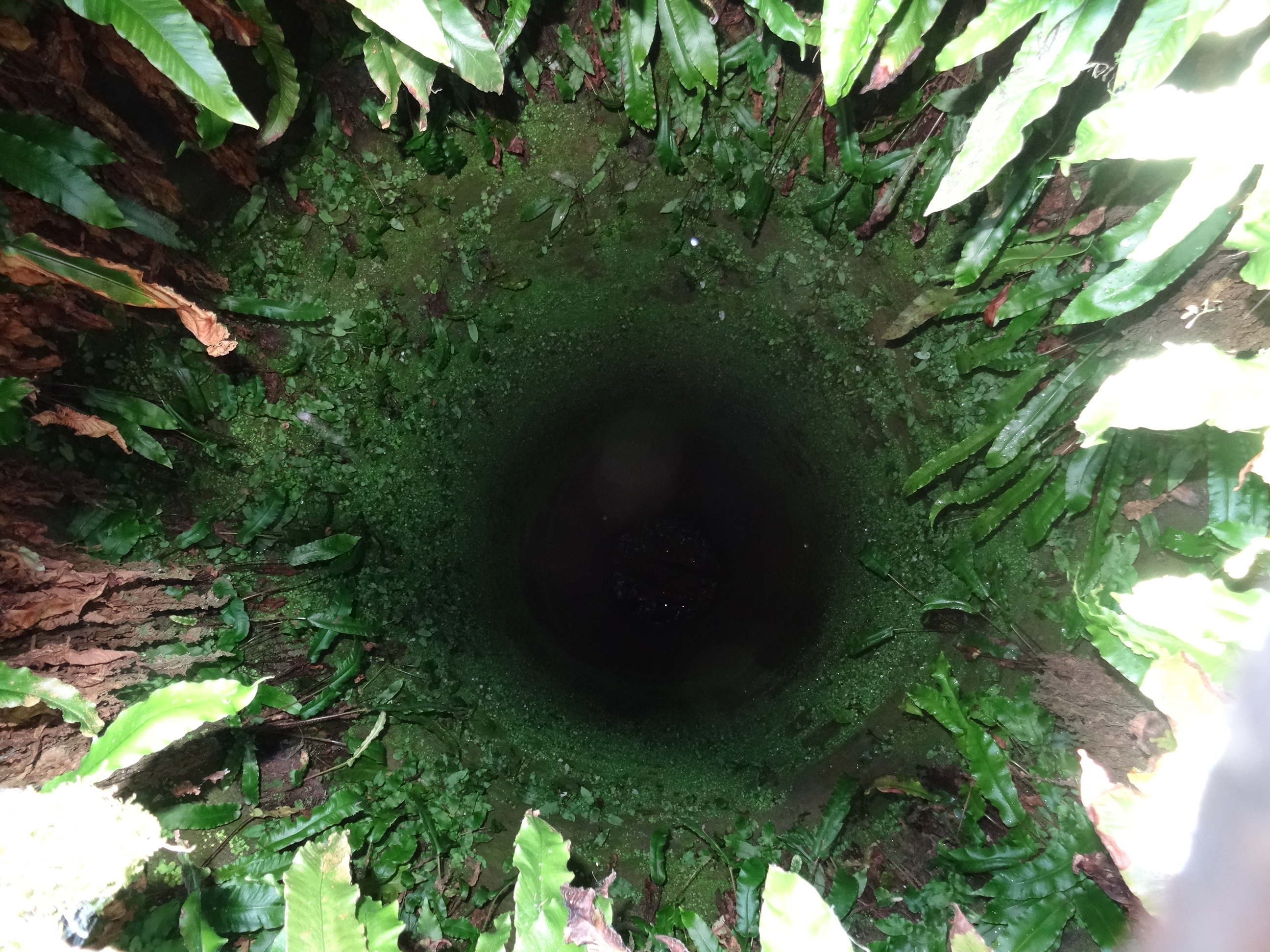
Into the abyss

‘Can I open the curtains? It’s bright outside and so eerie in here. Now my eyes are accustomed to the light, I can see how cold and damp the walls are. Condensation runs down them. Can’t we light the fire? How can the day be so bright and warm and your house so cold?’

‘Leave the curtains!’ He paused to consider her words. ‘You see a torture chamber in my eyes?’

Judith admitted, ‘Yes, but perhaps, it is my own fear I bring with me from my past.’

‘Why are you here?’ He demanded. ‘You can still flee.’

Now he was shouting, but she remained calm.

‘I notice you haven’t denied my observation. Tell me. Are you the torturer or tortured?’

He evaded her question, but instead repeated, ‘Why did you come with me?’

‘Have you never been intrigued by the bizarre?’ she asked.

He was silent. She had noticed his forearm muscles relaxing, after his recent rage.  Bristling, blood-gorging muscles had receded. Protruding blue veins flattened, but her last question reversed his temper. He clenched his fist and looked awesome in his fury, but she felt no fear.

‘You have that look again,’ she heard him shout. ‘Stop searching,’ but her mind was busy unravelling the next mystery.

‘You are a rich man, who rarely has to work, and then, never physical toil. Why are your muscles those of a labourer – of your own ditch-digger?’

He swiped her across the face with the leather gauntlet he was still holding. The studs drew blood from her upper lip. She vowed to herself, that he would one day regret that violence. She had provoked him by calling him a ditch-digger, but now she had the upper hand. She understood him and all his doors.

He softened his look, but she spotted the effort it cost. She knew faces betrayed thoughts. She must conceal her insights.

‘Are you opening doors again?’ he demanded. ‘Which one this time?’

She fixed him with that stare.

‘I just saw your armoury, silhouetted through your eye, held in that studded gauntlet. What do you need that for, in my presence? Your armoury and treasury,’ she continued, remembering her words about his wealth. She knew she had revealed herself to him.

‘Ah’, he drawled, ‘My treasure house. It’s my gold that keeps you.’

‘Not at all,’ she lied. ‘I have money enough.’

‘One never has enough,’ he mocked. ‘I wonder what is behind the doors that preceded your wealth.’

‘Perhaps, I was lucky. Someone else did the torturing and conquering for me – before my time.’

‘Nevertheless,’ he argued, ‘You don’t deny your gold is bloodstained, too.’

Guilt stabbed her. Is one never free of avarice, not even in the bedroom?

‘Don’t stop now!’ She felt his face close to hers. ‘Look into my soul, as deeply as you can, while you still have the chance,’ he urged.

She let their eyes meet again. His were beautiful, and the rugged, but perfect features of his brow destroyed any residual wish in her, to leave him. Lust was filling her breast. Her eyes blurred behind unruly tears and his beard washed into a garden of great beauty – albeit, watered with blood from his mouth. She wiped her eyes with a sleeve. The blood disappeared, leaving only the garden.

She felt him seize the moment, take her and force her roughly onto the marriage bed. She didn’t try to resist. As she let his movement excite her, she turned her head, and from the new angle, saw the sunlight behind the curtain. A shaft glanced his head and illuminated a secret garden in his long thick red hair – a garden of unrivalled beauty. There were sculptures, perfectly aligned between vast and dense clouds of roses and plants that thwarted her efforts at identification. Waterfalls, fruits, rocky promontories hung with exotic birds, filled her vision.

His movements subsided. Now she could focus and saw that the birds were picking at corpses, and that the waterfalls were tinged red, the roses scarlet, fronting lilacs of pure black. A passing cloud uncovered the afternoon sun and bathed the room in evening red.

She felt his weight lift and his gaze follow hers as he rested on one elbow. She rose, straightened her smock and pulled back the drape. Light flooded the room, warming the air, but causing a shiver to shake her. She noticed that the condensation running down the walls was tinged with red. She tasted it. Salty.

She turned to gaze at him, dragging her eyes from the window view, the view of his vast kingdom, seemingly without edges, a universe that disappeared in unending splendour, where every aspect hinted at the riches of this man – her man – and the ochre sunlight spoiled it for her, with that reminder of the blood he had spilt to get it.

‘Stop now,’ he commanded, but she thought his voice irresolute. The red disappeared as the exposed sun caused pure white light to flood the room. She turned to him. His face was in shadow, but his body dappled with beams, reflecting from a vast mirror at the head of the bed. Now the room warmed and the feeling of dampness receded. The play of light entranced. She fancied he was surrounded by water, floating. This was some kind of mirage, but from where should the heat come? Nevertheless, she felt encouraged. Perhaps the first five doors could be ignored, but her optimism was dispelled. She listened to the water. There it was again – the sighs of grief as the surface shimmered and waves lapped at the edges.

‘You have seen enough. Go no further, I beg you.’ His voice was contrite, pleading even. Gone was the power person of distended muscles.

‘Why, why my love?’ She answered. ‘The red between us is gone. You are so beautiful, seem to be resting in a lake. How the light can play tricks. Is it a trick of the light?’

She stepped to him and as her feet touched the light display, the sighs became louder. She stooped and touched the shimmer, and was amazed to feel wetness. Without thinking, she put her damp finger to her lips. It too, was salty.

‘Where does this water come from?’

She watched his head droop, and his tears fall into the dappled light show. The sighs stopped as his tears touched. The water disappeared as a cloud past over the garden.

‘Stop now,’ he pleaded. ‘There is nothing more to see. Just love me as I am, as you know me.’

‘There is nothing more? There is no seventh door?’ She quizzed him.

She waited for his answer. Nothing came.

‘There is a seventh door,’ she exclaimed.

She watched him slide exhausted to the floor, but he couldn’t resist the impulse to turn and look at a series of pictures on a remote unlit wall. She noticed he was sweating and realised the room had become too hot for comfort.

She reached and stroked his forehead and fancied a strand in his beard hair was her naked torso. The moment was broken when he took her arm and pushed her hand away with a rough action. She was fighting for air now, as the temperature continued to rise, but the pictures demanded her attention. He didn’t resist as she released his grip on her arm and walked toward the wall.

Three portraits were of women of stunning beauty, draped across luxurious garden furniture. They were hung with heavy jewels, including ostentatious wedding rings, drinking finest wines with sweetest morsels. ‘Trophy wives,’ she concluded, but noticed the pictures distort and show signs of scorching in the unbearable heat.

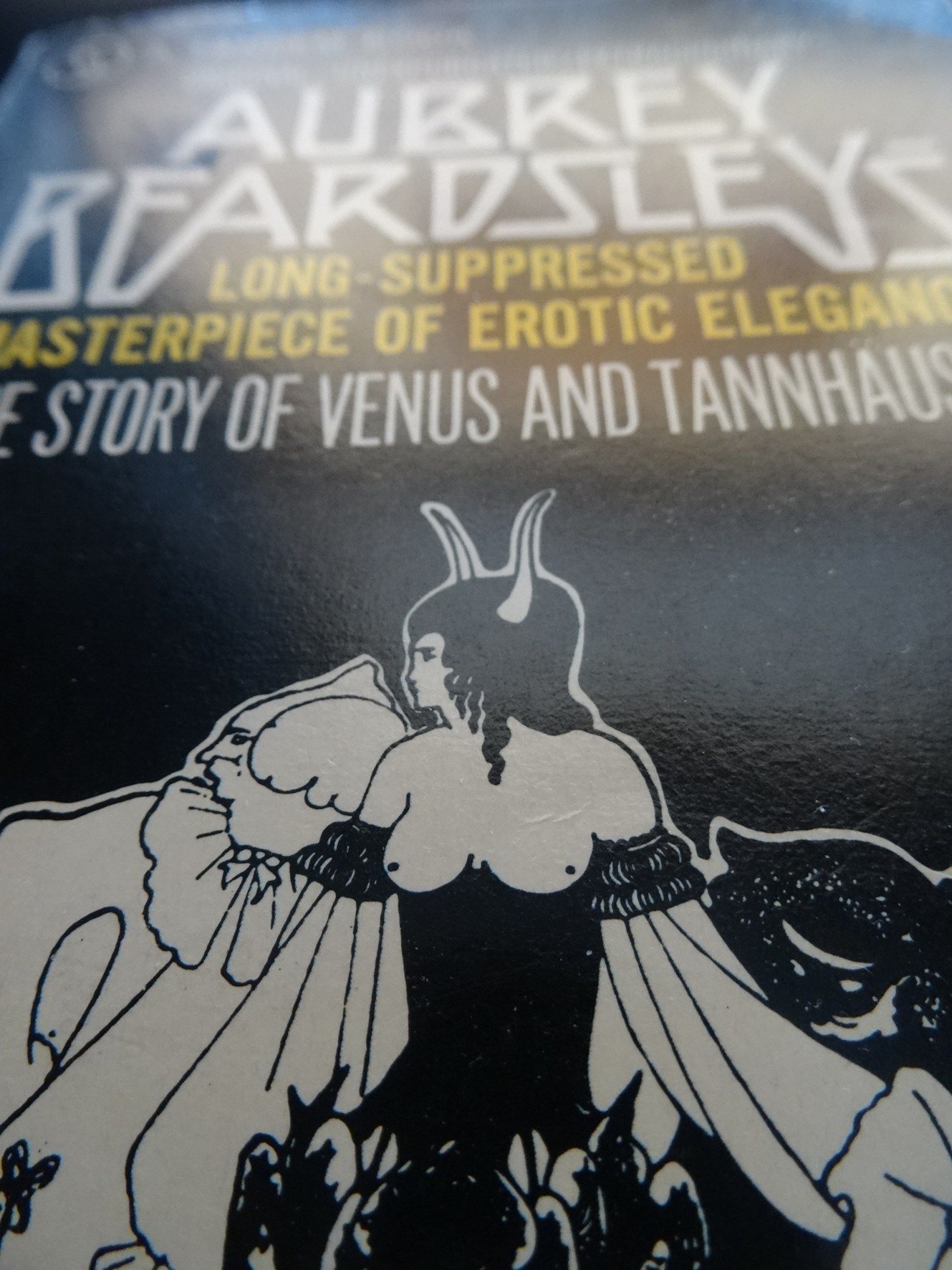
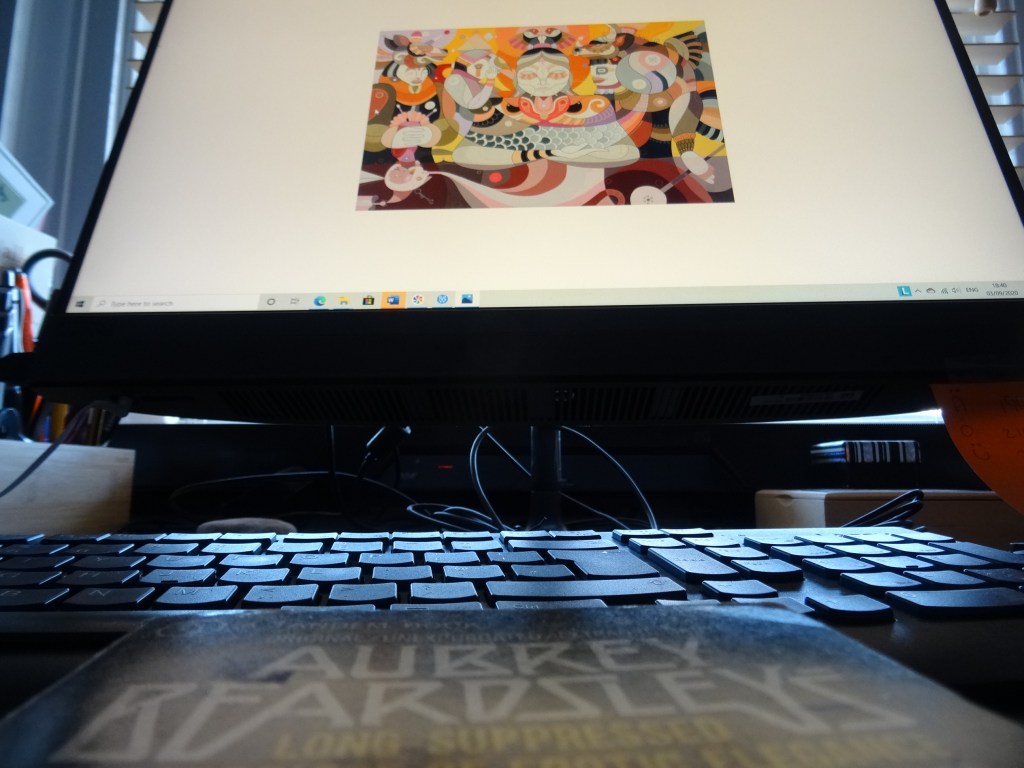
The pictures had brass plates on the bottom span of the frames. ‘Fortune,’ she read and, ‘Horn of Plenty’. In the third picture, named ‘The Way We Live Now,’ a woman studied Beardsley’s print of Salomé, holding up the head of John the Baptist, blood pouring from the severed neck. She noticed, it wasn’t a print, but a photograph of a real head and torso.

The fourth picture was of an empty bench in the same garden. This frame, too, carried a small brass label. She barely managed to decipher the text as smoke and flames filled the room.

‘The Settled Account,’ she read aloud.

The original title to this story was A kékszakállú herceg vára; literally: The Blue-Bearded Duke’s Castle and is a one-act expressionist opera by Hungarian composer Béla Bartók. The libretto was written by Béla Balázs, a poet and friend of the composer, and is written in Hungarian, based on the French literary tale La Barbe bleue by Charles Perrault, itself based on an older tale, thought to emanate from Normandy. My reworking uses the setting, 2 figures and seven secrets from Balázs’s libretto. That apart, it is original.
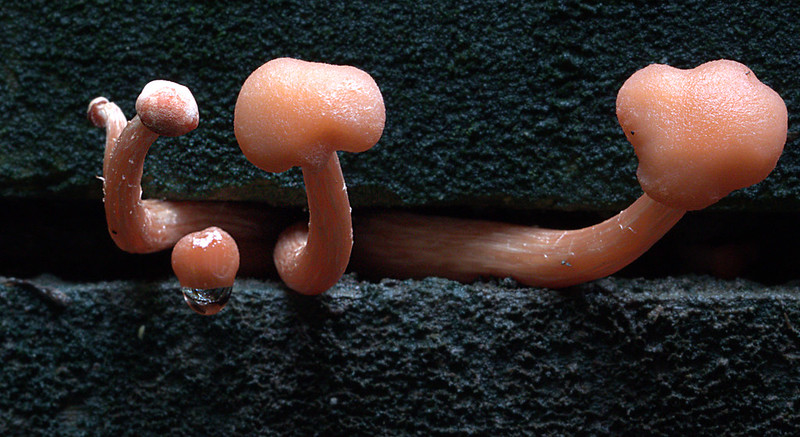
A bit of nature – Haiku


The traditional Japanese Haiku requires a turning point after line 2 and an element of nature. This natural-world feel is often ignored by modern writers as one no longer wants to be restricted by convention. Every so often, I see a moment that demands the real thing.

My thanks to Vern Smith (Flickr.com) for posting the above growth of a fungus emerging from her timber retaining wall – thankfully in New Zealand. I don’t want one!

Here is my picture from an East Riding forest. It tempted the Haiku pen, too.

For phone users –

Dead vegetation

Offers life to dormant raiders.

Waiting spores oblige.

Fungi are often the first invaders when decomposition of organic matter occurs. This requires the spores to be omnipresent and cast off their dormant cloak the moment warmth and moisture allow. The fungus will break down the heavy stuff, leaving the path free for bacteria and small animals to set up home.

The Trouser Role


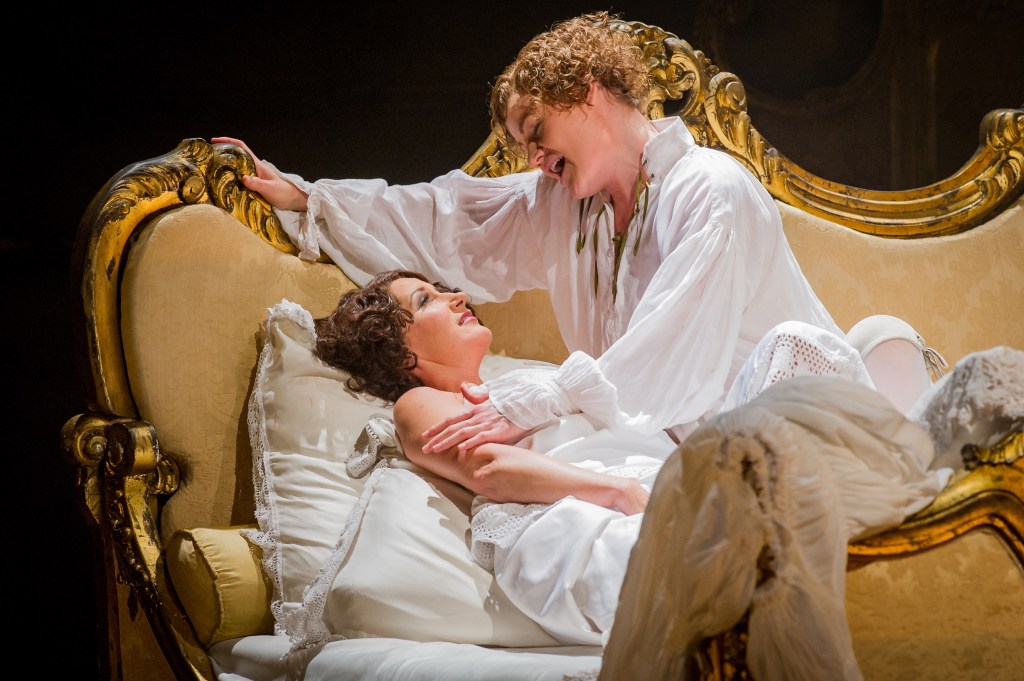
Scene 1. Der Rosenkavalier – Octavian and the Marchallin – Opera North.

The curtain rose, revealed the obscene scene

Of lovers now ungauged as passions rage.

A head goes down in haste to taste the Queen.

Two women sing. Sweet harmonies cascade,

Into lustful grating cadence of sound,

Until silenced by a lingering kiss.

Taught strings take up their tension, and astound

The watchers, caught; voyeurs of lovers’ bliss.

The words they sing, hidden in music’s flow,

Fly past us, like a morality lost.

In this moment only the lovers know

The reason for this lesbian cost.

Now we see the trousers are on a boy.

His cousin’s matronly mounds, are his toy.

Cherchez la femme -Der Rosenkavelier is the turning point in the novel.

The day I met Elvis.


The Greatest


Blueberry Hill

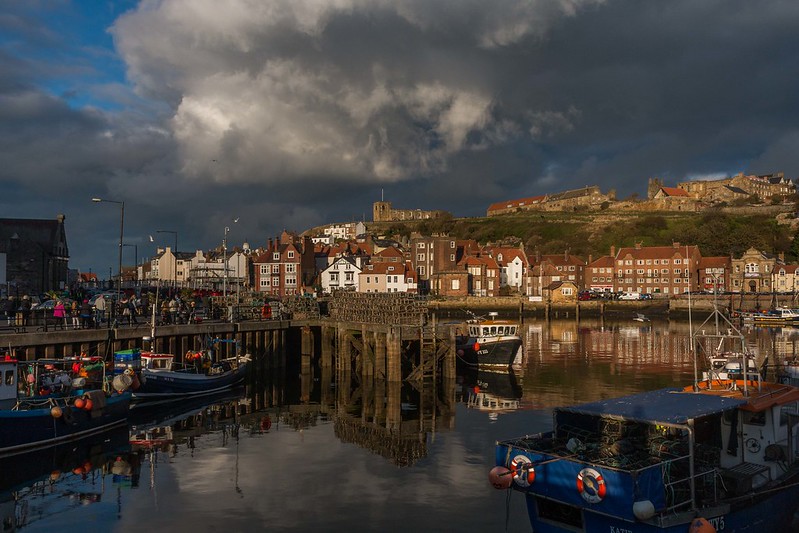
I walked up the steep path on Abbey Terrace – a fanciful notion as the abbey is on the opposite side of the river, and barely visible from the terrace. The day was quiet, perhaps boring for locals anxious to start earning before the season started. Seagulls circled and the sound of the waves pounding rocks at the cliff base, receded as I worked my way in land.
The gulls fell silent, perhaps in reverential amazement, for there was no doubt. From the top of one of the fine, early Victorian terraces, came Elvis’s voice, singing ‘Blueberry Hill’.
I hummed along.
‘ The wind in the willows,
Played Love’s sweet melody.
But all of the vows you made,
Were never to be.
Though we’re apart,
You’re part of me still,
For you were my thrill,
On Blueberry Hill.’

Old vinyl.

Was someone airing old vinyl? But something was wrong. There was no backing – no guitar, or drums or shalala boys or doowa girls. It was Elvis, no doubt, but without backing group, in Whitby, relaxing and wandering down memory lane. It had to be him. I knew Blueberry Hill’s every nuance, even after 60 years. I wore that EP to a fraction of its original thickness, back in 1961. Some things are never forgotten.

Sound is a funny beast. I stood, turning alternate ears in an attempt to locate the source. Didn’t it come from the rear of a house? I ran up the hill, turned right, and found the entrance to Back Abbey Terrace. Once inside the huge rear pentagon, I searched the rooftops. I looked up at an open garret window just as Elvis finished the final refrain of ‘Viva Las Vegas’.

Had I discovered Elvis’s hideaway?

The Elvis silence was broken only by gulls, and wind whipping round the rendered corners and plastic wheelie bins. No sound from Elvis – no hint of his whereabouts. I thought I’d lost him, but then, wham, crash and off he went into Jailhouse Rock, followed by Blue Suede Shoes. They were perfect renderings, but this time with backing tape.

I had found Elvis.

Now I needed to meet him.
Blue Suede Shoes finished with a snare drum roll of doubtful authenticity, but the vocals had been faultless.
I waited for another song. I heard only seagulls call and wind in the wires. I shouted, ‘Hey! Elvis!’
A croaky diminuendo replied through the window.
‘What?’
That voice didn’t have the élan of Jailhouse Rock, but I told myself, Elvis is an old man. Perhaps he can’t do it these days without amps.
‘Can I come up and see you, Elvis?’ I shouted.
This time, through the amp and with a Mississippi drawl, I heard, ‘Sure thing, buddy. Mind your head.’
A ring, with two keys, came through the window, described a lazy parabola and landed angrily on the rough concrete parking pad. I retrieved them and heard, ‘Use the front entrance. Number 9. Let yourself in and come right on up. I don’t do stairs so good these days.’
I hurried back to Abbey Terrace, found number 9 and tried a key, then ascended four flights of a fine carved-wood staircase, which ended in another door. The second key worked, but off the small entrance hall went another, less grand flight, into an attic.
‘Keep on coming, partner,’ Elvis encouraged.

Steep stairs and cowboy boots

I looked up the steep stairs.
My first view was of a microphone lead, running up the side of a beautiful, but tiny cowboy boot.
I let my gaze wander up a diminutive woman’s figure. The hand grasping the mic, was gnarled with advanced rheumatoid arthritis, the face old before its time. The mic clicked as she turned it off and laid it to one side.
Without the mic and echo effect, her voice was old. She grinned at me and with a local accent said, ‘You look disappointed. Did you really expect Elvis? The first letter is right. I’m Enid.’

Arthritis

She couldn’t open a hand, with the thumb distorted to a crazy angle, so held out a clenched fist for me to shake.
‘But you sang just like Elvis. It was uncanny,’ I said.
‘Been doing it for nigh on 60 years,’ she explained. ‘Didn’t we all try to sing like him as school kids, back in the fifties?’
‘Didn’t we just,’ I assured her. ‘My air guitar to ‘Blue Suede Shoes’, was excruciating. I’m glad videos were still a black art and there is no evidence to embarrass me.’
Enid laughed. ‘My renditions won me a music singing prize. I auditioned for RADA with Wooden Heart, among other things, was accepted and then there was no money to send me. My dad lost his job due to a fishing accident, and I had to take work with Mendelssohn’s dairy as a milk woman, to help with the bills. I earned plenty over the years, singing in pubs and clubs as an Elvis tribute act, but eventually my agent gave up. Young people had forgotten, perhaps never knew and certainly no longer cared, who Elvis was.
‘The dairy work worsened my health. I was only about 25 when I realised something was wrong, but struggled on until last year. Now I need somewhere with no stairs or I am housebound.’
‘As was Elvis in the end,’ I reminded her.

We chatted for hours, interspersed with songs she remembered. ‘Fool Such As I’, could have fooled me. She was perfect.

As I walked down the hill towards the river, I heard her final song wing over the rooftops, distorted by the stiff, onshore breeze. It was a ghostly ‘Only the Lonely’.

Costello or Presley?


On my next Whitby visit, I rang the bell to top flat, number 9. It was answered by a thin woman with dyed ginger hair. She looked like a less damaged version of Enid.
‘We bought flat from Enid,’ she told me with a Lancashire accent. ‘My husband wanted the music studio. He were lead guitarist for Tornados. We’ve retired on airtime Telstar still gets. Enid wasn’t so lucky. She rents a bungalow in Ruswarp, these days. Sad really, poor luv. She ‘ad to stop singing. Sad, really sad, but you can’t do Elvis impressions out of a bungalow on housing estate.’
The thought horrified. Enid was Elvis. Without him she was nothing.


I drove to Ruswarp and sat outside several bungalows, with a CD of Elvis ballads, including ‘Heartbreak Hotel,’ on the car disc player, as loud as it would take it – windows down. Enid didn’t show and after an hour a weary pensioner came out and told me to clear off.

‘Do you know someone, lives round here,’ I countered, ‘called Enid? She does Elvis tributes.’

‘Costello?’ He queried.

‘Presley,’ I corrected.

‘Oh,’ he commented without interest. ‘Is that why you are disturbing neighbourhood? If I come across your Enid, she’ll get a piece of my mind – you making a din out here. We are respectable people – more a Billy Cotton Band Show household if you like. Now bugger off.’

Crestfallen would be the mild version. I returned to the car to silence Elvis. The neighbour had a point.

Perhaps he felt sorry for me. He tried to show hospitality and called, ‘To be fair, me gran did like Max Bygraves on wireless. Toothbrush song, or ‘owt like that.’

That was the end of my lollipop.

Haikus add fun


The narrative is clear. Find something inherently ugly and write something about it, to its advantage. After all, concrete might have feelings and all art needs recognition.

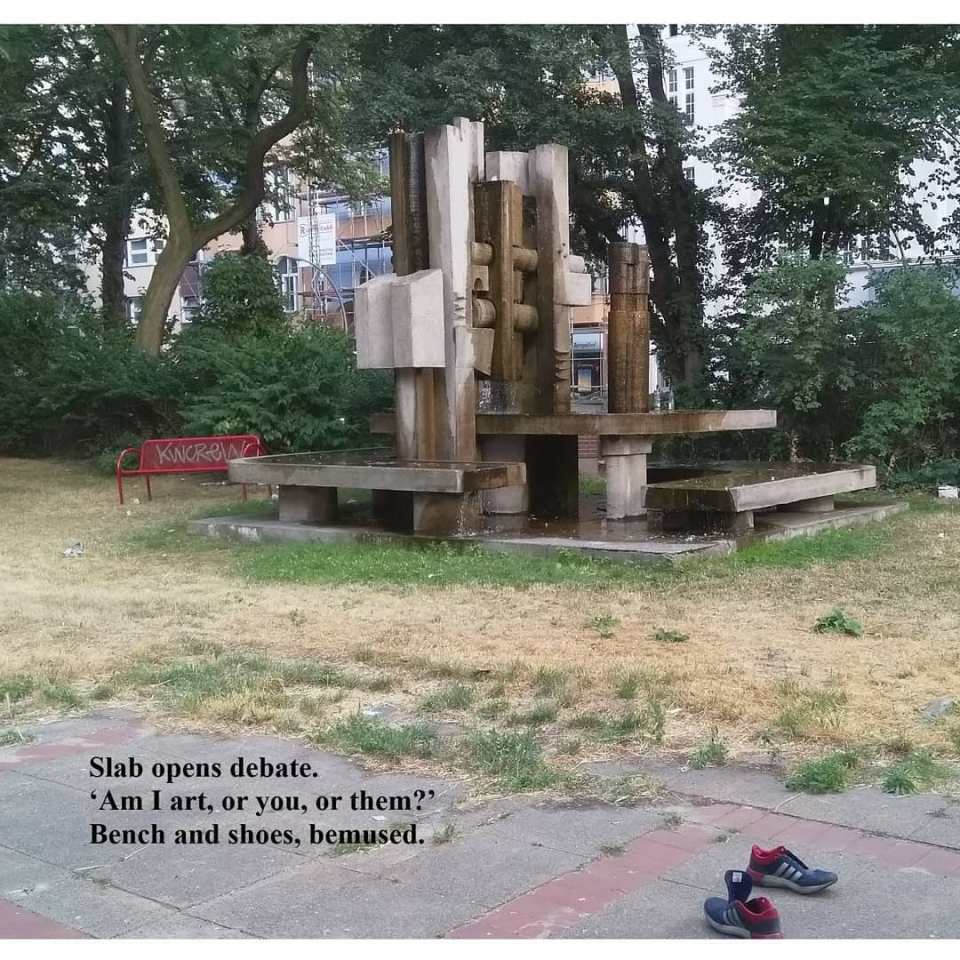
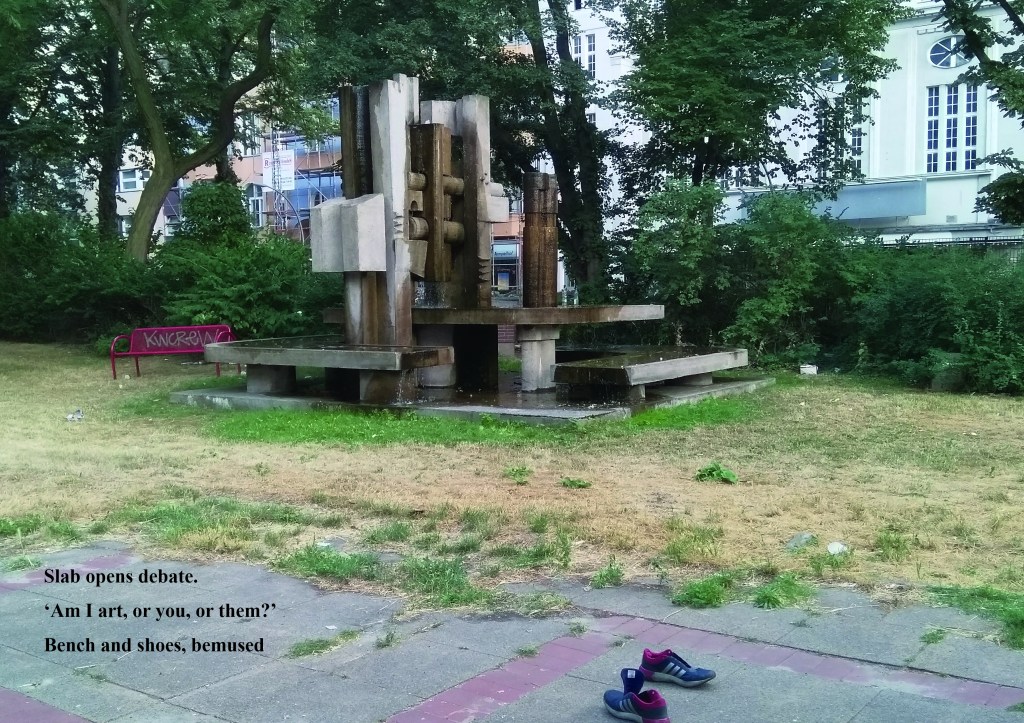
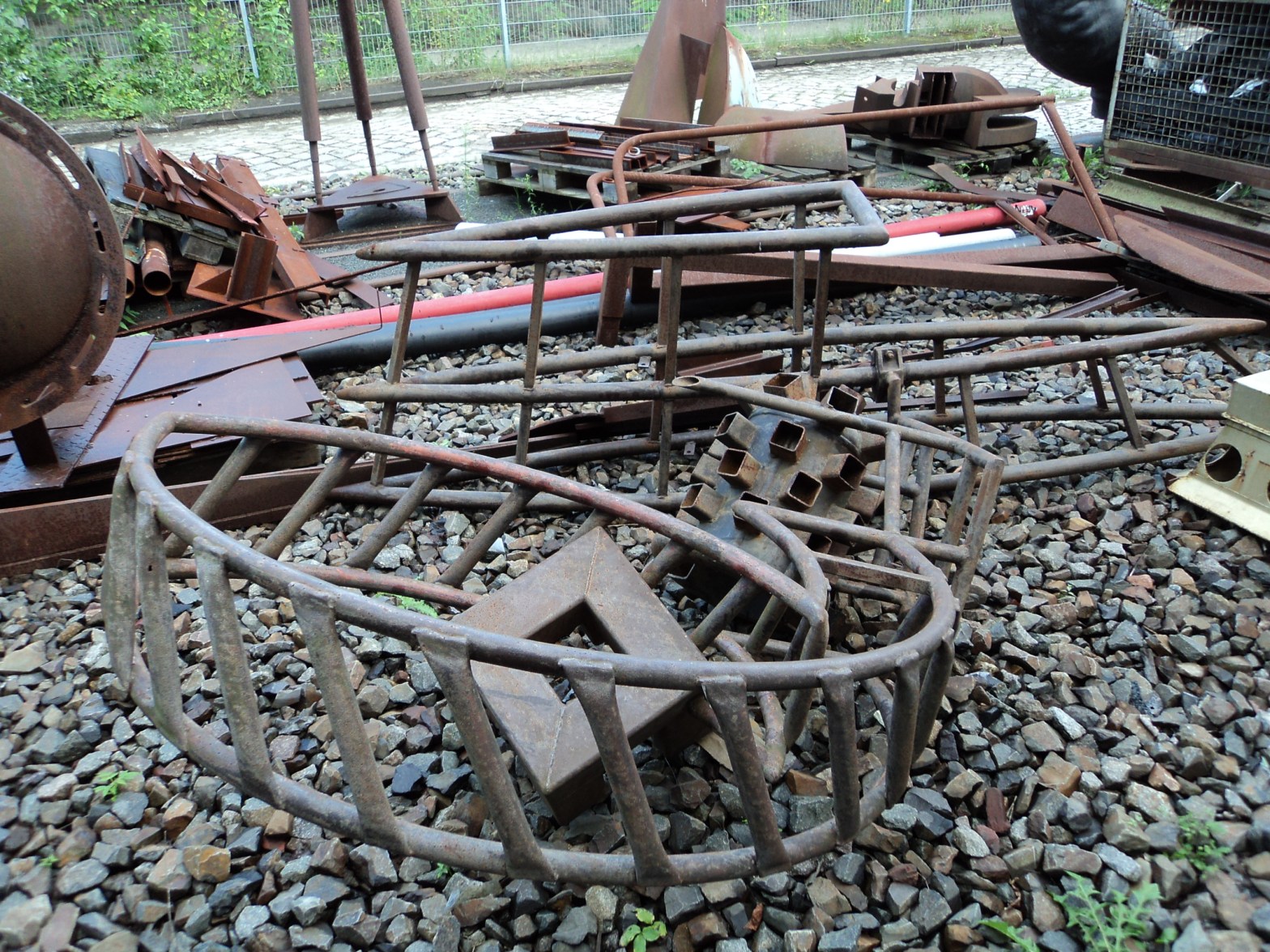
I found some ghastly slabs, on the green central reservation of the street where I live, near the smart apartments, (above). The strip was popular with drunks and users and for some reason, one of them had abandoned his trainers. Perhaps, he just needed some laces. I should have empathised and helped out but it takes real courage to jump over one’s prejudice.

The council has opened the area up and so the ‘unwholesome’ residents have had to move on. I’m sad that they no longer have a place to sit, but pleased to feel safe again. OK. The fear of crime is always bigger than the reality, and our fear means a casual piece of art juxtaposition will never reoccur. Shame.

Here’s my piece called ‘Slab’.

For phone users:

Slab opens debate. Am I art, or you, or them? Bench and shoes, bemused.

I use Haikus to help me adopt a mindful approach to things I see. Try it sometime. Let me know how you get on.

A long haul for heroes


A writer’s problem – readers think you are your hero.

Video, explaining a little about Goddesses

So you cunningly create a hero or heroine and your best friend reads your work and deduces that you have visited that city, the brothel, ridden your bike down the very mountain path etc. or whatever else occurs in the story. After all, academics argue that Shakespeare couldn’t have written The Two Gentlemen of Verona, because he never visited Italy and his knowledge of the city within the play, is too exact to have been written from the imagination. It must have been someone of noble birth, not a working class oik with a glovemaker for a father.

Much Ado About Nothing frieze in London – unknown origin. Picture St. James’s Hotel. The Forest of Arden features in Goddesses – girl dresses as boy playing a girl.

Garbage of course. Academics should ask themselves how many Italian merchants, or merchants who had lived decades in Italy, were residing in Shakespeare’s London. Of course a grammar school boy from Stratford wrote it! I’m not going to compare myself to Shakespeare, but it is good to know Shakespeare has my problem, albeit in reverse and centuries after his death. Well, that won’t happen to me!

All things are possible. Yes! I could have done those things – but I didn’t. I’ve never shot three people in cold blood and made a desperate getaway, leaving the loot with a charity for prostitutes. (The Last Stop). Nor does JK Rowling have a broomstick licence.

My friends assume I have never done time so it can’t have been me. In fact they know very little about what goes on in my head and Jesus said, thinking about it is as bad as doing it. With that, he set the bar too high for most of us. I might have robbed a bank and paid for sex, but I’m unable to own up to either, in my head or otherwise. It wasn’t me Guv!

Goddesses

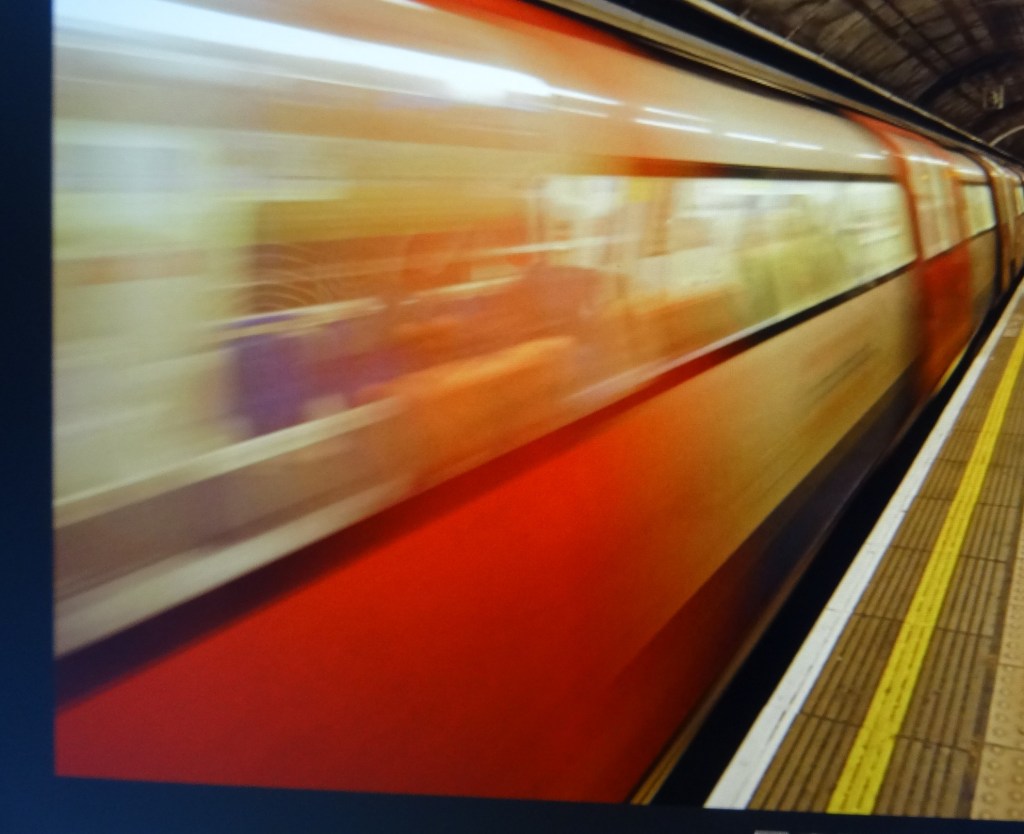
My heroine gets into hot water, after a quickie on the Northern Line.
Thus it was, it took 2 years to gather the courage to publish Goddesses – or 49 ½ Shades of Charcoal. I was simply scared of the rebound!

It is written in the first person from the POV of a 37 year old successful business woman – little room for confusion then. It can’t have been me.

But I thought up all those pornographic scenarios – therefore I am guilty as charged of being a disreputable rake. ‘But I thought them up to ridicule the industry and give my readers a good laugh,’ I reply.

Too late! The book is out there and I must face the consequences, lose friends, be looked at strangely by my family etc. That’s why it took so long to press the <publish> button.

The graffiti from the Südgelände gave me the idea.

Experience so far:

Men think my plots are a hoot – women hate them. Which leaves me to consider myself a failure. After all, if women hate the plot they can’t be identifying with my characters and therefore my female POV is not realistic. Nevertheless, I am hanging on to the thread of a hope that says I can think myself inside a woman’s erotic psyche. That might be why women hate the book – it’s too close to home and a colleague once told me, of all the men she knew, I was most in harmony with my female self – (Jung I assume). I didn’t dare ask for clarification at the time and she has since stopped talking to me.

What evidence

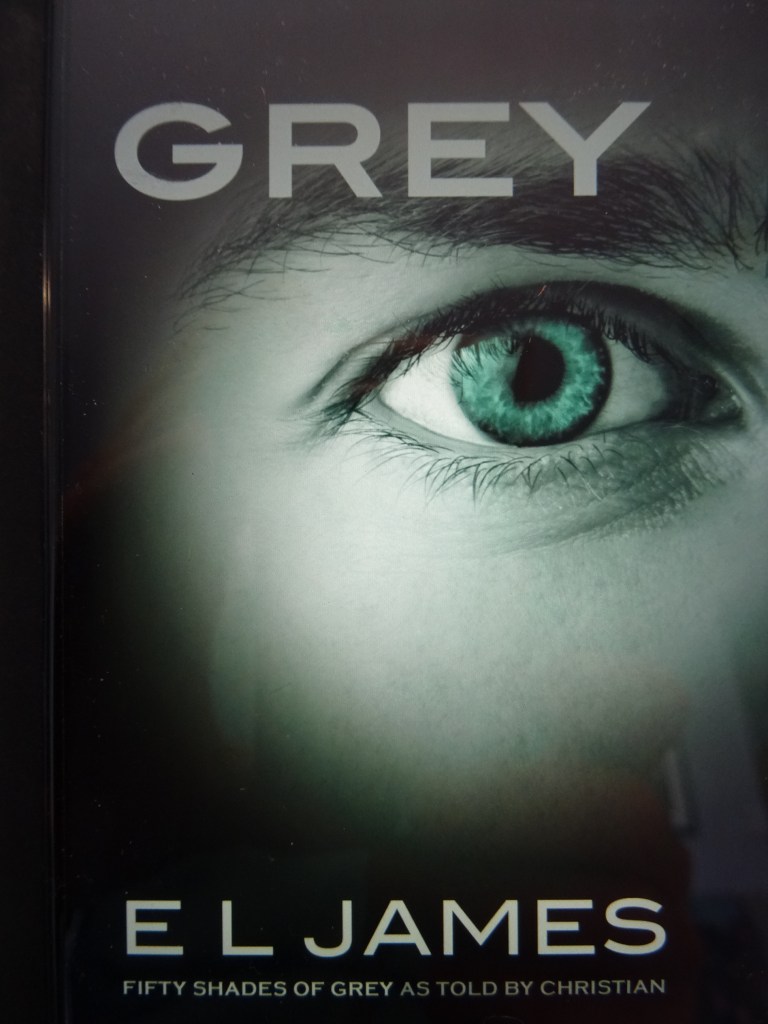
When 50 Shades of Grey was published, it caused a world paper shortage. I looked through the carriages on the U6 in Berlin and counted the women of all ages, reading a book folded into brown paper. What a give-away! Presumably, they were curious about a bit of BDSM, but didn’t care to reveal it. But 50 Shades isn’t erotic and has little to do with reality. Rotten Tomatoes described the film as ‘As erotic as kicking a log down the street,’ and I found the film better than the book. I think we were conned by marketing and not for the first time and I wanted to put that right. Another beta reader told me he needed several cold showers while reading Goddesses so I have done better than E L James in that department. I didn’t even feel the need to wash my hands after 50 Shades.

The book that caused a paper shortage.

At this moment I am drawing the following conclusions.

Men like tongue in cheek, witty porn. Maybe pornography for women is still a serious thing in their lives, in which case, I envy them. I can rarely take such a boring genre, seriously. Why invent a film style that uses actors of doubtful ability and the same plot, over and over again? It’s doomed to boredom – except that it keeps going, albeit by giving away its output. Who wants to buy the same story every week.

Challenge

Therein was my challenge. I would write something involving sex and be original and be funny. Dr. Hilary Johnson, my editor, told me my story was very funny and original. She also told me she wouldn’t be editing for me again. I’m still wondering about the sub-text.
Failure

And what about my heroine? There couldn’t be anything of me in a 37 year old business woman POV, set in 2020, could there? My friend M S Wall spotted it immediately. Our upbringing tried to crush every ounce of imagination and rebellion from us. Well, it didn’t succeed – thank goodness.

Turn in your graves, you 60s bigots. Aren’t these the things I wish I had done, rather than what I did do? But it’s never to late to dream. You can’t take those away.

Cherchez la femme – vive les déessess.

A dream plot for any author. Goddesses.

What is art?


Homeless Art

This strip of grass used to be the hangout spot for the homeless, drunks and drug dealers. It’s not surprising that the city fathers decided to open it up and make it less attractive to nefarious deals. On the one hand we have gained an area to admire the brutal art the city has purchased over the years, but we have lost the casual contribution by the homeless, who, in this case cast a pair of serviceable trainers in the vicinity. I love the brutal fountain, out of concrete slabs, but the casually discarded shoes asked another question.

Slab opens debate.
Am I art, or you, or them?
Bench and shoes, bemused.

Inspirational Structures


Inspirational structures can lead to a new, simpler, less mystical mindfulness.

It doesn’t have to be the Notre Dame or Windsor Castle.

The Hafnia Sea did it for me. The brilliance of the engineer and architect who put it there, need celebrating.

Drawing board moment,

Captain’s juxtaposition.

Art is everywhere.

Haiku – 3 lines, 5,7,5 syllables, turning point after second line, should include a reference to nature.

The moment against the blue sky, was magic. Did those engineers and maritime architects know they were creating art? And the captain placed the object perfectly, for me to photograph, although he didn’t have me in mind? A random boat trip from Lübeck to Travermünde, provided the angle.

Finally, the act of writing the Haiku concentrated my mind on what the picture means to me. And it means something different to all of us. Have a go. Take your favourite picture and Haiku it. E-mail it to me and I’ll include it in my next post. clivelap@gmx.com

Instagram is not about taking photos and boring your friends with them. I am sure I do that, too. It’s about observing, and sharing that observation with others, but through my eyes. Of course, I have to make the effort of seeing and accept that everyone sees it differently. That’s the beauty of putting it out there. I lose control – as Heinrich Böll put it. Or rather, I hand control over.

I will also be trashed, ignored and trivialised, but that’s ok. As the saying goes, ‘if you can’t stand the heat, don’t go in the kitchen’. The point of the exercise is to push back the boundaries of indifference, because, in so doing, I protect things I cherish possessions. Hate thrives on indifference.

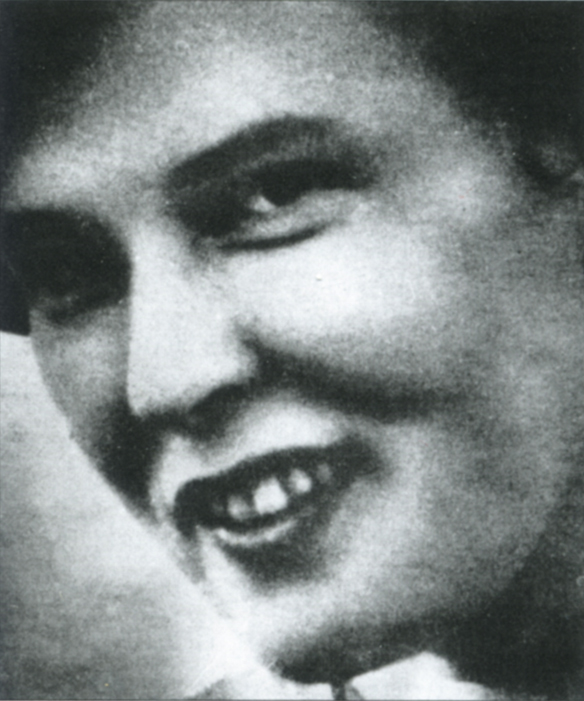
An inspirational woman, who challenged hate and paid the ultimate price.

Eva-Maria Buch paid with her life for challenging Nazi hate. She inspired me to create my heroine, Maria.

Darwin Rules! OK?


More wit from my Suffolk novel, Someone Tell Me What Is Going On.

Darwin on Blow Jobs

We stopped mid-afternoon for tea and cakes. Vera was vacant and morose. She was working something through. I decided it wasn’t the moment to challenge her.

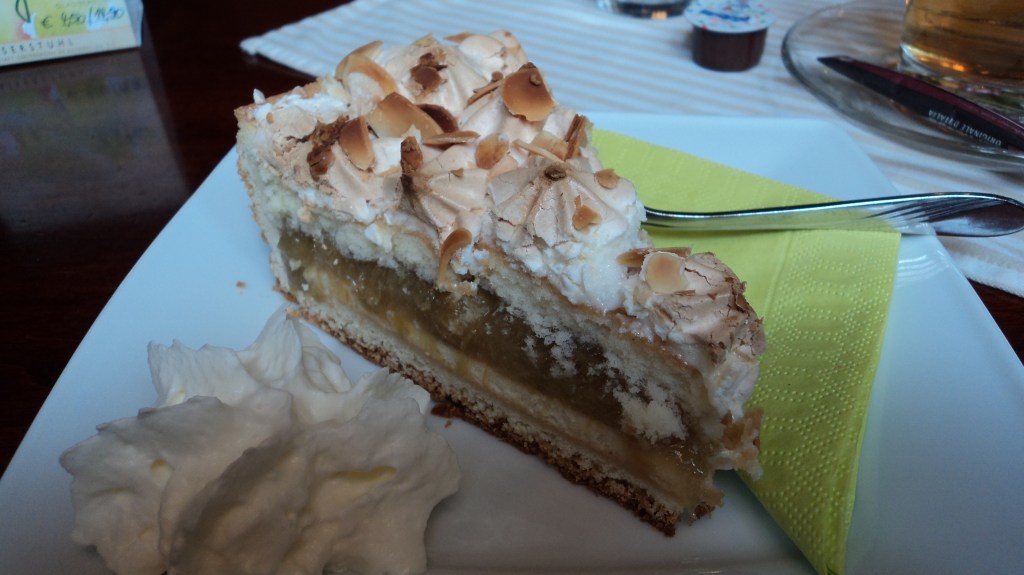
Where are the strawberries?

The cream tea was magic. Perhaps now she can be cheered up?

‘I feel sorry for blokes with beards and moustaches,’ I started. ‘I’ve nothing against facial hair, but an inch of scone, butter, jam and double cream must be a challenge too far if you don’t want to look like Father Christmas after a road traffic accident.’

She looked irritated by my simile.

‘Say that again.’

‘What?’

‘The bit about road accidents at Christmas.’

‘Not worth it.’

‘At last we agree on something.’

Ignoring my figure of speech, she picked up on the topic. She was glad to be diverted.

‘Women are genetically better predisposed to cope with cream tea, Millicent. It’s Darwin, I suppose. Natural selection. It’s an advantage for a woman to be able to open her mouth wide, and that has nothing to do with dentists.’

I felt a giggle coming on.

‘How do you work that one out? Why is a woman scoffing cream tea likely to survive better than one who can’t manage four layers in one go?’

‘It means, as a rule of thumb, she will be able to eat quicker and will get more to eat, and thus better survive.’

I decided to lead her on.

‘OK. Anything else?’

‘She can talk quicker and louder, so her man will want to get out of the way and go hunting more often. That means he will bring home more food.’

By now we were both convulsed in giggles, knowing what was still to come.

‘Very good!’ I said. ‘But if she talks too much, he may choose not to bring his catch home to her.’

I had an inkling of her next thought, but I didn’t want to spoil her punch-line. Vera struggled to control her mirth and steady her voice. She had several attempts at beginning the sentence. The buttered scone with jam and cream had to wait a while. Vera didn’t notice that in her efforts to control the giggles she shouted.

‘If she has a big gob, she can do good oral sex and her man will forgive her talking all the time and want to come home quicker after hunting. Also, he will be motivated to be a better hunter and bring more food so that she will be more thankful.’

‘Darwin covers all bases again,’ I snorted, with tears of mirth streaming down my cheeks.

I think we came close to be ejected from the tea-room. That would have made the local paper.

Photo by cottonbro on Pexels.com

A quick excerpt from my novel, Someone Tell Me What Is Going On.

Amazon e-book download, just £0.99. Free on Kindle Unlimited

Haiku fun.


I’m into mindfulness – not the spiritual meditational stuff, although I’m sure that can be useful. I use the simple premise that the act of looking for photographic opportunities, increases awareness. I write a Haiku to go with that picture and I know I have spent half an hour studying and realising what that picture tells me.

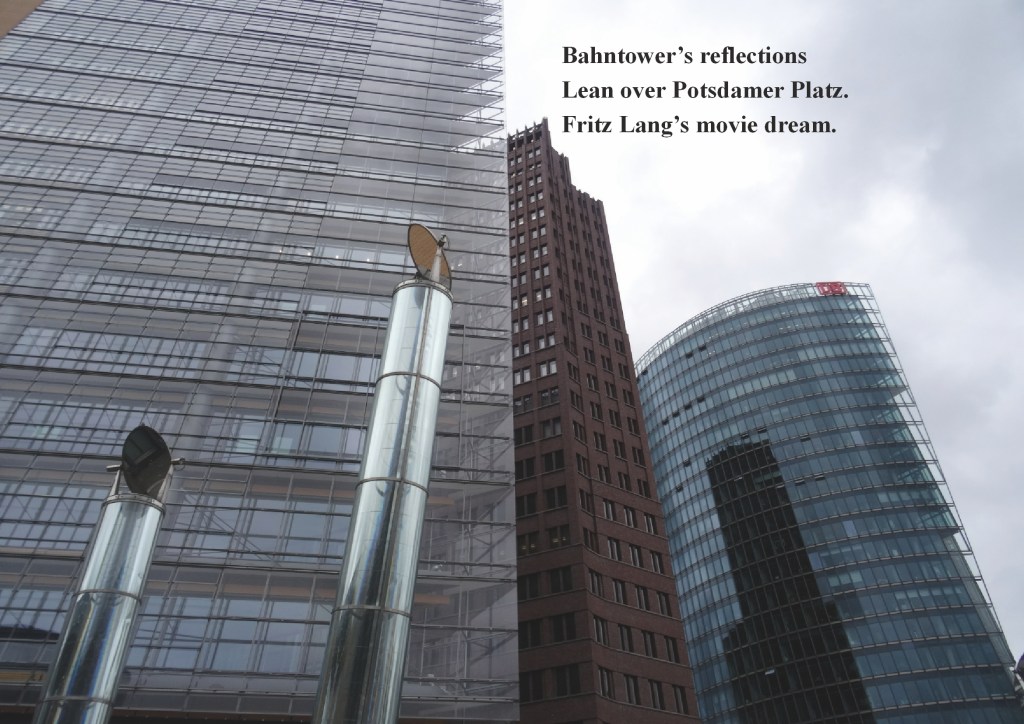
Here is an example. I have linked the centre of the German film industry to the great visionary film maker, Fritz Lang. Tragically, Lang’s vision was only realised after the old Potsdamer Platz was flattened 1939-45. It then waited another 40 years, through DDR inactivity, to finally be built as a fitting pastiche of Lang’s film, Metropolis.

Fritz Lang’s Movie Dream – Metropolis

This is mindfulness applied to Potsdamer Platz and its history, pre and post WW2.

Or one can photo edit to produce a different take on the vertical lines.

Potsdamer Platz vertical lines abstracted. PhotoPlus

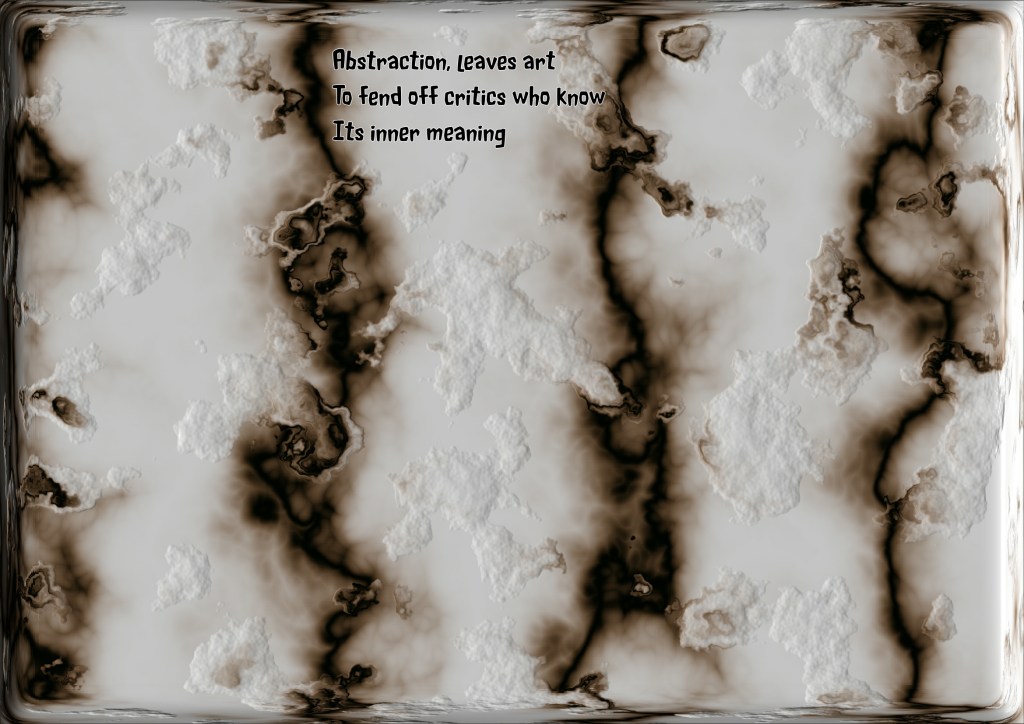
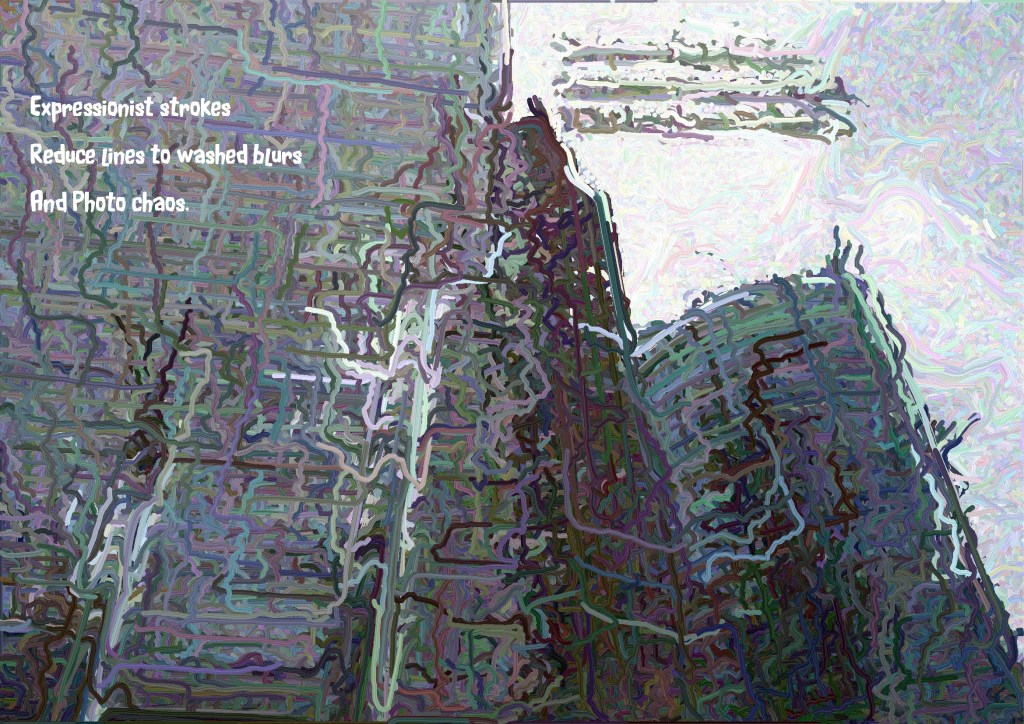
I”m a great fan of expressionist literature and try to write in that style. Expressioism takes elements and exaggerates them to achieve effect.

Expressionist chaos – PhotoPlus

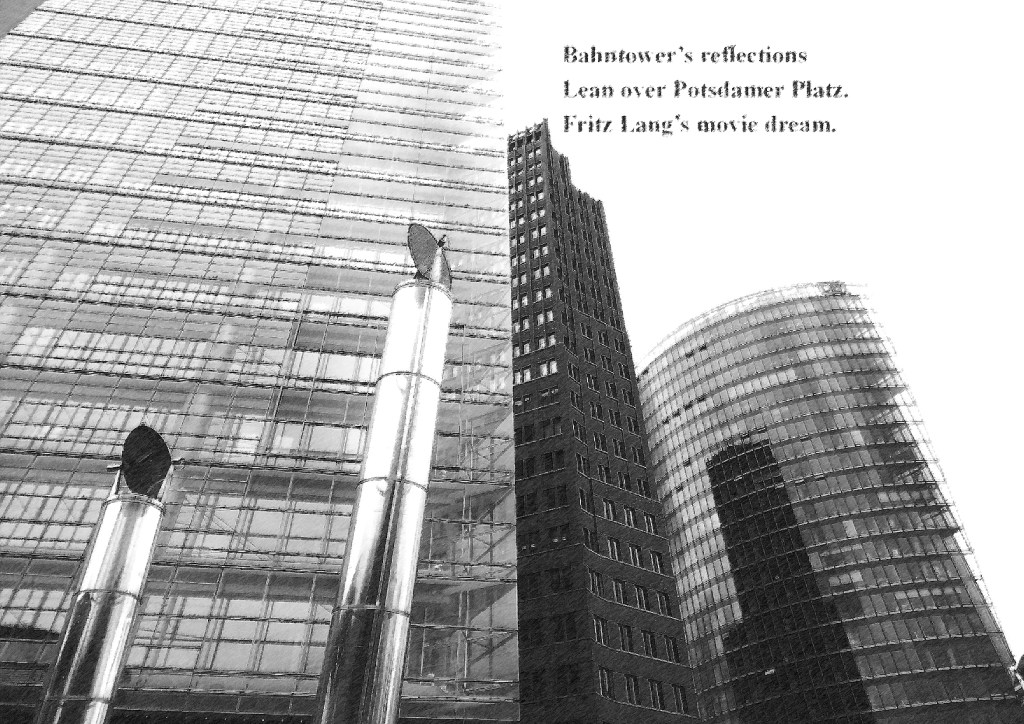
But sometimes, less is more. Here is the Bahntower reduced to pencil lines.

Perhaps you would like me to make you one. You can supply the picture and I will write the Haiku, using your theme. You can have it as a high resolution PDF and print it to make an unusual birthday card. Price on application but typically £25 for the Haiku from your picture or £50 if I do a picture search for you. All work is on approval.

Go back

Your message has been sent

Warning
Warning
Warning
Warning